Beer Styles for Game Day: A Fan's Guide to the Tap List
Lagers, IPAs, wheat beers, sours and stouts, sorted by what they taste like, how strong they run and when they make sense during a long game.
By Luis Ferreira9 min read
On a playoff night the busiest moment behind a bar is not tip-off. It is the ten minutes before, when a crowd of people who have been refreshing injury reports all afternoon look up at a board with twenty-odd beers on it and realize they don't know what half of them are. I spent ten years on the other side of that board. The question I heard most was never "what's good?" It was "what's like the thing I usually drink, only a bit more interesting?"
It's a fair question. Beer styles are families, and once you know roughly how each one tastes and how strong it runs, a long tap list stops feeling like a pop quiz and becomes something you can plan a whole game around.
Lagers: the backbone of a long night
Lager is less a flavour than a method. Bottom-fermenting yeast works at cool temperatures, and the beer then rests cold for weeks (the German lagern means "to store"). The result is usually clean, with little fruity yeast character in the way. On game day, clean is a feature. You can drink a lager next to almost any food and still taste the food.
Helles
Munich's pale lager, developed in the late 1800s as the city's answer to the golden beers coming out of Bohemia. Soft, bready, faintly sweet, barely bitter. A good helles tastes like the inside of a fresh roll, and nothing in it shouts. It sits around 4.5 to 5.5 percent. When someone asks me for one beer to carry them through the first half, this is usually where I point.
Pilsner
The first golden lager was brewed in the Czech city of Plzeň in 1842, and nearly every pale fizzy beer since owes it something. Next to a helles, pilsner is drier and more bitter, with a floral or spicy hop smell. Czech versions are rounder and a little richer, German ones crisper and sharper, and plenty of North American craft pilsners land somewhere in between. Expect around 4.5 to 5.5 percent. This is the beer for salty, fried food. The bitterness and the bubbles reset your mouth after every wing.
Vienna lager
Amber, toasty, a bit like the crust on a good loaf. The style faded in Austria but kept a following in Mexico, where amber lagers in that tradition never went away. It is the move when you want more flavour than a pale lager without anything heavy. Usually around 4.5 to 5.5 percent.
Mexican-style lager
Light, crisp and dry, often brewed with some corn in the grain bill, which thins the body and leaves a faint sweetness. These run around 4 to 5 percent and go down very easily, which is exactly why they are worth counting. Next to a tray of nachos during a late West Coast game, few beers make more sense.
Pale ale and IPA
American pale ale is where a lot of people's craft habit starts: a solid malt base, clear hop bitterness, citrus and pine in the nose, usually around 4.5 to 6 percent. On most boards it is the most food-friendly hoppy option.
IPA is more of everything: more hops, more bitterness, more alcohol. Two camps own most tap lists now.
West Coast IPA
Clear, gold, dry and properly bitter, with pine, resin and grapefruit pith. The dry finish makes it feel lighter than it is. Most land around 6 to 7.5 percent, and double IPAs go to 8 and past.
Hazy IPA
Also sold as New England IPA. Cloudy, soft, low in perceived bitterness, smelling of mango, orange juice and ripe peach. Oats and wheat give it a pillowy body. Hazies are lovely and risky on game night for the same reason: they drink like juice and often carry 6.5 to 8 percent. They also fade fast. A hazy that has sat warm for a few months tastes dull and faintly of cardboard, so on draught, freshness is half of what you are paying for.
Wheat beers
Wheat brings a creamy body and a haze. The flavour depends mostly on the yeast.
- German hefeweizen: banana and clove from the yeast, soft and fluffy, around 5 to 5.5 percent.
- Belgian witbier: brewed with coriander and dried orange peel, light and peppery, around 4.5 to 5.5 percent.
- American wheat: cleaner, often with a light hop touch, built for patios.
Wheat beers are great with lighter food, lemon pepper wings and anything with citrus. They also make good bridge beers for the friend who says they "don't really like beer".
Sours
Sour beers get their tartness from lactic acid bacteria and sometimes wild yeast. On a game-day board you will mostly meet three kinds.
- Berliner weisse: light, lemony, low in alcohol, often around 3 to 4 percent. One of the best session beers there is.
- Gose: tart, with a little salt and coriander, around 4 to 5 percent. Strange on paper, terrific with fried food.
- Fruited sours: raspberry, passion fruit, cherry, sometimes all three. Strength varies widely, so read the ABV.
Flemish reds and lambic-style blends are older, slower sours that deserve a quiet night, not a sip between possessions.
Stouts and porters
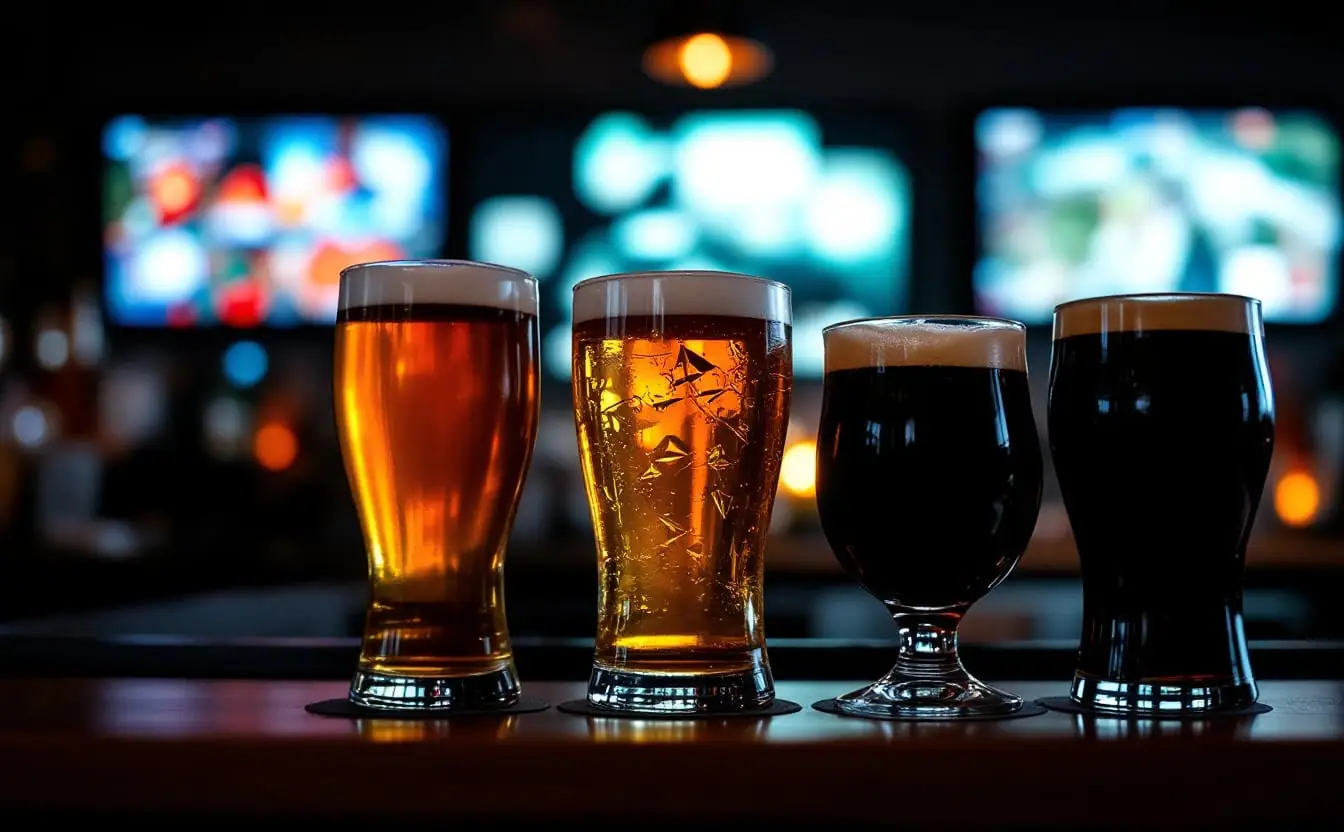
Dark does not mean strong. A dry Irish-style stout is one of the lighter beers on many boards, usually around 4 to 4.5 percent, and it is often poured on nitro, which gives that slow cascade and the creamy head. Porters are close cousins, a little more chocolate and caramel, less sharp roast, around 4.5 to 6.5 percent.
Imperial stouts are another animal: around 8 to 12 percent, tasting of brownie, espresso and dried fruit. They come in small glasses for a reason. An imperial stout belongs after the final buzzer, not alongside the opening tip.
Session beers vs big beers over three hours
An NBA broadcast runs around two and a half hours, longer with overtime, and most people turn up before tip-off and linger for the post-game show. That is a long time with a glass in your hand, and the arithmetic catches people out.
In Canada a standard drink is 341 ml (12 oz) of 5 percent beer. A proper Canadian pint is 20 imperial ounces (568 ml), so a pint of 5 percent lager is already more than one standard drink, and a pint of 7 percent IPA is more than two. A 16 oz US pint of that same IPA comes close to two. Three pints of hazy over a game is not "three beers" in any way your body recognizes.
None of that means drinking only light beer. It means planning, and this is what I suggested to regulars who asked:
- Open with something flavourful and modest: helles, pilsner, Berliner weisse or a dry stout.
- Treat the big beer as a moment, not a default. Halftime, or a smaller pour in the fourth.
- Get a glass of water with every round. Bartenders do not judge this. We are relieved.
- Ask for smaller sizes. Many bars pour half pints, sleeves or 5 oz tasters, especially of strong beer.
- Eat real food early, not just a bowl of popcorn at the end of the third.
- Sort out the ride home before the game starts, while your judgment is still at its best.
How to read a tap list
A typical board line gives you a name, a brewery, a style, an ABV, sometimes an IBU figure and a pour size. Read them in this order.
Style first. It tells you more than the clever name. ABV second, because over a long game it is the most useful number on the board. Pour size third: a 10 oz pour of imperial stout and a 20 oz pilsner are very different commitments.
IBU (International Bitterness Units) measures bitter compounds from hops. Treat it as a hint, not a verdict. A high IBU beer with lots of malt can taste less bitter than a lower IBU beer that is bone dry.
Then the small words:
- Nitro: smoother, creamier, less fizzy.
- Cask: naturally carbonated, served a little warmer, with a softer sparkle.
- Rotating or guest: the line changes, so ask what's on.
- Fresh or new keg: good news for hoppy beers, which lose aroma with time.
When unsure, ask for a taste during a time-out, not on the final possession of a one-point game. The good rooms for watching (there is a whole guide on where to watch) have staff who can talk you through the board in under a minute.
Glassware and the pour
Glass shape matters less than glass cleanliness. A "beer clean" glass has no film of grease or rinse aid. In a dirty glass, bubbles cling to the walls in little streaks and the head collapses fast. In a clean one, the foam holds and leaves rings of lace down the side as you drink.
At home, the pour goes like this. Tilt the glass to about 45 degrees and pour down the side. When it is about half full, straighten it and pour into the centre to build a head about two fingers deep. That foam carries aroma and keeps some of the carbonation in the glass rather than in your stomach.
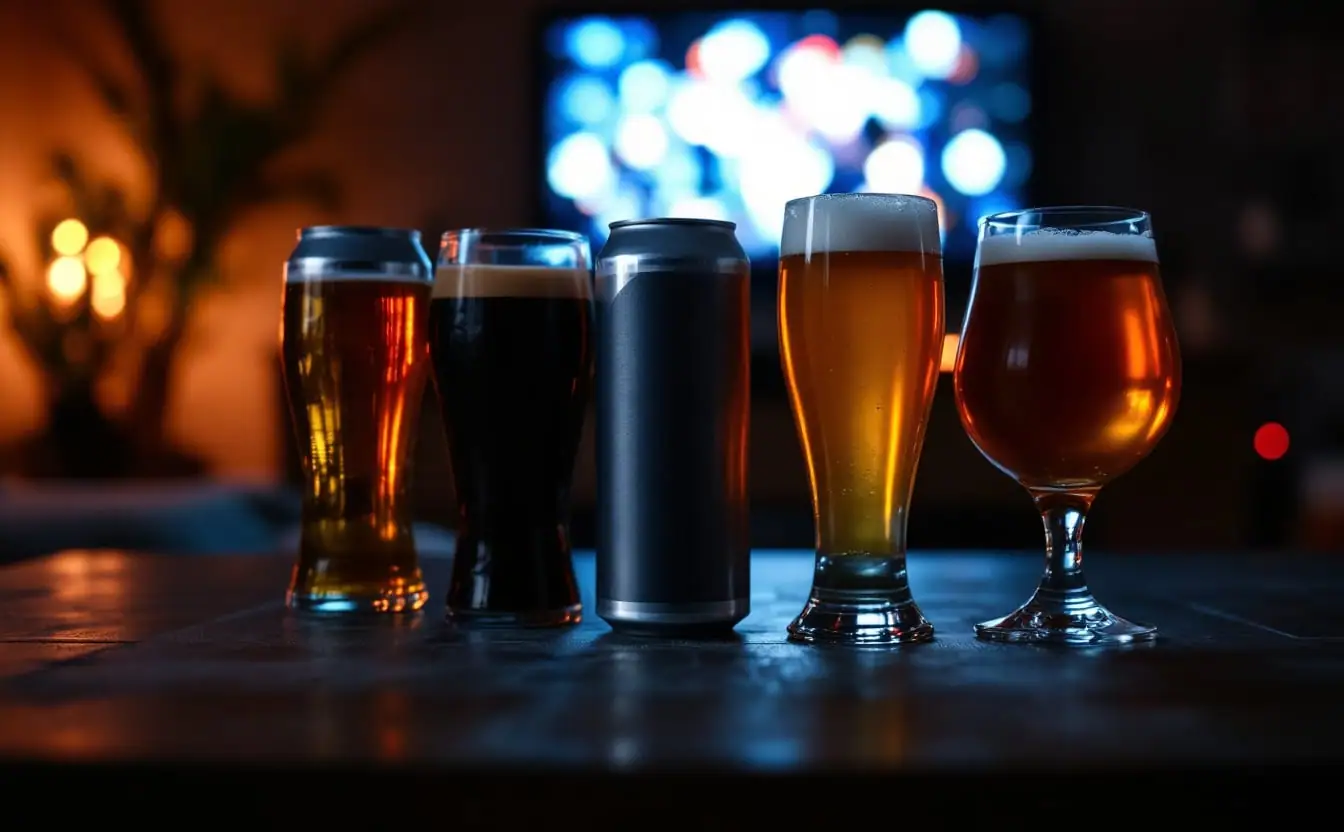
A few shapes are worth owning: a tall slim glass for pilsner and helles, a tall curvy weizen glass for wheat beer, a tulip for IPAs and strong beers, and a nonic pint (the one with the bulge near the rim) for everything else. Skip frosted mugs. Ice on the glass makes the beer foam over and numbs the flavour.
Lagers go coldest, about 38 to 45°F (3 to 7°C). Pale ales and IPAs taste better a touch warmer, around 45 to 50°F (7 to 10°C). Stouts and strong beers open up at 50 to 55°F (10 to 13°C), so let an imperial stout sit for ten minutes before you judge it.
The game-day style table
| Style | Flavour | Typical strength | Game-day use |
|---|---|---|---|
| Helles | Bready, soft, gentle | around 4.5 to 5.5 percent | Opening round, all-purpose |
| Pilsner | Crisp, dry, floral bitterness | around 4.5 to 5.5 percent | Wings, fries, anything salty |
| Vienna lager | Toasty, amber, lightly sweet | around 4.5 to 5.5 percent | Burgers and grilled meat |
| Mexican-style lager | Light, dry, faint corn sweetness | around 4 to 5 percent | Nachos, hot wings, late games |
| American pale ale | Citrus, pine, moderate bitterness | around 4.5 to 6 percent | Burgers, pizza |
| West Coast IPA | Dry, resinous, bitter | around 6 to 7.5 percent | One round, with rich food |
| Hazy IPA | Juicy, soft, low bitterness | around 6.5 to 8 percent | Halftime treat, smaller pour |
| Hefeweizen | Banana, clove, creamy | around 5 to 5.5 percent | Lighter food, afternoon games |
| Witbier | Orange peel, coriander, peppery | around 4.5 to 5.5 percent | Lemon pepper wings, salads |
| Berliner weisse | Tart, lemony, light | around 3 to 4 percent | Long games, hot days |
| Gose | Tart, salty, herbal | around 4 to 5 percent | Anything fried |
| Dry stout | Roasty, dry, creamy on nitro | around 4 to 4.5 percent | Second half, smoked meat |
| Porter | Chocolate, caramel, light roast | around 4.5 to 6.5 percent | Ribs and barbecue |
| Imperial stout | Rich, espresso, dark fruit | around 8 to 12 percent | Post-game, small pour |
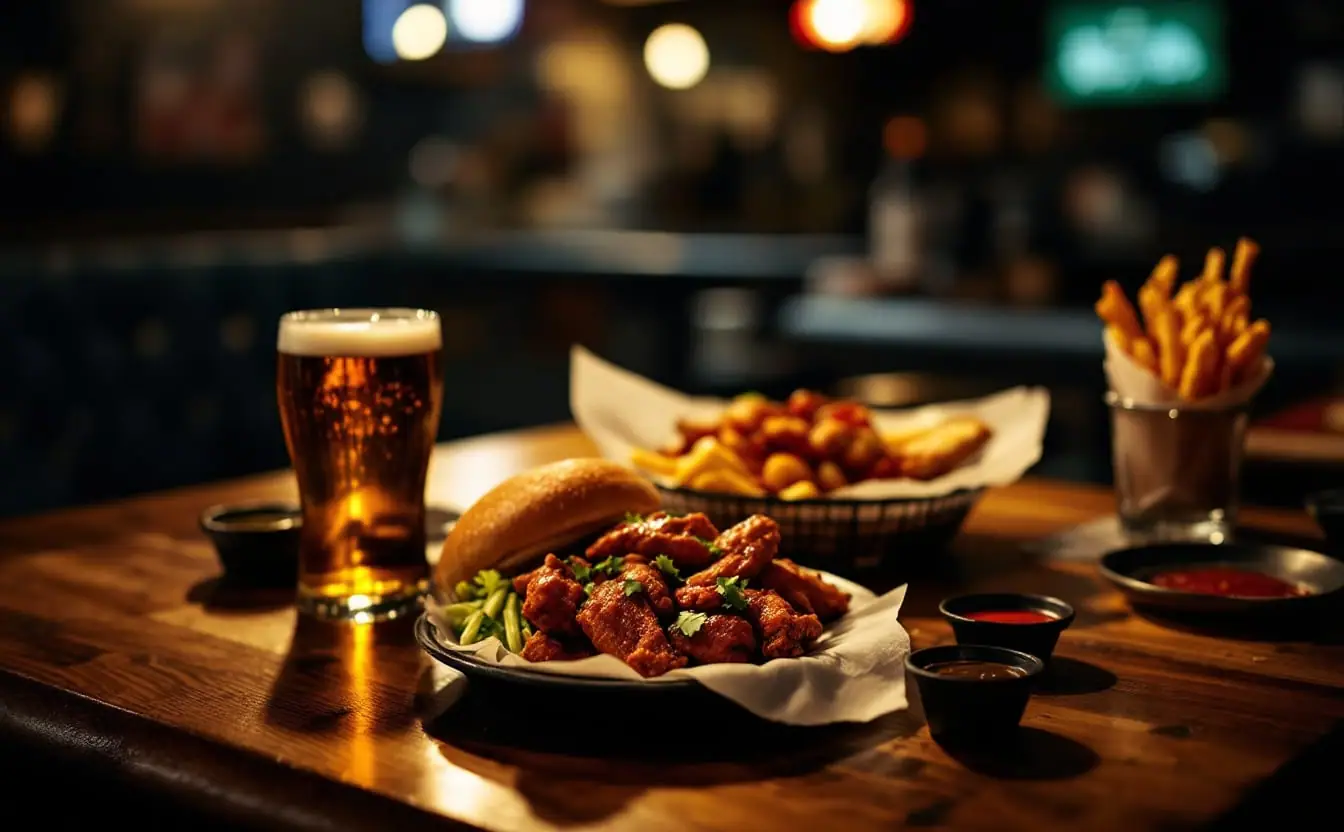
For food to go with all this, the game-day food guide goes course by course, and the fried, baked and smoked wings comparison covers the dish most of these beers end up beside.
My own order on a long playoff night hasn't changed in years: a helles at tip-off, a pilsner with the wings, water at every time-out, a half pint of something dark in the fourth, and a ride home booked before the anthem.