Gallery: The Rooms Where We Watch
Eight photographs, eight kinds of room, and what each one teaches about sightlines, sound and the people you watch with.
A good place to watch a game is not an accident. Somebody decided where the screens hang, how high the bar sits, which seats face the action and which face the door, how far the food has to travel and how loud the room is allowed to get. Most fans never notice those choices until one goes wrong: the pillar that blocks the screen, the speaker that buries the play-by-play under a playlist, the booth where half the table watches over their shoulders. The photographs below show the kinds of rooms we spend our game nights in, plus one of the places the game itself comes from. None of them is a particular bar. They are types, and each one says something about how watching spaces get built and why some rooms feel right the moment you walk in. For the practical version, our guide to what makes a good room for a game works through it point by point. This page is the slower look.
Behind the bar

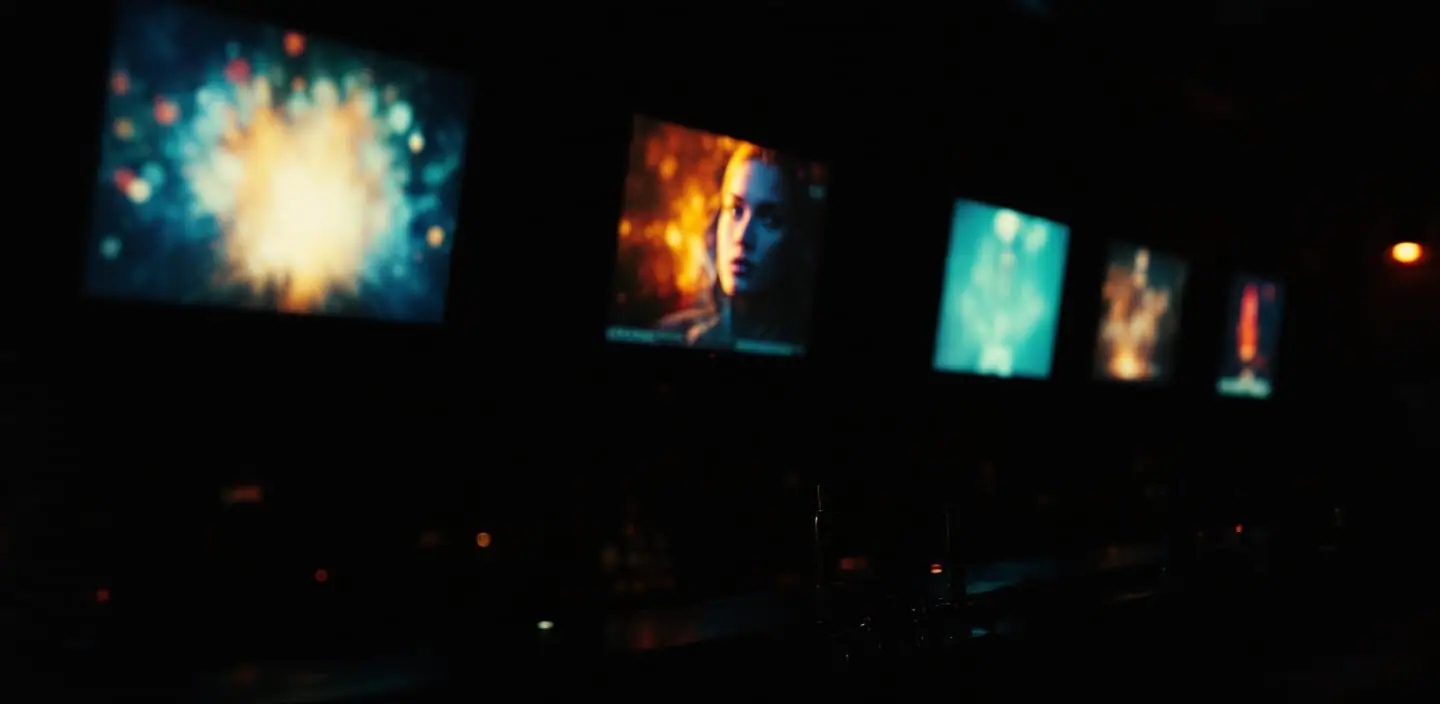
The tap row is where most rooms start, and this photograph shows why it's built the way it is. The handles sit at standing height in a straight line, close enough together that one person can pour three pints without taking a step. Behind them the screens melt into soft blocks of colour, which is roughly how they look to whoever is pouring: something to glance at between orders, never something to watch. What you can't see is the work under the counter. Beer travels from a cold room through insulated lines, often chilled along the way, and reaches the faucet at around 38°F (3°C). The draught quality guidance most brewers point to calls for cleaning those lines every two weeks, and you can taste it when a place lets that slide: flat, faintly buttery, a little sour. A good room puts its taps where the crowd can see them, because a visible pour is reassuring and a busy bar top tells you the kegs are turning over quickly. For what to order once you're standing in front of the handles, start with the beer styles for game day.
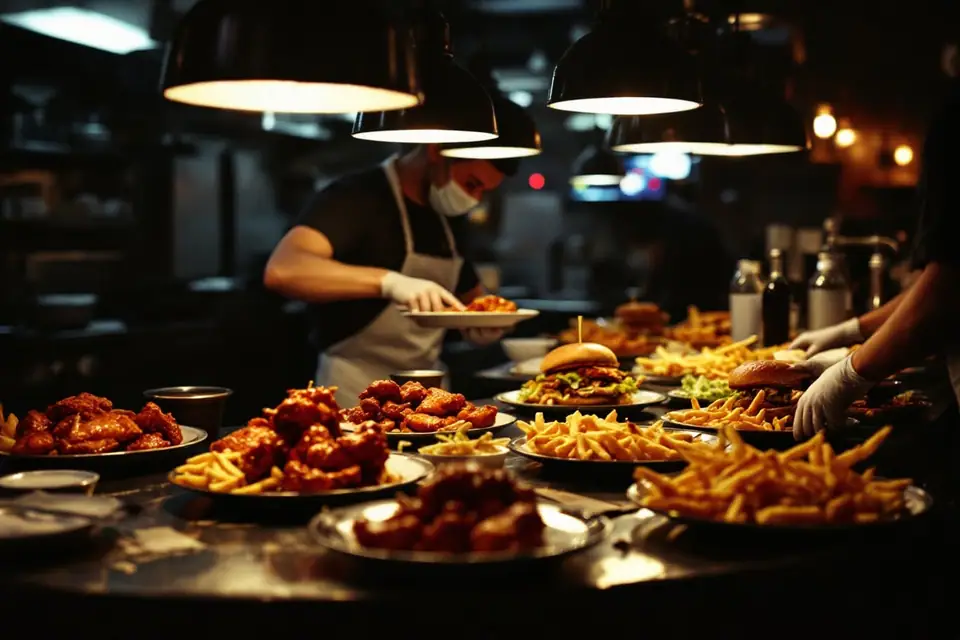
Every sports bar has a hidden second room, and this is its front edge. The pass is the steel shelf where finished plates land under heat lamps for the short gap between a cook's hands and a server's. In the photograph, wings sit in steel bowls and burgers stand with their tops leaning on the side so the bun doesn't steam itself soft. Heat lamps buy time, though not much of it, and anyone who has worked a line on a playoff night knows the rhythm: quiet through the anthem, then a flood of tickets at the first timeout and another at halftime. That rhythm shapes the whole building. The kitchen door sits close to the busiest tables. Wings come out in waves because a fryer only holds so many baskets. Dishes that hold well, like dips, layered nachos and sliders, became bar staples partly because they survive the walk. The same thinking works at home, and the game-day food guide is built around it: cook in waves, let a low oven do the heat lamp's job, and send out food that travels.
Screens and sightlines
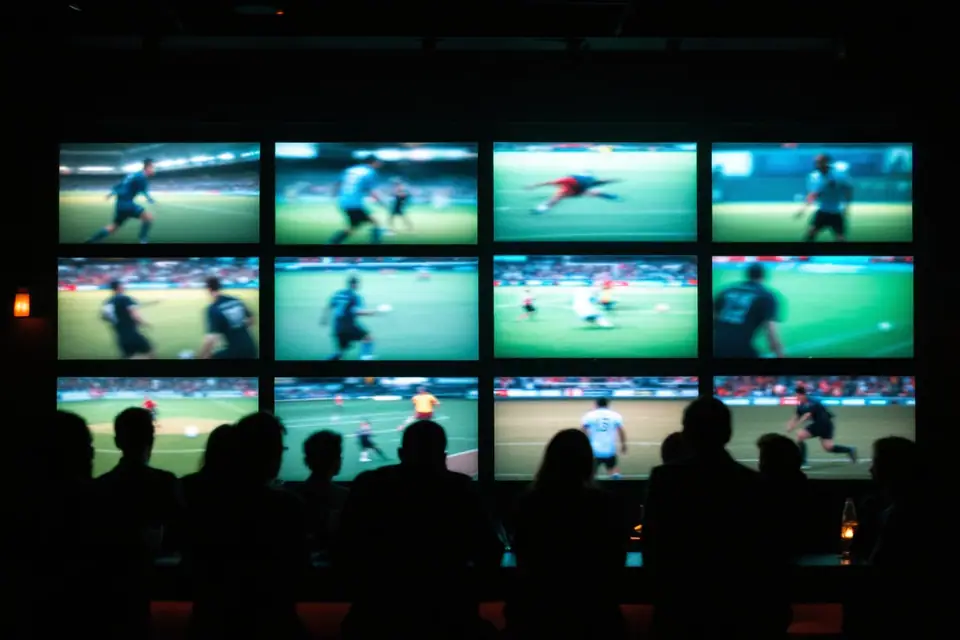
The screen wall is the signature of the modern sports bar, and it's harder to get right than it looks. Here the screens run edge to edge across one wall, each showing a different game, with the room lights turned low so the glow carries. The dimness is deliberate. Pictures look sharper and colours richer when little light is bouncing off the glass, and a dark ceiling cuts the reflections that wash out a screen for anyone sitting at the far end. The best walls are arranged with intent. The biggest screen carries the game most people came for and hangs in the centre, while the other games go to the edges, where a fan of that team can find a seat facing them. Height matters more than size. Screens mounted too high leave the whole room with stiff necks by the third quarter, which is why the better rooms keep the main screen as low as the sightlines over the bar allow. Sound can usually follow only one game at a time, and a good room makes it obvious which one that is.
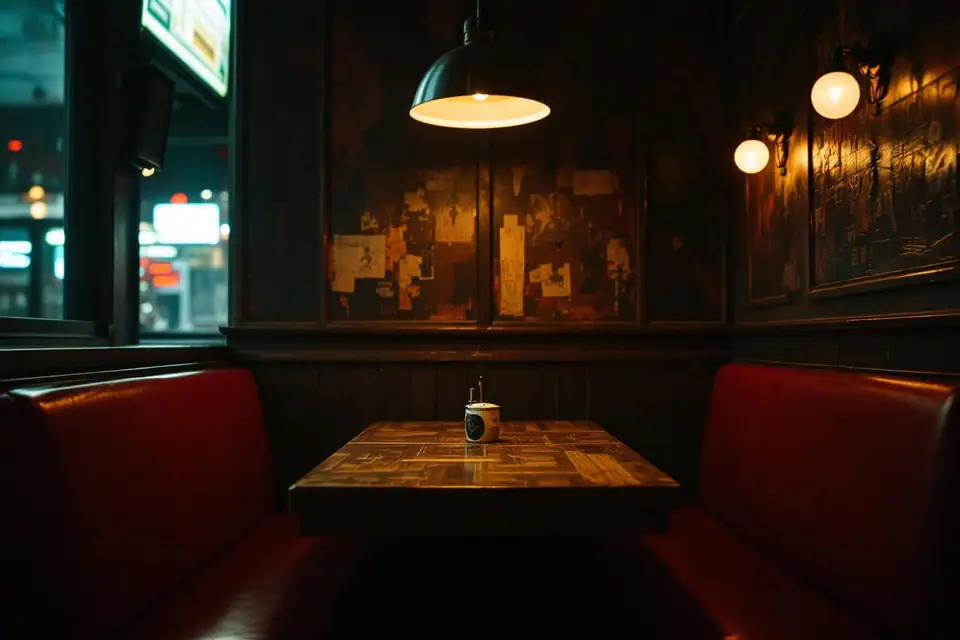
The booth with its own screen solves the problem the wall creates. On a busy night, a big wall means watching whatever the room is watching; a booth gives a small group its own game, at its own volume, an arm's length from their plates. In this photograph the set is mounted at the end of the table, at eye level for everyone seated, so nobody has to twist around to follow the play. That placement is the lesson. A booth that faces the main wall leaves half its seats with their backs to the action, and every regular knows the shuffle that follows when a close game reaches the final two minutes. The materials help too. Wooden panels and high-backed benches soak up some of the noise from the rest of the room, so conversation at the table doesn't turn into shouting. Small screens at close range, with every seat aimed at them, beat big screens at the wrong angle. It's a principle worth stealing for any room, public or private, where a handful of people want to see the same thing.
The crowd
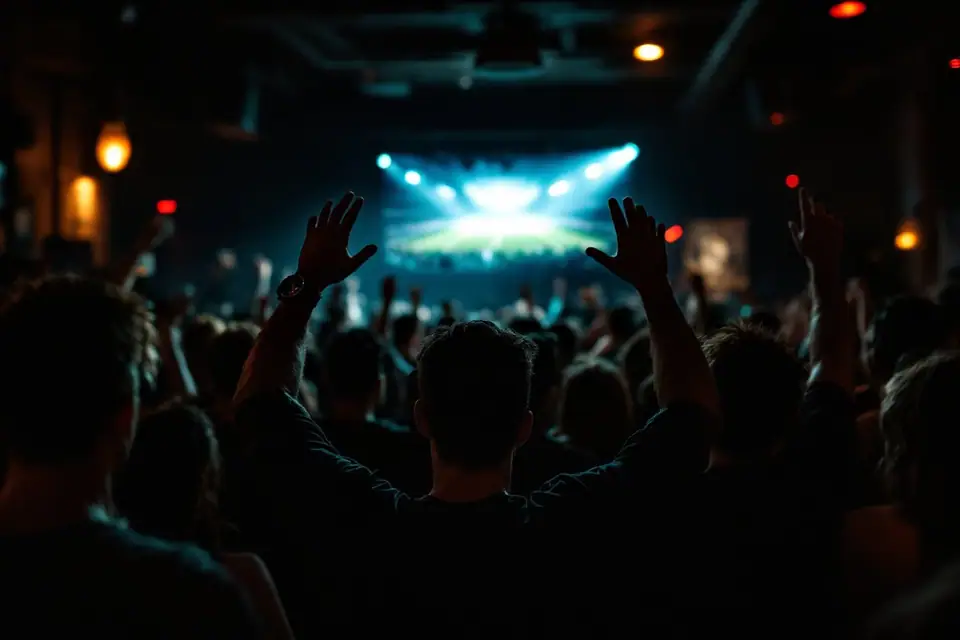
This is the photograph the rest of the room exists for. Seen from behind, the crowd is a row of raised arms and silhouettes, every head turned the same way, and the screen itself is almost secondary. You can hear this picture: the half second of silence while the ball is in the air, then the roar that arrives before the replay does. A room built for watching together has to leave space for that moment. That means aisles wide enough for people to jump up without knocking over a table, a floor where standing in front of someone for ten seconds is forgiven, and enough distance from the screen that the whole crowd can see it at once. The crowd also changes the game for the people in it. Strangers high-five. A table of rival fans gets ribbed and gives it right back. Somebody who walked in alone leaves knowing three names and a running joke about the referee. Sharing a broadcast with a full room turns it into an event, which is the heart of the argument in why we watch together, and it's why so many fans leave a perfectly good couch to watch the same feed in public.
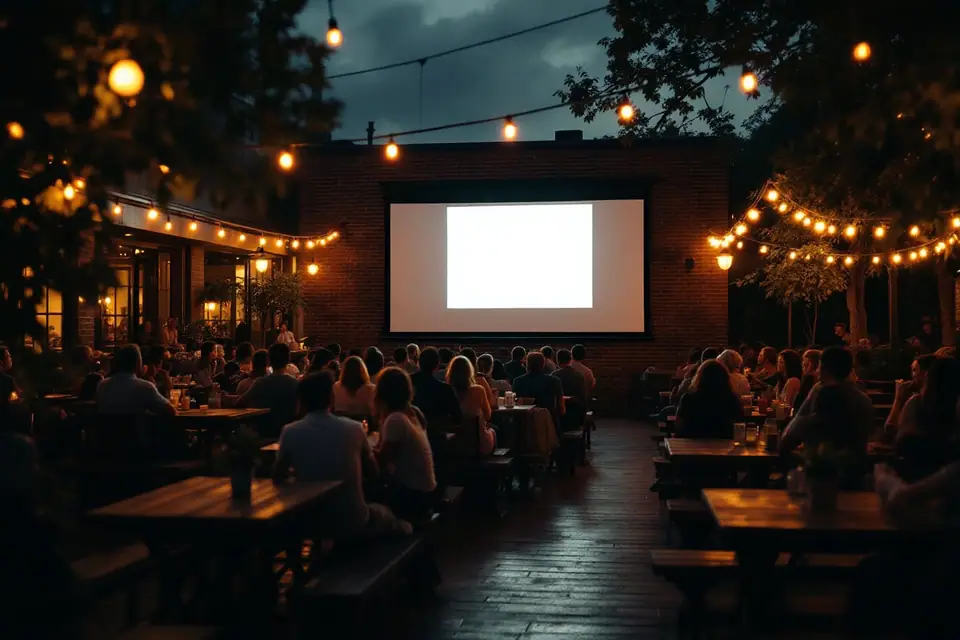
The patio is the crowd with the roof taken off, and it comes with its own engineering problems. In the photograph the screen still glows against a sky going purple, the hardest light of the day for any display. Outdoor screens have to be far brighter than indoor ones to stand up to daylight, and the good ones face away from the setting sun so the picture doesn't wash out just as the game tips off. A smart layout puts the screen against a wall or under an awning, which cuts glare and gives the sound something to bounce off. Sound is the other challenge. Open air swallows it, and the neighbours usually have opinions, so patios do better with several small speakers spread among the tables than with one loud one. Then there's the weather. Heaters, blankets folded over the chair backs and a plan for the first cold drizzle are the difference between a patio that works from May to October and one that works for three weeks a year. Up here the outdoor season is short, and every warm playoff night counts.
At home
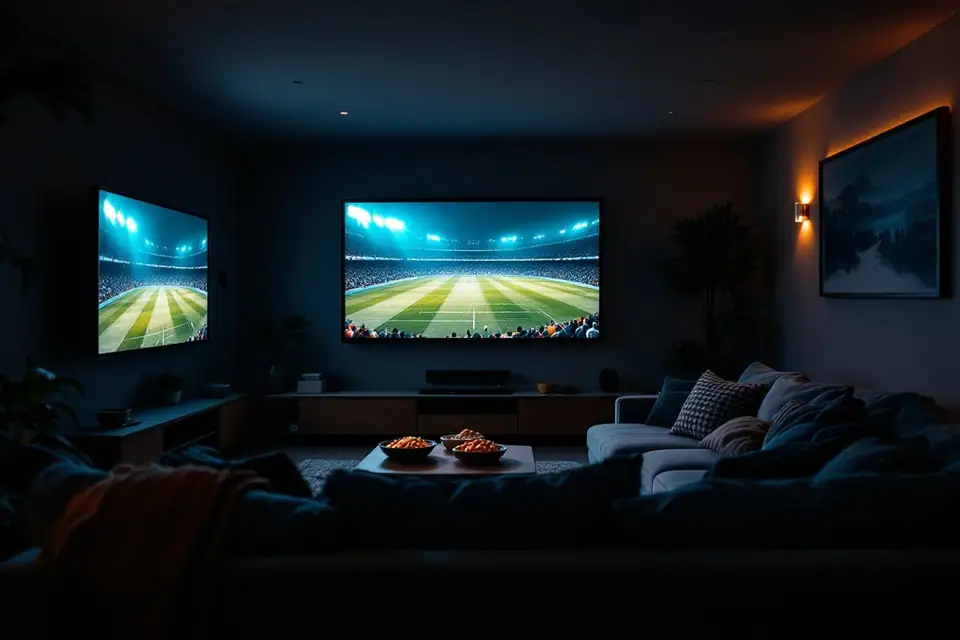
The basement room is where most games actually get watched, and this photograph shows what it borrows from the bar. The sectional wraps around so every seat faces the screen, the lights are low and warm, and the television hangs close to seated eye height instead of up over a fireplace. Basements make good viewing rooms almost by accident. Few windows means little glare, carpet and concrete keep the noise from travelling upstairs, and nobody minds a shout at midnight in overtime. A bar fridge in the corner saves a dozen trips up the stairs during commercials. The lessons from the public rooms still apply. Put the best seat square to the centre of the screen. Keep a low table within reach of every cushion, because people set plates down on whatever is closest. When you're trying to hear the commentators over a room of friends, clear dialogue matters more than booming bass, so a sound bar with a proper centre channel earns its place. A soft light behind the screen makes a long night easier on the eyes. The full plan, from screen size to seating distance, is in our guide to building a home viewing room.
Where the game starts
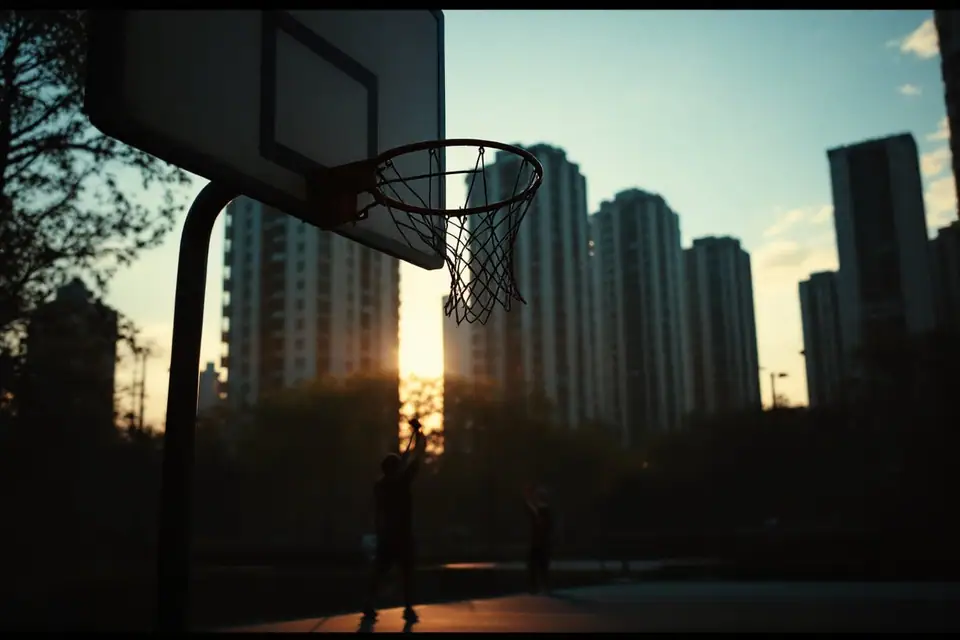
Every room on this page is, in the end, built around a game that started somewhere like this. A public court in the city at golden hour: chain nets, painted lines worn pale at the free throw line, a fence along two sides and apartment windows looking down from the others. No screens, no taps, no booths, and still the sightlines are perfect, because the spectators lean on the fence a few steps from the play. Pickup basketball has its own etiquette. Winners stay on, players call their own fouls, and whoever claims "next" gets to pick a team for the following game. Most people who watch the professional game closely have played some version of this one, and it changes how they see a broadcast. They notice the cut away from the ball, the screen that never got set, the defender who gave up on the play. They also know how a made shot sounds through a chain net, which no broadcast quite captures. The best watching spaces try to recover a little of this court. They put people close to the action and close to each other, and they make room for the noise.
What the eight rooms agree on
Look back across the eight photographs and the same few rules keep turning up. Put the screen where every seat can see it without turning. Control the light, because glare ruins a picture faster than a small screen does. Decide which sound matters and make sure it carries, whether that's the play-by-play or the room itself. Keep the food close, and choose food that survives the walk from the stove. Leave room for people to stand up when the shot goes in, and a little more room for the ones who stay standing through the last two minutes. None of it needs a commercial fit-out or a contractor. A basement, a patio or a borrowed living room can follow the same rules, and the first one costs nothing. Turn the couch to face the screen square, then move the lamp that's reflecting in the glass.
Last updated