Alcohol-Free Beer Has Gotten Good: What to Pour on Game Night
How non-alcoholic beer is made, which styles taste closest to the real thing, and how to host a long game where nobody feels left out.
By Luis Ferreira9 min read
When I started tending bar, the alcohol-free option was one dusty brand of bottled lager at the back of the cooler. People who ordered it did so quietly, and they usually got it handed over in the bottle with no glass, as if it didn't deserve one. By the end of my time pouring, I had a non-alcoholic IPA on draught that regulars ordered on purpose, and a fridge with five or six alcohol-free options that turned over every week.
The change is real. Brewers learned how to make these beers well, and drinkers started asking for them: designated drivers, people training for a race, people on medication, people with an early shift, people who simply want to remember the overtime period. If you host games or spend long nights watching them, it helps to know what is good and why.
How alcohol-free beer is made
There are two broad approaches. You can brew a normal beer and take the alcohol out, or you can brew so that very little alcohol forms in the first place. Plenty of brewers now combine the two.
Taking the alcohol out
The most common removal method is vacuum distillation. Alcohol boils at a lower temperature than water, and under a vacuum both boil at far lower temperatures than they would in an open kettle. That lets a brewer draw the alcohol out of finished beer gently, closer to the warmth of a bath than a rolling boil, without cooking it. The catch is that aroma compounds are delicate and volatile too, so some flavour leaves along with the alcohol. Better systems capture those aromas and blend them back in.
The other route uses membranes, with reverse osmosis the best known. The beer is pushed under pressure against an extremely fine membrane. Water and alcohol pass through, while the larger flavour and colour molecules stay behind as a concentrate. Water without the alcohol is then added back to rebuild the beer. The process runs cold, which is kind to flavour, but the equipment is expensive and slow.
Brewing so less alcohol forms
Yeast makes alcohol by eating sugar. Give it less to eat, or stop it early, and you get less alcohol. That is the idea behind limited fermentation. Brewers can mash at higher temperatures to make a wort full of sugars that yeast struggles to ferment, or chill the beer and pull the yeast out before fermentation gets far.
Special yeasts take the same idea further. Some strains cannot ferment maltose, the main sugar in beer wort. They eat the simpler sugars, make a little alcohol and some flavour, then stop on their own. Brewers have been doing a lot of interesting work with these strains in recent years.
The weakness of the brewing-side methods is leftover sugar. Too much of it and the beer tastes "worty", a raw, cereal sweetness that reminds you of a brewhouse on mash day. Good brewers balance it with hops, acidity or roasted malt.
One more thing all methods share: alcohol helps protect beer from spoilage, so alcohol-free beer is more vulnerable once it leaves the brewery. Many are pasteurized for that reason. It is also why you should treat them more like fresh food than like a bottle you can forget in the garage.
What the labels generally mean
The terms overlap and the rules differ by country, so take this as the general picture in Canada and the US rather than legal advice.
- Non-alcoholic: commonly means 0.5 percent ABV or less. That is a small amount, but it is not zero.
- Alcohol-free, or 0.0: usually used for products with no detectable alcohol, or very close to it. How strictly the term is defined depends on where the can was made and sold.
- De-alcoholized: describes the method (the alcohol was removed), and the result is typically at or under 0.5 percent.
- Low alcohol: above the non-alcoholic line but well below a regular beer, often a couple of percent. These are not alcohol-free and shouldn't be handed out as if they were.
For most people, 0.5 percent changes nothing about their night. For someone who is pregnant, on certain medications or not drinking for recovery reasons, the difference between 0.5 and 0.0 may matter, and that decision belongs to them. Read the number on the can, not just the word.
Styles that work, and one that struggles
Some styles have places to hide. Some don't. (If the full-strength versions are new to you, the guide to beer styles on game day covers what each one is supposed to taste like.)
IPA is the category's big success. Hops carry a huge amount of aroma, and brewers can add them after the alcohol comes out, so the nose stays bright even when the body is a little lighter. Non-alcoholic IPAs tend to be gentler on bitterness than full-strength ones, which makes them easy to drink with food.
Wheat beer translates well too. Wheat and oats give the beer body that alcohol would otherwise help provide, and the banana and clove of a hefeweizen come from the yeast, so a good one tastes like itself at almost any strength.
Stouts and porters might be the best of the lot. Roasted malt is loud: coffee, cocoa, burnt toast. It covers the slight thinness that alcohol removal can leave, and a bit of leftover sweetness reads as rich in a stout rather than unfinished.
Sours and fruited beers do well for a similar reason. Acidity gives the beer a frame and a clean finish, a job alcohol usually shares.
Light lager is the hard one. A pale, delicate lager has nothing to hide behind. Any thinness, any worty sweetness, any cooked note from processing shows up straight away. There are good ones, and they keep getting better, but if your first non-alcoholic beer was a light lager and it put you off, try an IPA or a stout before writing off the whole category.
Freshness and serving
Treat alcohol-free beer like a fresh hoppy beer. Check the date on the can, buy from a store that keeps it cold if you can, and keep it in the fridge at home. Without alcohol to help, flavour fades faster, and hop aroma is the first thing to go.
Serve it the way you would serve the full-strength version. That means a proper glass, not straight from the can. Pour with a good head of foam. These beers can be a little thinner, and the foam carries the aroma that does a lot of the work. Lager styles go cold, about 38 to 45°F (3 to 7°C). Stouts are better a few degrees warmer so the roast can open up.
A long game, round by round
Alternating full-strength and alcohol-free rounds over a long night is common now, and it works. Some people call it zebra striping. Here is how a three-hour game can look for someone who wants to drink some, but not a lot.
| When | What's in the glass | Why |
|---|---|---|
| Pre-game, with food | A full-strength helles or pilsner | Something you really want, on a full stomach |
| First quarter | Water, then an alcohol-free IPA | Sets an easy pace while the game settles |
| Second quarter | Alcohol-free wheat beer | A beer in hand without the numbers adding up |
| Halftime | One full-strength beer you've been looking forward to | Make it a moment, not a habit |
| Third quarter | Alcohol-free stout | Flavour and body without stacking drinks |
| Fourth quarter and overtime | Alcohol-free, plus water | You're driving, or you're up early |
Not everyone needs a plan like this. But in the rooms I worked, the people who seemed happiest at the end of a long playoff night were rarely the ones who drank the most. They were the ones who could still tell you exactly how the last four minutes went.
Hosting so non-drinkers feel included
This is the part that matters most if the game is at your place. A guest who isn't drinking, for whatever reason, should never have to ask twice, explain themselves or hunt around for something to hold.
- Put the alcohol-free options in the same cooler as everything else, at the same temperature, not on a corner of the kitchen counter.
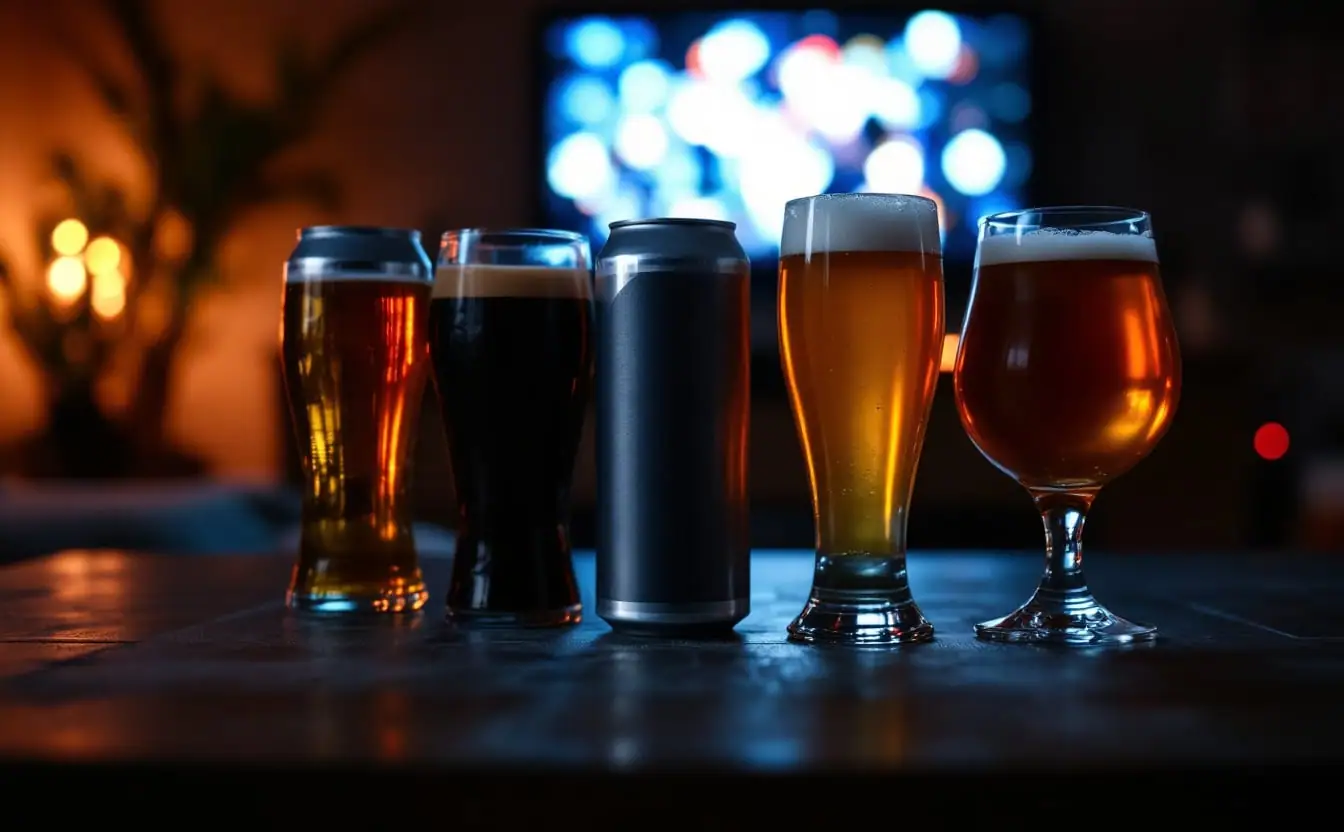
- Buy more than one kind. Give people the same choice you would with regular beer: an IPA, a stout, a lager, plus a couple of good sodas.
- Use the same glasses for everyone. It is a small thing that does a lot for how included someone feels.
- Don't ask why someone isn't drinking, and don't announce it to the room. "What can I get you?" covers everything.
- Don't push beer-flavoured drinks on anyone. Some people who don't drink for recovery reasons prefer to skip them entirely, so have options that taste nothing like beer.
- Feed people properly. A table of real food makes everyone more comfortable, drinking or not.
The watch party planning checklist has the rest of the host's to-do list, and the beer and bar food pairing guide covers which alcohol-free drinks to put next to wings and burgers.
Beyond beer
Sodas
A good ginger beer has real bite and stands up to hot wings. Root beer and cream soda are surprisingly good with barbecue. Craft sodas with less sugar and more actual flavour (grapefruit, blood orange, a cola with some spice) are worth a spot in the cooler.
Shrubs
A shrub is a drinking vinegar: fruit, sugar and vinegar, left to mingle and then topped with soda water. It is tart, refreshing and grown-up in a way most sodas aren't. A simple cold-process version:
- Combine 250 g (about 9 oz) of chopped fruit (berries, peaches, plums or rhubarb) with 250 g (about 9 oz) of sugar in a jar. Stir, cover and refrigerate for a day or two, until the sugar has pulled a syrup out of the fruit.
- Strain out the fruit, pressing gently. Stir 250 ml (about 1 cup) of apple cider vinegar into the syrup.
- Bottle it and keep it in the fridge. It lasts for weeks, and the sharpness mellows as it sits.
- To serve, pour about 30 ml (1 oz) over ice and top with 150 to 180 ml (5 to 6 oz) of soda water.
Spritzers
The easiest option of all: a splash of juice and plenty of soda water over ice. Cranberry and lime, grapefruit with a pinch of salt, or apple with a sprig of rosemary. They take thirty seconds, look good in a tall glass and are light enough to drink all night.
A note on kombucha
Kombucha is a popular choice, but because it is fermented it can carry trace alcohol, and the amount can creep up if bottles sit warm. It is fine for most guests and not the right pick for anyone who needs to avoid alcohol completely.
On a game night now, my own fridge holds a six-pack of non-alcoholic IPA next to the lager, a few cans of alcohol-free stout for the second half and a jar of rhubarb shrub on the door. More often than not, the alcohol-free shelf is the first one to empty.