Does Beer Go Bad? How Long Beer Lasts and How to Store It
Beer rarely turns dangerous, but it does go stale. How long each style lasts, what skunky and cardboard flavours mean, and how to store beer properly.
By Rafael Antunes10 min read
Every few months somebody would walk up to the bar with a dusty six-pack found at the back of a cottage fridge, set it down and ask me if it was still okay. Does beer go bad? Yes and no. Sealed beer almost never turns into something dangerous. What it does, quickly or slowly depending on the style and how it was kept, is go stale: hop aroma fades, malt turns papery, and the beer stops tasting the way the brewer meant it to.
So the useful question is how long beer lasts before it isn't worth drinking, and that comes down to three things: the style, the package and the temperature.
Does beer go bad, or just stale?
Commercial beer is an unfriendly home for the microbes that make food unsafe. It has been boiled, it contains alcohol and hop compounds, it is fairly acidic, and much of it is filtered or pasteurized before sealing. That is why old beer is usually just stale, not dangerous.
Stale is still a real problem, though, and three processes do nearly all the damage.
What happens to beer as it ages
Oxidation: the wet cardboard flavour
A tiny amount of oxygen gets into every can and bottle at packaging, and a little more creeps past a bottle cap over the months. That oxygen reacts slowly with compounds from the malt and hops. In pale beers, the classic result is a flavour brewers call papery or wet cardboard, along with a dull sweetness and a colour a shade darker than it should be. In dark, strong beers, oxidation shows up more as honey, toffee, dried fruit or sherry. That difference is why some barleywines get better in a cellar and no pilsner ever has.
Light strike: why beer gets skunked
Skunked beer has nothing to do with temperature. It is caused by light. When ultraviolet and blue light hit beer, they break apart the bitter compounds that come from hops, and the fragments react to form a sulphur compound closely related to the one in a skunk's spray. You don't need much of it to notice.
Brown glass blocks most of the damaging light. Green glass blocks some. Clear glass blocks almost none, which is why a beer in a clear bottle on a sunny patio table can turn before you have finished drinking it. A few mass-market beers in clear bottles use modified hop extracts that don't react this way; most craft beer doesn't. Bright cooler lights in a store can skunk beer too, just more slowly. Cans and kegs let in no light at all.
Hop fade: why IPAs don't keep
The citrus, pine, tropical fruit and resin you smell in a good IPA come from hop oils, some of the most fragile flavours in beer. They start fading the day the beer is packaged. A hazy IPA at three months can taste like a duller, muddier cousin of itself at three weeks, and the bitterness can turn harsh once the aroma is gone. That is why so many hop-focused breweries print a canned-on date and why I always check it before I buy.
The rare one: spoilage
Occasionally beer does spoil in the microbial sense, usually because of a packaging fault or a problem at the brewery. Signs include a cold, unshaken beer that gushes when opened, a sour or vinegar smell in a style that isn't meant to be sour, a ropy or slimy texture, or a film or haze in a beer that should be clear. Don't confuse this with normal sediment: bottle-conditioned beers carry a layer of yeast at the bottom, and many wheat beers are cloudy on purpose.
When to throw it out
Old beer that just tastes tired is a judgement call. These are not:
- The can or bottle is leaking, or there is sticky residue around the seam or the cap.
- A can is bulging, or its ends are domed outward.
- The beer smells sour, vinegary or rotten in a style that shouldn't.
- There is heavy rust on a can seam or under a cap.
- It gushes on opening while cold and unshaken, and the smell is off.
If any of those apply, pour it down the drain without tasting it. No beer is worth a gamble.
How long does beer last?
Most packaged beer carries a best-before date set by the brewer, typically somewhere between a few months and about a year after packaging. That date is about flavour, not safety. As a rough guide:
- Hop-forward beers (IPAs, pale ales, hazy beers) are at their best in the first month or two, and many are noticeably duller by three months.
- Mainstream lagers and other balanced styles hold up for several months kept cold, and longer if they are pasteurized and stored in the dark.
- Strong, dark, malty beers and traditional sours can keep for years, and some change in interesting ways.
If a style name means nothing to you, the beer styles guide for game day explains each family.
Best before dates on beer
Breweries print dates in a few different ways. Some use "best before" or "best by" and a date. Some use "packaged on" or "canned on". Some print a code, often a run of digits where part is the year and part is the day of the year, stamped on the bottom of the can or the neck of the bottle. For anything hoppy, a packaged-on date is the more useful of the two, because it tells you exactly how old the beer is.
A best-before date is the brewer's estimate of how long the beer will taste the way it should. It is not an expiry date in the way a carton of milk has one.
How long beer lasts, by style
These are my own rules of thumb from ten years of rotating stock and checking dates. They assume sealed beer stored cold and dark. Warm storage shortens every one of them.
| Style | Best within (from packaging) | Keeps longer? | What age does to it |
|---|---|---|---|
| Hazy or New England IPA | About 1 month | No | Aroma fades fast; turns muddy and harsh |
| West Coast IPA, double IPA, pale ale | 1-3 months | No | Hop aroma fades, bitterness goes dull |
| Wheat beer (hefeweizen, witbier) | 2-4 months | No | Banana, clove and spice notes fade |
| Pilsner, helles, light lager | 3-6 months | No | Turns papery and sweetish |
| Amber, brown ale, porter, standard stout | 4-6 months | A little | Roast and caramel soften |
| Fruit beers, kettle sours | 3-6 months | No | Fruit character fades first |
| Belgian tripel and dubbel | 6-12 months | Somewhat | Spicy yeast character mellows |
| Barleywine, imperial stout, old ale | Years | Yes | Sherry, toffee and dried fruit develop |
| Belgian quad, strong dark ale | Years | Yes | Dark fruit and caramel deepen |
| Lambic, gueuze, aged sours | Years | Yes | Sourness and funk keep developing |
| Alcohol-free beer | Well inside the date | No | Goes flat and stale; freshness matters more |
Which beers age well
Beers worth putting away tend to share a few traits: plenty of alcohol (often 8 percent or more), a lot of malt, dark colour or a mixed-fermentation sourness, and often live yeast in the bottle. Barleywines, imperial stouts, old ales, Belgian quads and traditional lambic and gueuze are the classic candidates. Over a year or more, alcohol heat smooths out, bitterness drops away, and slow oxidation brings out toffee and dried fruit.
If you want to try it, buy two of the same bottle, drink one now and put the other away. Store them upright, in the dark, somewhere steady and cool, ideally 50 to 55°F (10 to 13°C). A basement corner works. A garage that swings from freezing to hot doesn't. Those big cellar beers are also the heaviest ones in the fridge, and the beer calorie calculator shows how far an imperial stout sits from a pilsner of the same size.
Everything else should be drunk fresh: nothing hoppy, nothing light, nothing with fruit in it. That goes double for alcohol-free beer, which has no alcohol to help it hold up and is best well inside its date. There is more on picking good ones in the guide to alcohol-free beer for game night.
Cans vs bottles
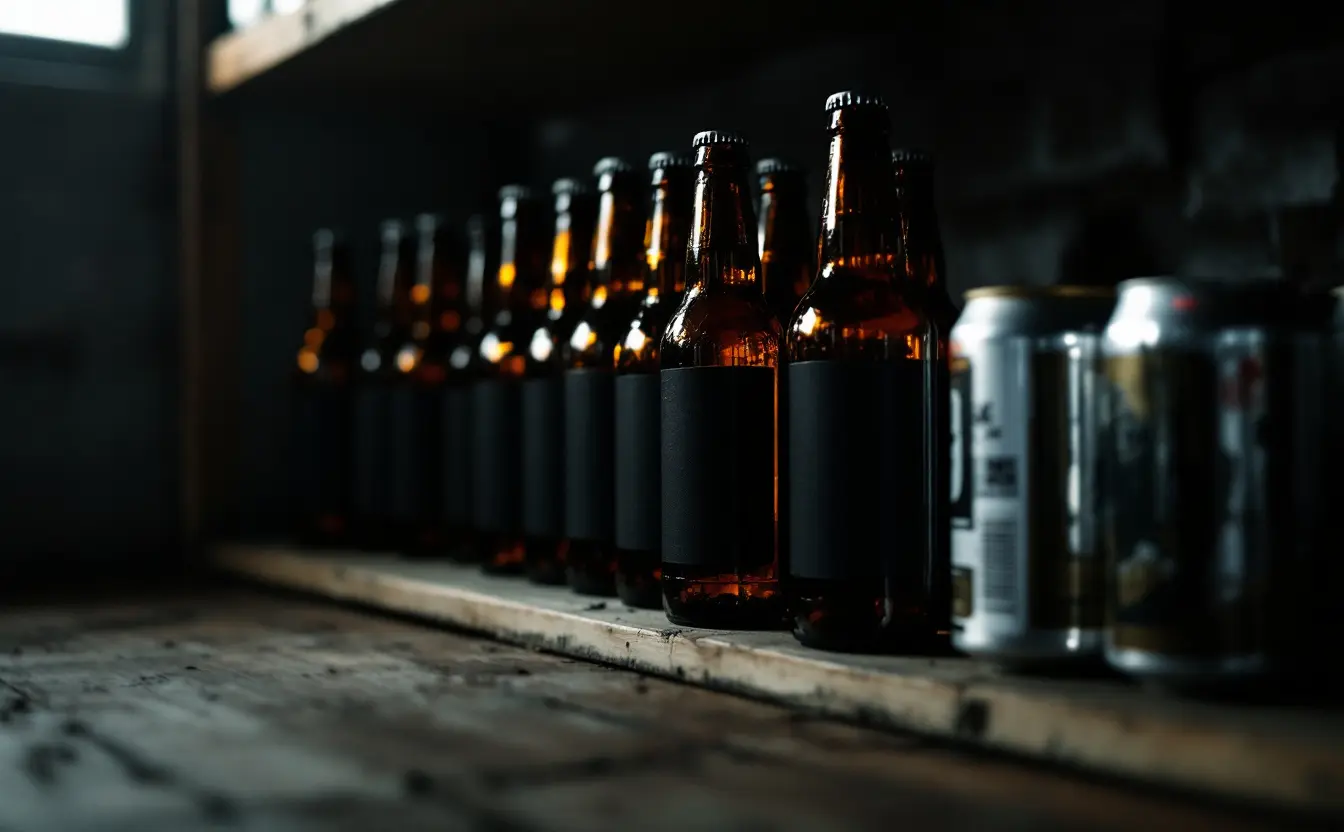
For keeping beer fresh, cans win. They block all light, so canned beer can't get skunked, and a well-sealed can lets in less oxygen over time than a crown cap. The old complaint about cans making beer taste metallic doesn't hold up: modern cans have a thin liner, and the beer never touches the aluminum. If you taste metal, it is probably your nose against the lid. Pour it into a glass.
Bottles still suit beers meant to age and bottle-conditioned beer with live yeast. Brown bottles protect well against light; keep green and clear ones in the box until they go into the fridge.
Dented cans are fine if the seam is intact and there is no leak or bulge.
How to store beer
Temperature is the biggest single factor. Cold slows every staling reaction and heat speeds them all up. An old rule of thumb in the brewing trade puts it this way: three days at 90°F (32°C) does about as much damage as 30 days at 72°F (22°C) or 300 days at 38°F (3°C). It isn't precise, but it is close enough to change how you shop.
- Keep beer cold if you can, in the fridge or a cool basement, and anything hoppy in the fridge, full stop.
- Keep it dark. Leave bottles in the case until you need them.
- Store it upright, so the yeast settles at the bottom and less beer sits against the cap.
- Keep it away from heat: a car in July, a sunny windowsill, the top of the fridge, a summer garage.
- Don't freeze it. Beer expands as it freezes, so bottles crack and cans bulge or split. If you put a few in the freezer for a quick chill before tip-off, set a timer.
Fridge or room temperature?
A stubborn myth says that once beer has been cold, letting it warm up again ruins it. It doesn't. A case that warms up on the drive home and goes back in the fridge is fine. What matters is the total time spent warm: a few weeks at room temperature won't hurt most beer much, but months in a warm cupboard will, and hoppy beer suffers first.
Draught lines, growlers and opened beer
On tap, beer is only as good as the system it runs through. A keg kept cold and pushed with carbon dioxide (not air) stays in good shape for weeks after tapping, but yeast, bacteria and beer stone build up inside the lines, and the standard advice in the trade is to clean them every couple of weeks. Dirty lines give beer a buttery, sour or vinegary edge. When I was behind the bar, one off pour was the signal to check the lines before blaming the brewery.
At home, a party pump (the hand pump that pushes air into a keg) lets oxygen in, so plan to finish that keg the same day. A sealed growler or crowler keeps a few days in the fridge. Once it is open, it is a same-day beer, and so is an opened can or bottle; recapping slows the loss of fizz but won't save it overnight.
FAQ
Does beer expire?
Not in the way milk does. The date on beer is a best-before date for flavour. Sealed beer past that date is usually stale rather than unsafe, but it won't taste the way the brewer intended, and hoppy beers fade fastest.
Can you drink expired beer?
Usually, if the package is intact, though it may taste flat or papery. Pour it into a glass and smell it first. If the can or bottle is leaking or bulging, or the beer smells sour when it shouldn't, throw it out.
How long does beer last in the fridge?
Sealed and cold, most beers keep their flavour for several months, though hoppy beers are still best within a month or two of packaging. Once opened, finish it the same day.
Does beer go bad if it gets warm after being cold?
No, that is a myth. A warm spell won't skunk or ruin beer. Months somewhere warm speed up staling, and skunking comes from light, not temperature.
What does skunked beer taste like?
It mostly smells like a skunk or burnt rubber, and that carries into the taste. It comes from light reacting with hop compounds, usually in clear or green bottles. It is a flavour fault rather than spoilage, and it doesn't go away.