What the First Two Weeks of an NBA Season Can and Can't Tell You
A hot start is fun and mostly noise. Here is what to watch in the opening weeks instead: rotations, shot diet, defensive schemes and pace.
By Marlon Forde8 min read
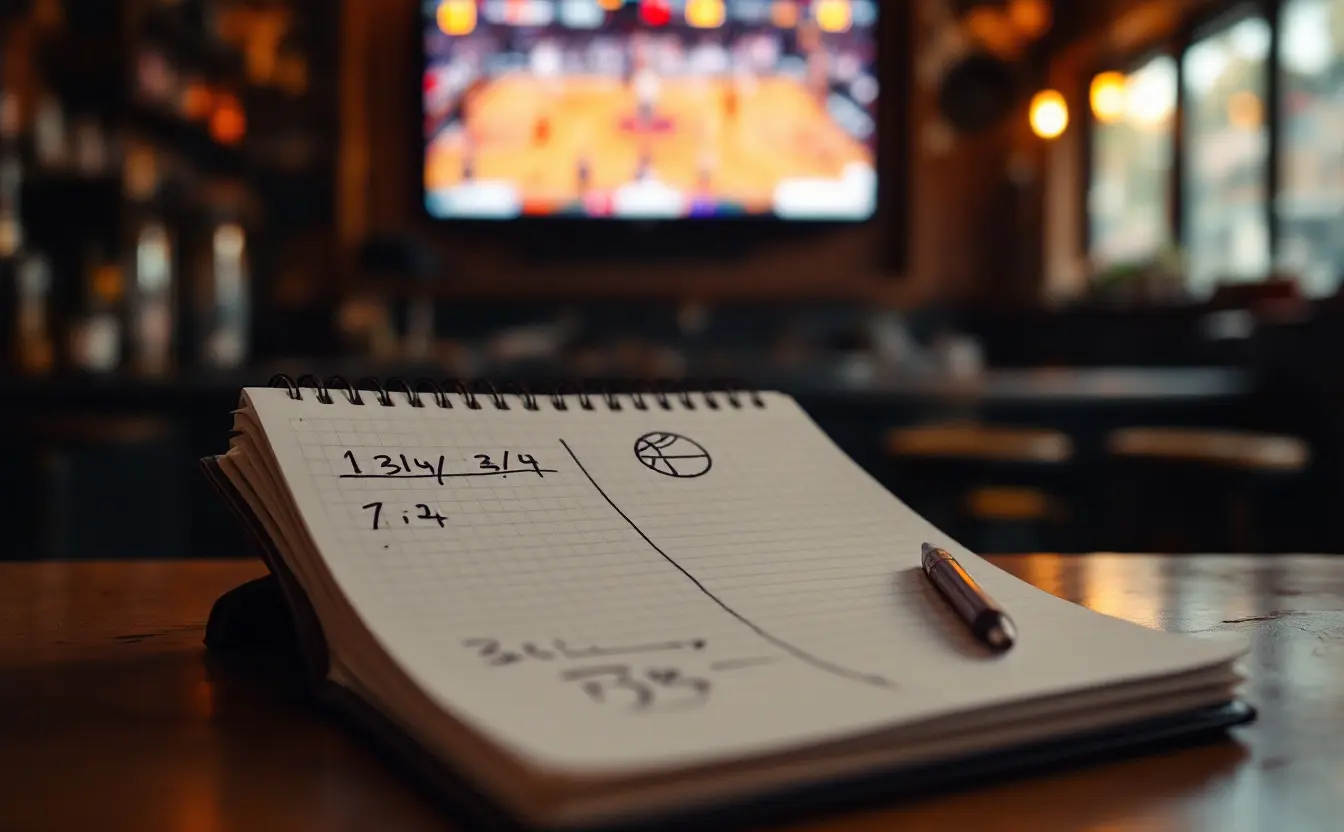
Every October, somebody on the next stool tells me his team is going to win 60 games. He has evidence. They are 4-1, the new wing has made half his threes, and the team everyone picked to finish first has lost three in a row. I nod, because it is October and hope costs nothing, and I write the date at the top of a clean page in my notebook.
The first two weeks of an NBA season are the most over-read stretch of the year. A team plays somewhere around six to eight games in that time, less than a tenth of an 82-game schedule. A couple of late free throws can flip a record. One warm week can make a shooter look like a different player. But the opening fortnight is not useless, either. Some of what you see in those games is real from the first night and tends to stay real. The skill is sorting one pile from the other.
Start with the arithmetic
Arithmetic is the cheapest cure for October fever, so begin there.
Take a wing who has made 36 percent of his threes over his career and gets up six a game. Five games in, he has taken 30. If he is still the same shooter, the most likely outcome is that he has made about 11. But 15 makes, which is half, sits well inside the normal wobble of 30 shots. So does seven makes, which would have the radio callers asking what happened to his stroke. Flip a fair coin 30 times and you will land 18 or more heads more often than you would guess. Nobody decides the coin has changed.
Now spread that across the league. Thirty teams, several shooters each, a few dozen attempts apiece. By pure chance some of them will run hot for two weeks and some cold, and the hot ones get the highlight package and the talk-radio segment. When the shots start falling at their usual rate again, people say the player has come back to earth, as though he had been somewhere.
Records wobble even faster than percentages. Plenty of early games come down to a possession or two, and those games behave a lot like coin flips. A team that has won four games by three points or fewer is not necessarily good at winning close games. Over a full season, records in tight games have a strong habit of drifting back toward even. Point differential, the gap between points scored and points allowed, says more than the win column does. After five games even that is shaky, but it is shaky in a more honest way.
What is real on the first night
The things worth trusting early are the ones a coach chooses. They do not need a big sample, because nobody rolled dice to get them.
The rotation
How a coach spends minutes tells you more than anything he says at the podium. Who starts matters less than who closes: write down the five players on the floor for the last five minutes of a close game. That is the lineup the coach trusts, and it usually holds.
Count how many players get real minutes, too. Most teams go nine or ten deep in the first weeks and tighten from there. A rookie who plays in a tight fourth quarter in week one has earned something. A veteran who started last spring and now sits through a whole game with a healthy body is news, even if nobody announces it. The box score lists it as a coach's decision, and that is exactly what it is.
Injuries scramble all of this, so note who is missing before you draw a conclusion. A backup scoring 20 because the starter ahead of him is hurt has shown you an opportunity, not a promotion.
The shot diet
Where a team takes its shots from is mostly a choice. Whether they go in is mostly luck, in the short run. That split is the most useful idea I know for October.
Sort shots into four bins: at the rim, mid-range, three-pointers, and trips to the free-throw line. A team that lived on long twos last season and is now getting to the basket and into the corners has changed how it plays, and that shows up in the attempts long before the percentages settle down. The corner three is the shot to watch for here, since teams that build their offence to reach it tend to keep reaching it. How often a team gets to each spot steadies far sooner than how often it scores from there.
Getting to the free-throw line counts as a skill, too. A guard who draws contact on every drive in week one is probably not doing it by accident.
The defensive scheme
You can see a defence's plan in the first quarter of the first game. Look at the big man's feet on the opening pick-and-roll: sitting back in the paint, up at the level of the screen, or switching onto the guard. A new coach or a new starting centre often means a new coverage, and it will not take long to see whether it suits the roster.
Watch how a team treats the other side's best scorer as well. Does a second defender come at him every time he catches the ball near the elbow, or do they leave him to one man and stay home on the shooters? Those decisions get made in a film room in September, and they hold until something forces a change.
Pace
How fast a team plays is close to a pure choice, and it is one of the first things to settle. A team that wants to run will run in its first game. Watch what happens after a defensive rebound. Does the ball cross half court in three or four seconds, or does the point guard walk it up and look to the bench for a play call? Watch after made baskets, too, because the teams that really mean it push even when the other side has had time to get back.
If you want a rough number, tally one team's possessions over a single quarter. In the modern game it usually lands somewhere in the mid-twenties. A team well above that is running on purpose.
What is mostly noise
A short list for the napkin:
- Three-point percentage, for a team or a player, over a handful of games.
- The opponent's three-point percentage. A defence has a lot of say over how many threes it gives up and how open they are, and far less over whether they drop.
- Free-throw percentage over a couple of weeks.
- The record, especially when most of the wins or losses were close.
- The word "clutch" after one late shot.
- A scoring average built on minutes that only exist because of an injury.
None of these are meaningless. They are just too young to read.
The grey area
Some early signs might be real, but I want about a month before I trust them.
A young player who has added a jump shot over the summer is the classic case. Do not judge it by makes. Judge it by whether he takes the shot without hesitating, and whether the defender on him has started closing out harder. Defenders tend to respect a new shot before the percentages prove anything.
A new pairing of stars is another. Two players who both need the ball often look clumsy together early, then figure it out, or do not. Two weeks is too soon for a verdict either way. Watch who has the ball in the last two minutes of close games, because that is where the pecking order gets settled.
Defensive effort belongs here as well. Every team says in training camp that it will defend. The rotations on the second night of a back-to-back show whether it meant it.
A worked example
Here is how I would read two made-up teams after two weeks.
The first is 5-1. It has made a hot share of its threes, its opponents have missed a lot of open ones, and four of the five wins came down to the last possession. Its shot chart looks like last season's: plenty of long twos, not many trips to the line. The coach is still using eleven players and changing his closing group every night.
The second is 2-4. Three of its losses were by three points or fewer. It has shot poorly from deep, and opponents have made more of their open threes than anyone would expect. But the shot chart has changed: more attempts at the rim, more corner threes, more free throws. The coach has tightened to nine players, with the same five on the floor at the end of every close game, and the new centre is switching screens the way he was signed to do.
The standings say the first team is better. Everything I can actually see says the second one is. If I had to guess which team will be higher in the table by the new year, I would take the 2-4 team without much thought. The only thing the first team has done better is get lucky, and luck does not pack for the next road trip.
How to watch the early games
You do not need a spreadsheet. A page per game is plenty:
- Write down the five who start and the five who finish.
- Note the coverage on the first pick-and-roll of each half.
- For one quarter, tally shots into the four bins: rim, mid-range, three, free throws.
- For the same quarter, count one team's possessions.
- Ignore the score until the fourth quarter. It will still be there.
There are more habits like these in my piece on reading a game from a bar stool, and they work as well in October as they do in May.
Then put the page away. Take it out again near the end of November, when teams have played something closer to 20 games, and check what held. In my experience the record from the first two weeks is where I was most often wrong, and the rotations, the shot charts and the coverages are where I was usually right. The man on the next stool will have a new theory by then, and his team will probably be sitting about where everyone thought it would be in September.