Wing Nights and Jug Specials: How Sports Bar Promotions Actually Work
Cheap wings on a Wednesday are not generosity. A former floor manager explains the math, the fine print and what a promo board really tells you.
By Colin MacAulay9 min read
The first time I was asked to build a weekly promotions calendar for a restaurant, I treated it as a menu problem. I listed what sold well, what was cheap to produce and what the kitchen could push out quickly, then started matching dishes to nights. The owner, who had been running rooms for twenty years longer than I had, listened to the whole pitch and then asked me which night I was trying to fix.
That question is most of what you need to know about bar promotions. A wing night or a jug special is not a gift, and it is not really about the food. It is a tool for moving people from the nights they would come anyway to the nights they would not. Once you look at it that way, the chalkboard by the door reads less like a menu and more like a diagnosis.
The shape of a sports bar week
A sports bar has a lopsided week. Friday and Saturday mostly take care of themselves. Sunday has football for a good chunk of the year. Thursday fills up as people start leaning into the weekend. Monday to Wednesday, unless a local team is playing, the room can feel like an airport gate at midnight: a few people, a lot of screens, staff polishing things that are already clean.
The bills do not know what day it is. Rent is the same on a Tuesday as on a Saturday. The kitchen needs at least one cook on the line whether it sends out twelve plates or two hundred. The fryers heat up, the walk-in hums and the bartender is paid for the shift. A large share of what it costs to open the doors is fixed, so every extra table on a slow night chips away at overhead that would otherwise be pure loss.
That is why wing night lands on a Tuesday or a Wednesday and almost never on a Friday. Discounting a Friday hands margin to people who were already coming. Discounting a Wednesday gives a group of coworkers a reason to pick one place over going home, and if they have a good night, some of them come back on a Friday at full price.
Cheap wings, full glasses
Wing night is the textbook loss leader. Depending on what the supplier is charging that month, the discounted wings might break even, make a little, or lose money once you count the oil, the labour and the wet naps. Wholesale wing prices move around a lot, which is why a deal that was a fixed price per pound last spring might now be a different price, a smaller portion or gone altogether.
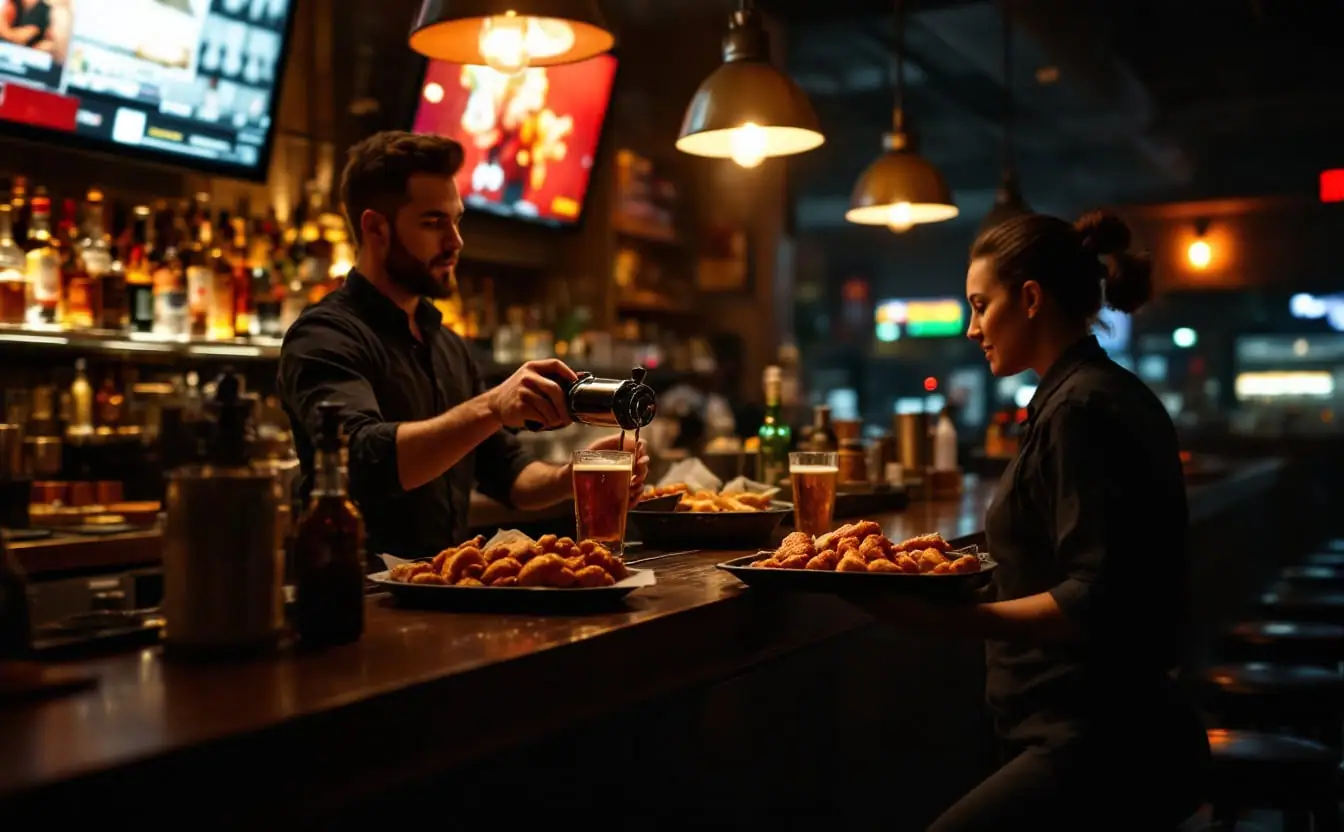
The plan rests on one simple fact: nobody eats a pound of hot wings without something to drink. The drinks carry the night. A pint of draught costs the house a modest fraction of what it sells for, pop costs even less, and neither one needs a cook. Add a basket of fries for the table, a second round, and someone ordering nachos because they are watching other people eat nachos, and the cheap wings have done their job.
This is where food cost percentages come in. Food cost is simply what the ingredients on a plate cost, divided by what the plate sells for. Operators often aim for a food cost of roughly a third of the menu price as a rule of thumb, sometimes a little under. If a burger sells for $18, a kitchen working to that rule wants the bun, patty, cheese, toppings and fries to come in somewhere near $6. The rest of the price pays for everything else: wages, rent, equipment, repairs, the dishwasher who keeps the whole place moving, and with luck a little profit.
Drinks generally run at a lower cost percentage than food, and they take seconds of labour instead of minutes. So a bar can let one item run at a terrible ratio on purpose, as long as the rest of the bill brings the night back into line. On wing night, the wings themselves blow straight through the one-third rule. The beer, the fries and the second round pull the average back down.
It also helps to know how much work sits behind a basket. Anyone who has tried cooking wings properly at home knows how much fryer time and attention one batch takes. Now picture a kitchen doing that for a full room on a Wednesday, at a price that barely covers the chicken.
The fine print, translated
Every promo board has small writing at the bottom. None of it is there to trick you. Each line is plugging a specific leak.
| What the board says | What it is protecting |
|---|---|
| With beverage purchase | The drink margin that makes the cheap food work |
| Dine-in only | The room, and the second round a takeout order never buys |
| Not valid with other offers | One plate that is already near cost from getting two discounts |
| Not valid on event nights | Seats that will fill at full price anyway |
| Minimum order of one pound | Kitchen time, since a small order takes nearly as long to cook |
| While supplies last | A fixed amount of product bought for the deal |
"With beverage purchase" usually means one drink per person or per order. At many places pop, iced tea or an alcohol-free beer counts, which is worth asking about if you are driving. The point is that you buy something with a healthy margin, not that you drink alcohol.
"Dine-in only" has two reasons behind it. Takeout wings never come with a second pint. And if the order goes through a delivery app, the commission can turn a thin margin into a loss on every box. There is a softer reason too: a full room on a Tuesday is its own advertisement. People walking past see a crowd through the window and come in. A stack of takeout bags by the host stand does not do that.
Event nights don't need a discount
On a slow night, the problem is empty chairs. On a big night, the problem is the opposite. A playoff game, the Super Bowl, the Grey Cup, a long Raptors run in the spring: the room fills without anyone touching a price. The question becomes how to make the most of a limited number of seats and a kitchen that is already at capacity.
So the specials vanish, and other things replace them. Reservations with a minimum spend per person. A cover charge at the door. A shorter menu the kitchen can fire quickly. Table time limits. Packages bought in advance that bundle food with a set number of drinks.
Customers sometimes take this personally, especially when the big game falls on wing night. It helps to look at it from the line. On a packed night the fryers are already running flat out. Selling the same wings at a discount to a room that would have bought them at full price means more work, longer ticket times for everyone and less money to pay the extra staff on the schedule. If you keep an eye on the sporting calendar, you can predict, almost to the week, when the Tuesday deal will quietly disappear.
Trivia, leagues and the slow build
Discounts are not the only way to fill a quiet night. Trivia is one of the most dependable. A good host costs money, but trivia brings in teams of four to six who sit for two hours, order in rounds and come back the next week to defend their spot on the leaderboard. Dart leagues, pool leagues, euchre nights and run clubs that finish at the bar all do the same thing. They turn a slow night into a standing appointment.
Loyalty programs try to bottle that habit. Punch cards, points apps and birthday rewards give regulars a small return and give them a reason to pick one place over the one next door. The rewards are usually modest compared with the spending it takes to earn them, and that is by design. The more valuable part, for the operator, is knowing who comes in and how often.
In my experience the strongest loyalty program in any bar is a bartender who remembers your order and asks how your kid's hockey tournament went. No app has beaten that yet. A lot of what keeps people coming back is the social life of the room, not the points.
The rules around drink deals
Food promotions are mostly a business decision. Drink promotions are also a legal one. In Canada alcohol is regulated province by province, and in the US state by state, and the rules differ a lot.
In Ontario, the Alcohol and Gaming Commission of Ontario (AGCO) sets minimum prices that licensed establishments must charge for drinks, along with rules on how drink promotions can be run and advertised. A bar there can lower its prices for a set window, which is what most people call happy hour, but it cannot go below the floor. Other provinces have their own minimums and their own wording. Many US states regulate drink pricing as well, and some restrict or ban time-limited drink discounts outright. Rules in many places also prohibit promotions that encourage heavy drinking, such as all-you-can-drink offers.
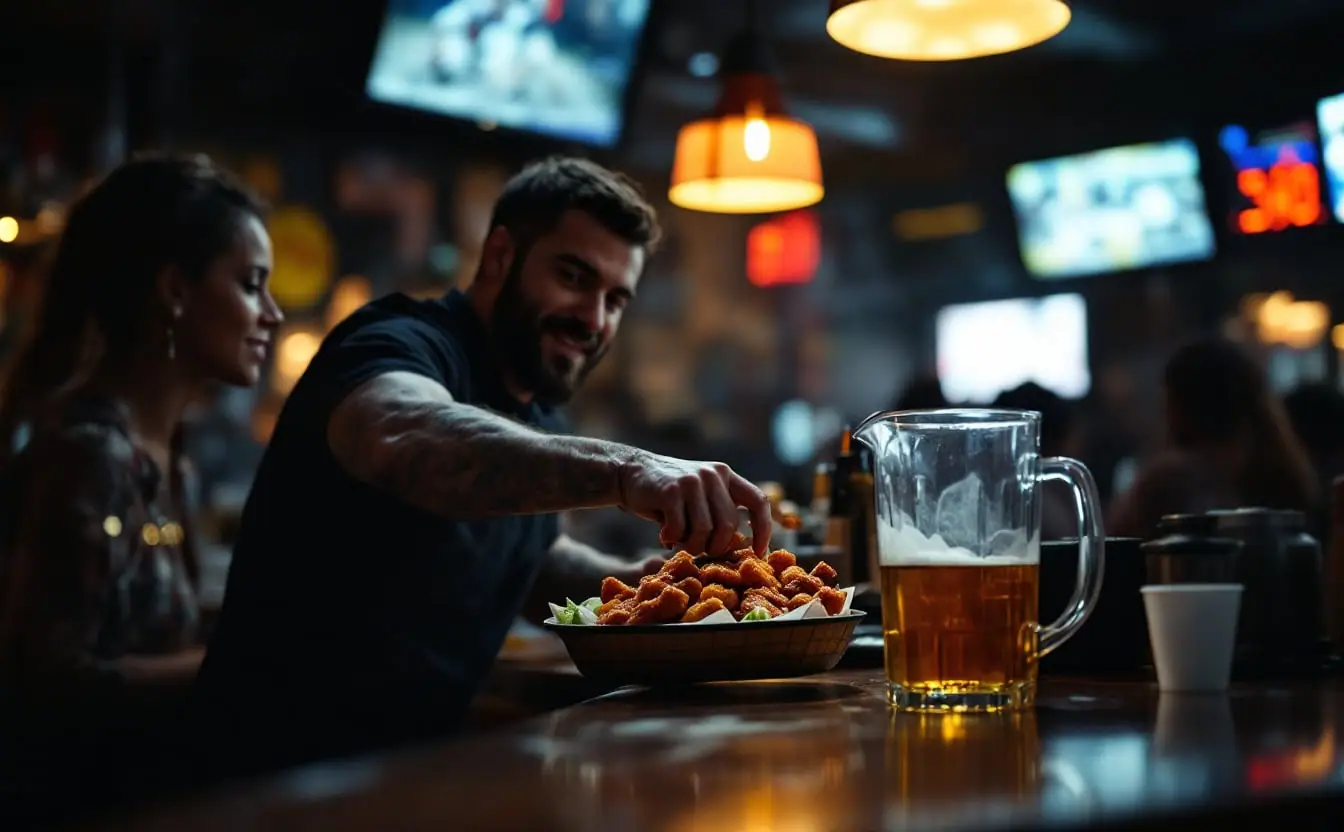
This is one more reason the headline deal on a board is almost always food. A jug special is about as far as many places go with beer: a pitcher of the house lager priced so that it works out a little cheaper per glass than buying pints one at a time. It rewards a table for sharing and moves a lot of one keg. That matters more than it sounds. A keg that empties in a week pours fresher beer than one that lingers in the cooler for a month.
How to read a promo board
Once you know the logic, a promo board tells you more than the price of wings.
The nights with deals are the slow nights. If you like a quieter room and a server with time to chat, go on one of them, or on a night with no deal at all, which is often the quietest of the week.
The featured item shows you what the kitchen can produce fast and in volume. Wings, tacos, burgers and pizza show up on promo boards because a small crew can cook them in batches. A place running a deal on a complicated plate either has a strong kitchen or a lot of one ingredient to move before it spoils.
A deal on every night of the week might mean a big room that is hard to fill, or a business working hard to bring people in. A place with no deals at all is often busy enough not to need them.
Faded writing tells its own story. Ask before you order, because specials change more often than the board does.
A full calendar of trivia, leagues and theme nights says the owner is trying to build regulars, not just one-time traffic. Those tend to be good rooms to watch a game in, because the people around you have been there before.
One last thing from the floor side
On wing night your server carries the same baskets, refills the same water glasses and wipes up the same sauce as on any other night, often for a bigger and hungrier crowd. The bill is smaller, but the work isn't. Take the deal, order the drink that makes the deal possible, and tip on what the meal would have cost on a Saturday.