Working Game Nights: What Sports Bar Jobs Are Really Like
Servers, barbacks, cooks and door staff: what sports bar jobs involve, what a playoff shift feels like and how tips, training and hiring work.
By Colin MacAulay9 min read
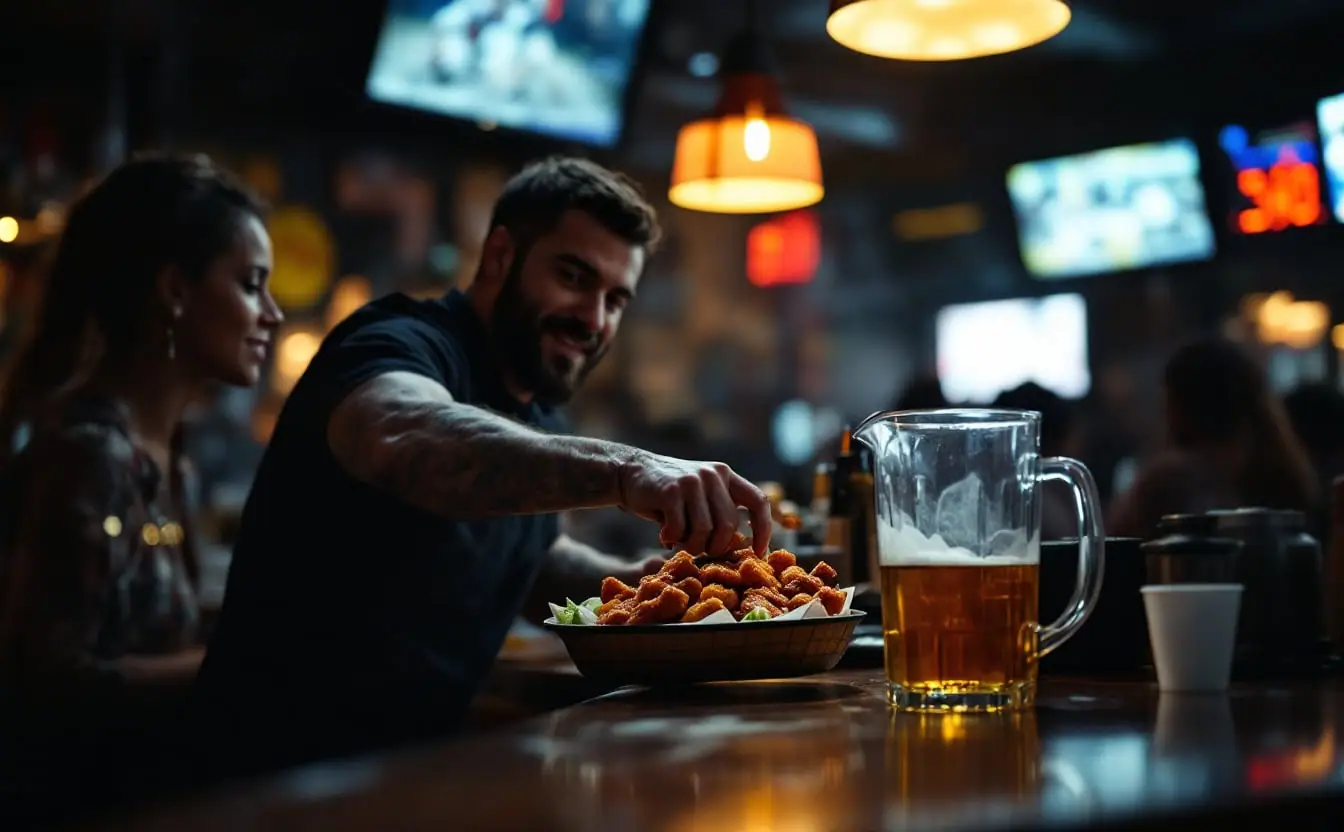
People who have never worked in a sports bar tend to picture the job as watching games with a tray in your hand. People who have worked in one know you see almost none of the game. You see the backs of heads, a ticket rail, a scoreboard reflected in a cooler door, and you follow the score mostly by the noise. When the room goes up, somebody scored. When it goes quiet all at once, the other team did.
I spent years running front-of-house in downtown restaurants, a few with more screens than tables, and these days I help small hospitality businesses with staffing. This is the work as it actually is: who does what, what a big night looks like from inside and how the money and the hiring work.
Who does what
Smaller places blend some of these roles together. Bigger ones split them further, adding food runners and bussers.
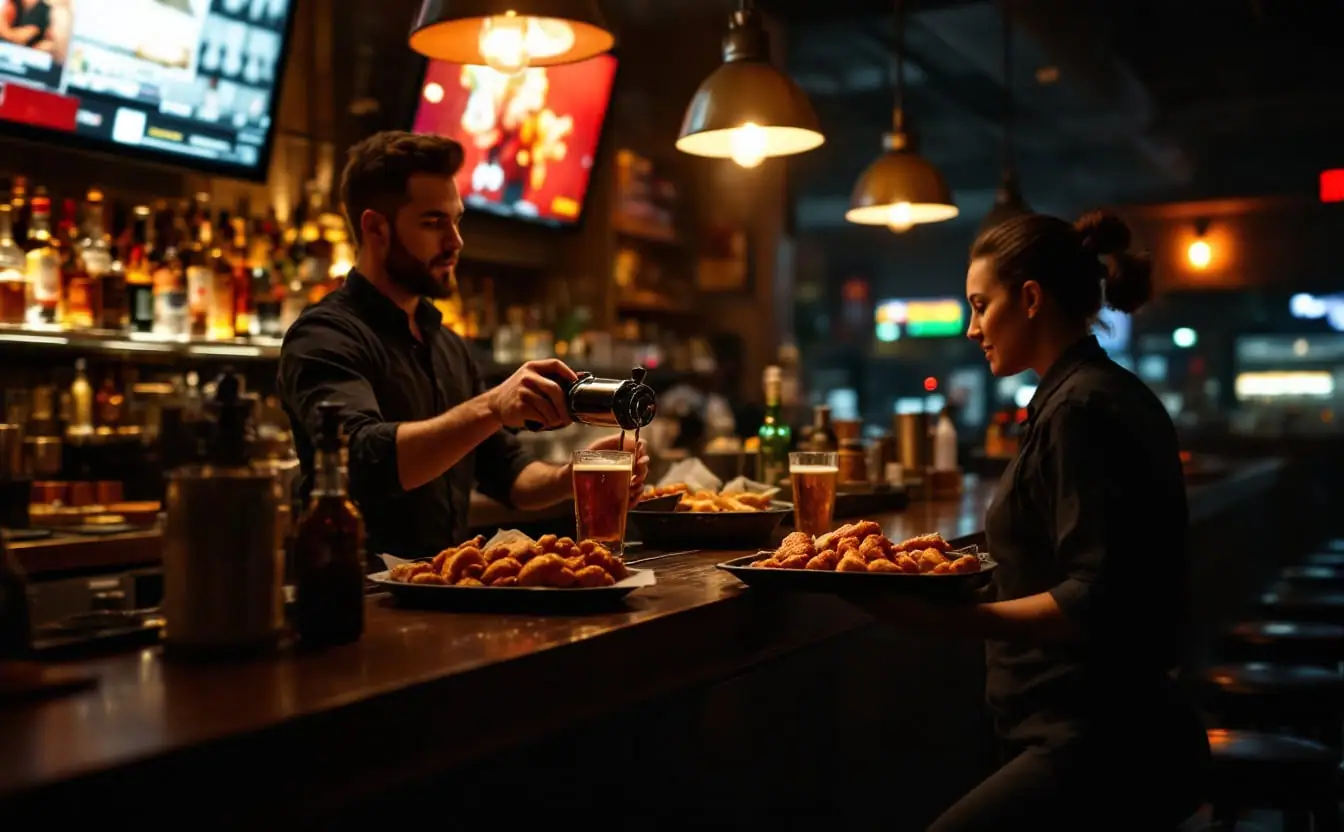
- Server. Takes orders, runs food and drinks to a section of tables, handles the bill. The job is part memory, part timing and part reading people. On game nights it also means knowing when not to stand in front of a screen.
- Bartender. Pours, mixes and rings in drinks for the bar seats and for the servers' tables. A good bartender is the unofficial host of the bar top and often the first person to notice who has had enough.
- Barback. The bartender's support crew. Changes kegs, hauls ice, stocks coolers, washes and returns glassware, cuts garnish. Invisible when the job is done well, painfully obvious when it isn't.
- Host. Runs the door and the waitlist, seats guests and balances sections so no server gets buried. On a playoff night the host is juggling reservations, walk-ins and people who swear their friend saved them a seat.
- Line cook. Works a station on the line: fryer, flat-top, grill, pizza oven or cold side. Sports bar menus are built for volume, so the fryer station on a big night is one of the hardest jobs in the building.
- Dishwasher. Keeps plates, glasses, pans and cutlery moving. If dish falls behind, the whole place falls behind within half an hour. In many kitchens this is the door to a cook's job.
- Security or door staff. Checks ID, counts capacity, watches the room and handles trouble. Good door staff prevent far more problems than they ever have to solve.
- Manager. Holds the schedule, the money, the licence obligations and the final call on anything that goes wrong.
A playoff night, hour by hour
Here is a composite of a weeknight playoff game with a 7:30 pm tip-off, the kind of night that pays a lot of people's rent. Times shift with the schedule, but the shape barely changes.
- 1:00 pm. Prep cooks are already in. Extra wings are portioned, sauces topped up, cheese shredded for nachos, onions cut by the bucket.
- 3:00 pm. The barback goes through the walk-in and the keg cooler. Anything close to empty gets changed now, because nobody wants to swap a keg in the second quarter. Ice bins are filled, coolers stocked, glassware racked.
- 4:30 pm. Pre-shift meeting. The manager runs through sections, reservations, the minimum spend on reserved tables, anything the kitchen is out of and which regular specials are off tonight. (Big games almost never carry discounts, for reasons covered in how bar promotions work.) Door staff get their capacity number and any notes from the last game.
- 5:30 pm. The early wave. People who left work early to grab seats, ordering slowly because they plan to stay. Servers take their first big round of drinks and try to get food orders in before the kitchen gets slammed.
- 6:45 pm. Full room. The waitlist is long, the host has stopped quoting times, and the ticket rail in the kitchen is full from end to end. This is the hardest hour for the line.
- 7:30 pm. Tip-off. Something odd happens: orders slow down. People watch. Experienced servers work the stoppages, timeouts, free throws and the ends of quarters, because nobody wants to be asked about another round during a fast break.
- 8:30 pm. Halftime. A sudden rush of drink orders, bathroom lines and people stepping outside for air. Fifteen minutes of everything at once.
- 9:15 pm. Fourth quarter. If it's close, the room barely orders. Staff stand at the end of the bar or by the pass and watch for a minute, which is about all the game they get.
- 9:45 pm. Final buzzer. Every table asks for the bill at the same time, half of them split six ways. This is the real crunch for servers. Door staff manage the exit, which is easy after a win and a little less so after a loss.
- 11:00 pm onward. A smaller crowd lingers. The kitchen cleans the line while servers restock and roll cutlery.
- Close. Tabs are settled, cash is counted, tips are calculated and paid out or recorded. Closers mop, take out the garbage and walk out into a quiet street with ringing ears.
Tips, pools and tip-outs
Tips are a large part of front-of-house pay, and how they are handled varies a lot between workplaces and jurisdictions.
At some places, servers keep their own tips and "tip out" a share to the bar, the kitchen, the hosts and the bussers, often calculated on their sales rather than on what they were tipped. At others, everything goes into a pool that is split by hours worked or by a point system that weights some roles more heavily.
The law differs as well. In Ontario, an employer is not allowed to keep any part of staff tips, though pooling and redistributing them among staff is permitted, and the province no longer has a lower minimum wage for liquor servers. In much of the US, employers can pay tipped workers a lower base wage and count tips toward the minimum, while a number of states do not allow that. If you are starting somewhere new, ask how tips are handled before your first shift, not after. A well-run place will explain it without hesitation.
Smart Serve and the paperwork
In Ontario, anyone who serves alcohol in a licensed establishment needs Smart Serve certification, an online course and test covering things like checking ID, recognizing intoxication and the legal responsibilities that come with pouring. The requirement also covers managers and security staff, and plenty of places want every front-of-house hire certified before their first shift. Other provinces have their own programs, such as Serving It Right in British Columbia and ProServe in Alberta, and many US states require or encourage responsible beverage service training under various names.
Kitchen staff often need food handler training too. Many jurisdictions require at least one trained person on site whenever food is being prepared. If you are applying, finishing these certificates first is an easy way to look serious, because it saves the employer a step.
What it does to your body
Nobody tells new hires how physical this work is. You stand for the whole shift and walk more than you would guess. You carry trays of full pints at shoulder height through a crowd that is not looking where it's going. Barbacks lift full kegs, which are heavier than most people expect and the classic way to hurt a back if you lift with it instead of your legs. Line cooks work beside fryers in a very hot kitchen, and small burns and cuts come with the territory.
Then there are the hours. A closing shift after a late game can end well after one in the morning. Sleep, food and water become things you manage on purpose.
What helps: proper non-slip shoes (the single best purchase anyone in this business makes), compression socks, a real meal before the shift instead of fries picked off the pass, earplugs made for musicians if the room is loud, and a stretch before you lift anything. Veterans pick up these habits after a few bad weeks. You can skip the bad weeks.
Getting hired, and what managers want
The old advice still works. Walk in on a weekday afternoon, between the lunch and dinner rush, and ask for a manager. Two to four o'clock is usually the window. Never walk in on a Friday night or during a game. Bring a one-page resume and your certificates. Online applications work too, but a face still counts for a lot.
What managers look for, roughly in order:
- Availability. Nights, weekends and the playoffs. Someone who can work the big nights is worth more than someone with a long resume who can't.
- Reliability. Showing up on time, every time, and not vanishing when the schedule gets hard.
- Composure. Staying calm when the room is loud and three tables want you at once.
- Attention. Remembering a drink order, noticing an empty glass, seeing a problem at a table before it grows.
- Experience. It helps, but plenty of managers would rather train someone with the first four than retrain someone with bad habits.
Sports knowledge is a bonus, not a requirement. You don't need to talk strategy. You do need to know not to approach a table during a free throw with the game on the line. If you want a feel for what the regulars are reacting to, reading a basketball game from a bar stool is a good primer.
Expect a trial shift, sometimes called a stage in kitchens. It should be paid. Use it to show that you can take direction, ask good questions and stay out of the way when you're not sure.
Handling a rowdy room
Every sports bar has bad nights. A lost Game 7, a blown call, two sets of fans who should never have been seated side by side. Most trouble can be handled long before it gets loud.
The first tool is service itself. Slowing drink service, bringing water and suggesting food all help. In most places it is against the law to serve someone who is visibly intoxicated, and the business, and sometimes the server, can be held responsible for what happens afterward. Cutting someone off is part of the job, not a judgment call you get to skip because the table tips well.
How you do it matters. Speak to the person privately, not in front of their friends. Keep your voice even, offer water and food, and offer to call a cab or a ride. Bring in a manager or door staff early. Never put your hands on anyone. That is what trained door staff are for, and even they would rather talk someone out than walk them out.
Good managers prevent a lot of this with seating, keeping rival jerseys apart on a big night and putting the loudest groups where they will bother the fewest people. Much of what makes a good room for a game is planning that customers never see.
Why people stay
For all that, plenty of people do this work for years and love it. The money on a big night can be very good, and it arrives quickly. The schedule bends around school, training, a second job or a band that practises on weekday mornings. The skills travel, too. Anyone who has run a section on a playoff night can handle a crowded office.
Mostly, though, it's the crew. There is a particular feeling in the minutes after close on a big night, when the house lights come up, the music goes off, and the same eight people who just survived a full room sit at the bar counting out the tip pool on a sticky bar top while someone mops around their feet. Nobody saw much of the game. Everybody knows exactly how it ended.