How to Clean a Grill: After Every Cook, Once a Month and Every Spring
A grill cleaning routine from someone who closed restaurant kitchens for years: what to do after each cook, once a month and when the cover comes off.
By Colin MacAulay10 min read
For years I was the last person out of downtown restaurants. Closing meant a walk through the kitchen with a clipboard: char-broiler scraped and brushed, grease troughs emptied, flat-top stoned and oiled, hood filters checked. The cooks grumbled about that list every night. They stopped grumbling the first time a fire inspector walked in unannounced and left without writing anything down.
A backyard grill needs the same thinking at a smaller scale. If you want to know how to clean a grill without losing a Saturday to it, the answer is a routine in three layers: five minutes after every cook, twenty minutes once a month in season, and a proper strip-down every spring.
How to clean a grill: the short version
- After every cook: run it hot with the lid closed, scrape the grates, wipe them, shut off the gas or close the vents.
- Once a month in season: empty the grease tray, scrape the cook box, check the burners or firepot, empty the ash.
- Start of season: strip it down, soak the grates, clear the burner tubes, leak-test the gas line.
After every cook
This is the step people skip, and it saves the most work. Residue scraped off hot comes away in a few strokes. Left overnight, it goes sticky and starts the rust.
- Burn it off. When the food comes off, close the lid and run a gas grill on high for 10 to 15 minutes. On charcoal, close the lid with the vents open while the coals still have some life. Fat and sauce turn to dry carbon.
- Scrape while hot. Wear a long grill glove and work along the bars with a bristle-free brush or scraper.
- Wipe. Turn off the burners, fold a damp paper towel, hold it in tongs and run it along the warm grates to pick up the dust.
- Shut it down. Close the valve on the propane cylinder, not just the knobs. On a kettle, close the lid and both vents so the coals starve.
Next time, preheat for 10 to 15 minutes, then wipe the hot grates with a paper towel dipped lightly in canola oil. Clean, oiled, properly hot grates are what any cooking time assumes, whether it comes from a recipe or the grill time calculator.
Once a month during grilling season
If you grill most nights, make it every two weeks. Let the grill cool completely first.
- Grease tray and drip pan. Scrape the solid fat into the garbage (never down a sink) and fit a fresh liner if your grill takes one. An overfull grease tray is one of the classic ways a backyard grill catches fire.
- The cook box. Scrape the walls and floor with a plastic scraper toward the grease opening. The black flakes under the lid are carbonized grease, not peeling paint; brush them off before they land on a burger.
- Heat tents and burners. Lift out the metal tents (flame tamers) over the burners and scrape them. When you next light up, the flames should be mostly blue; lazy yellow flames mean a burner is partly blocked.
- Ash. Empty a charcoal grill's ash once it is stone cold. Ash holds moisture, and damp ash against the bottom of a kettle is how bowls rust through.
At the start of the season
Spring, or whenever the cover comes off. Give it a dry afternoon.
- Soak the grates and heat tents in hot water and dish soap for half an hour or so.
- Pull the burners and clear blocked ports with a straightened paper clip, never a toothpick, which can snap off inside.
- Run a thin tube brush through each burner's venturi tube, the open end nearest the knobs. Spiders build in there over winter, and a blocked tube can push the flame back toward the controls.
- Scrape the lid and cook box, empty the grease system and wash everything with warm soapy water.
- With the knobs off and the cylinder valve open, brush soapy water onto every gas connection. Growing bubbles mean a leak. Fix it before anything gets lit.
- Reassemble and run it on high with the lid closed for 15 to 20 minutes to burn off soap and moisture.
Do the same, minus the leak test, before the grill goes under a cover in the fall.
Gas, charcoal and pellet: what changes
How to clean a gas grill
A gas grill's weak points are the burners and the grease path. Fat runs down through the cook box into a tray or cup, and if that path clogs, grease pools where the heat is. Keep the cook box floor scraped toward the opening and the tray empty. Don't line the bottom of the cook box with foil: plenty of manufacturers warn against it because it traps grease right under the burners.
How to clean a charcoal grill
Charcoal is simpler: no burners, no hose. The enemies are ash and water. Empty the ash every cook or two, only once it is stone cold, into a metal can with a lid, well away from the house. Ash can hide live embers for longer than most people expect, so never tip it into a plastic bin or a paper bag. Work the vents back and forth now and then so they don't rust stuck. If you are newer to charcoal, the charcoal grilling guide for beginners covers building the fire itself.
How to clean a pellet grill
A pellet grill burns hardwood pellets in a small firepot, and ash that builds up around it can smother the fire or stop the grill from lighting. Every few cooks, with the grill cold and unplugged, lift out the grates and drip tray and vacuum the firepot and barrel with a shop vacuum. Never vacuum a firepot that might still be warm; an ember inside a shop vac is a fire you didn't plan for.
The drip tray, the sloped plate that carries grease to the bucket, sits directly above the fire, so give it a fresh foil cover or a good scrape regularly and empty the bucket. Pellets left in the hopper for months soak up moisture, swell and can jam the auger. The pellet grill explainer walks through how the whole system fits together.
How to clean grill grates, by material
Stainless steel
The toughest of the three. Stainless takes a stiff coil brush or a metal scraper without complaint, and a paste of baking soda and water handles stubborn spots. The bronze tint it picks up from heat is cosmetic.
Cast iron
Bare cast iron gives the best sear marks and rusts given half a chance, so treat it like a cast iron pan. Scrape it hot after every cook and keep a thin film of oil on it. If rust shows up, scrub it off with steel wool, wash, then dry the grates completely in a hot grill or oven. Rub on a very thin coat of oil, wipe most of it off, and heat at around 400 to 450°F (204 to 232°C) until it stops smoking. Two or three thin coats beat one thick one, which turns gummy.
Porcelain-coated
Porcelain-enamelled grates are steel or cast iron under a glassy coating. Intact, the coating resists sticking and rust. Chipped, the grate rusts at every chip. So the whole job is protecting it: a wooden scraper on warm grates, a nylon brush only once they have cooled (nylon melts on hot metal), and no steel scrapers. For a deep clean, soak and scrub with a non-scratch pad. No seasoning needed.
The trouble with wire grill brush bristles
The cheap wire brush hanging off half the grills on any street has a known flaw. As it ages, the bristles work loose. One snaps off, sticks to a grate, ends up in a burger and gets swallowed. Health agencies in Canada and the US have warned about it, and doctors have published reports of patients with bristles lodged in the throat or further down, some needing surgery to remove them. It isn't common, but a bristle is nearly impossible to spot in a bun, and that was enough for me.
Safer options:
- Coil or spiral brushes, made of tightly wound wire with no single bristles to come loose.
- Wooden scrapers, which wear grooves that match your grates after a few uses.
- Nylon brushes, on cool grates only.
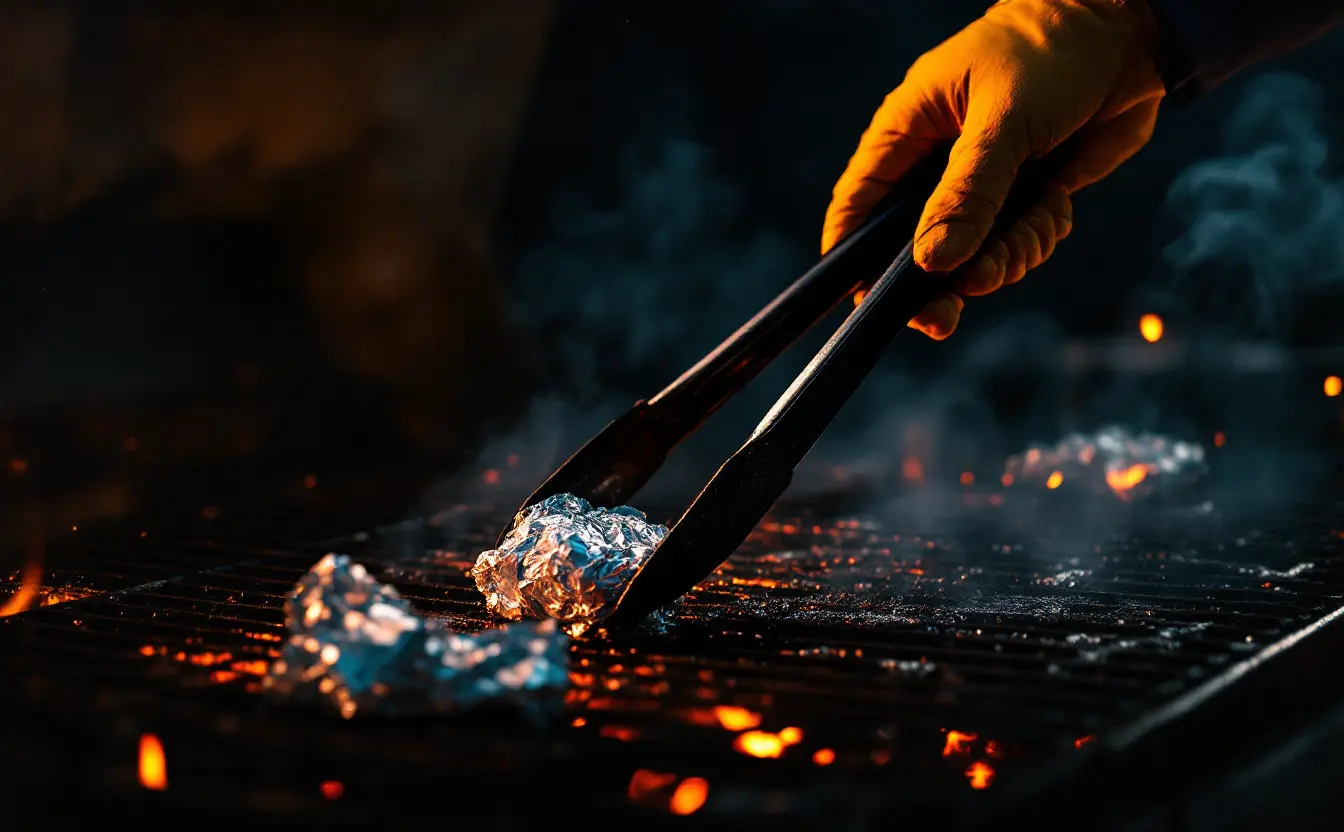
- A ball of aluminum foil held in long tongs and rubbed along hot grates. It works better than it has any right to.
If you keep a wire brush, check it every time and replace it when the bristles look bent, flattened or loose. After brushing, wipe the grates with a damp paper towel and look along every bar before food goes on.
Grease and fire safety
Restaurants pay to have their hoods professionally cleaned on a schedule because grease burns, and burns hot. A backyard grill is the same problem in miniature, and an empty grease tray is the simplest fire prevention there is.
- Know what a grease fire looks like: flames that keep growing after you lower the heat, or fire coming from underneath the grill. Turn off the burners, close the cylinder valve if you can reach it safely, keep the lid shut and step back. Never use water on a grease fire. If it doesn't die down, call the fire department.
- Keep a fire extinguisher where you can grab it, not in the basement.
- Keep the grill clear of siding, deck railings and overhanging branches, and never run one in a garage.
- Never spray aerosol cooking oil at a lit grill.
What not to do
- Oven cleaner on porcelain-coated grates or the inside of the lid. It is harsh enough to dull and damage the porcelain, and many grill makers tell you not to. Dish soap and hot water do the job.
- Water on hot cast iron. The sudden change in temperature can crack or warp it, and the water invites rust. Let it cool, or scrape it dry.
- A pressure washer on burners, igniters, or a pellet grill's controller and auger. Water forced into those parts means rust and electrical trouble.
- Foil over the entire grate. It blocks airflow, can overheat the grill and leaves grease with nowhere to go.
Grill cleaning checklist
| Task | Gas | Charcoal | Pellet | How often |
|---|---|---|---|---|
| Burn off and scrape grates hot | Yes | Yes | Yes | Every cook |
| Shut down | Close cylinder valve | Close lid and vents | Run shutdown cycle | Every cook |
| Empty ash (cold only) | No | Yes | Vacuum firepot | Every 1-3 cooks |
| Empty grease tray or bucket | Yes | No | Yes | Monthly, or sooner |
| Scrape cook box, tents or drip tray | Yes | Lid and bowl | Yes | Monthly |
| Clear burner ports and venturi tubes | Yes | No | No | Start of season |
| Leak-test hose and fittings | Yes | No | No | Start of season, every new cylinder |
| Soak and deep clean grates | Yes | Yes | Yes | Start and end of season |
| Season bare cast iron | If cast iron | If cast iron | If cast iron | After deep cleaning or rust |
FAQ
How do you clean grill grates quickly?
Heat the grill on high for 10 to 15 minutes with the lid closed, scrape the grates with a coil brush or wooden scraper while they are hot, and wipe them with a damp paper towel held in tongs. Five minutes after every cook saves a big scrub later.
Is it better to clean a grill hot or cold?
Grates are easiest hot, because the residue has turned to brittle carbon. Everything else (grease trays, the cook box, burners, the firepot and ash) should be done cold.
How do you clean cast iron grill grates?
Scrape them hot, keep them lightly oiled and keep water to a minimum. For a deep clean, scrub, dry them completely in a warm grill or oven, then season with a very thin coat of oil heated until it stops smoking.
Can you clean grill grates with an onion?
For light cleaning, yes. Spear half an onion on a long fork, cut side down, and rub it along hot grates; the moisture steams off some of the residue. It won't shift real buildup, but it is a decent bristle-free option between proper cleans.
Are wire grill brushes safe?
They can shed bristles that stick to the grates and end up in food, which is why health agencies have warned about them. If you use one, inspect it before every use and check the grates before cooking. Coil brushes, wooden scrapers and balled-up foil avoid the problem altogether.