Loaded Nachos That Stay Crisp: A Layering Method
Soggy nachos come from steam, wet toppings and one thick pile. This layering method keeps the chips crisp from the first scoop to the last.
By Megan Tremblay9 min read
Every pub kitchen has a nacho problem, and I spent enough years on a fryer station to see it from both sides of the pass. The plate goes out looking like a small mountain. Twenty minutes later it comes back half eaten, and the bottom third is one damp slab of corn that nobody wanted to touch. The top was great. The middle was fine. The bottom was soup.
That slab isn't bad luck. It's moisture with nowhere to go, and a sheet pan, a box grater and some discipline about what goes on when will fix it. With the method below, the chips stay crisp for a full quarter of basketball, which is longer than most trays survive anyway.
Why nachos go soggy
Three things do the damage, usually all at once.
Steam is the first. A tortilla chip is crisp because it is dry, and anything hot and wet resting on it pushes water back in. Pile hot beans and meat on chips, trap the lot under a thick blanket of cheese, and the steam has nowhere to go but down. The chips at the bottom end up in a little sauna.
Wet toppings are the second. Salsa, pico de gallo, sour cream, guacamole and the brine on pickled jalapeños all carry liquid. Bake them on top and that liquid heats, thins out and runs straight to the bottom of the pan. Undrained beans and greasy ground beef do the same thing with less drama.
One thick layer is the third. Dump a whole bag of chips into a dish, load everything on top, and the top layer gets all the cheese while the bottom layer gets all the drips. The chips underneath never feel direct heat, so they never dry or toast. They just absorb.
Fix all three and the problem mostly goes away.
Sheet pan or cast iron
Both work, for different jobs.
A rimmed half sheet pan, the standard 18 by 13 inch (46 by 33 cm) size, is my default for a group. It's wide and shallow, so the chips spread into thin layers, and the low rim lets steam drift off instead of pooling. Line it with parchment so the cheese that runs off the chips doesn't weld itself to the metal.
A 12 inch (30 cm) cast iron skillet is better for three or four people and better on the coffee table. Cast iron holds heat, so the cheese stays soft long after the pan leaves the oven. The catch is depth: a skillet tempts you to stack high, and high means soggy. If you use one, preheat it in the oven for 10 minutes so the bottom chips start toasting the second they land.
Skip deep glass dishes; they trap steam and heat slowly.
Chips that can carry weight
The thin, shatter-crisp chips that are great with salsa will fold under a spoonful of beans. You want thick, sturdy chips, the kind sold as restaurant-style or cantina-style. Plain salted is best. Flavoured chips carry a seasoning dust that turns pasty under melted cheese, and lime-flavoured ones argue with everything.
For the sturdiest base, fry your own. Cut corn tortillas into quarters and leave them out uncovered for an hour or two to dry a little. Fry in oil at 350°F (177°C) for 2 to 3 minutes, until the bubbling slows and they turn deep gold. Drain on a rack rather than paper towel, and salt them right away.
Whatever you use, toast the chips on their own first. Five minutes on the sheet pan in a 400°F (204°C) oven drives off any moisture they picked up in the bag and gives the bottom layer a head start.
Grate the cheese yourself
This is the biggest single upgrade, and it costs two minutes with a box grater.
Bagged pre-shredded cheese is tossed with an anti-caking agent, usually potato starch or powdered cellulose, so the shreds don't clump in the bag. The coating also keeps the shreds from melting together, so you get separate, slightly greasy strands instead of a smooth layer that grips. Block cheese grated on the large holes melts into a continuous sheet, and that sheet is what holds the layers together.
My blend is two parts Monterey Jack to one part medium or old cheddar. Jack melts smoothly and stays soft as it cools; cheddar brings the flavour and the orange. Plan on about 340 g (12 oz) of cheese for a half sheet pan. Grate it straight from the fridge and keep it cold until you build, because warm shreds mat together and melt unevenly.
A quick cheese sauce, if you want one
For the stadium-style pour, skip the processed block and make this. Treat it as a bonus, not a replacement: sauce soaks chips faster than melted shreds do.
- Toss 225 g (8 oz) grated cheddar or Jack with 2 teaspoons of cornstarch.
- Warm 160 mL (2/3 cup) evaporated milk in a small pot over medium-low until it steams.
- Add the cheese a handful at a time, stirring, until smooth. Don't let it boil.
- Season with hot sauce or a spoonful of brine from the jalapeño jar.
Serve it in a warm bowl for dunking, or drizzle a thin line over the tray right before it goes out. Never bake chips under it.
The layering method
Here's the full build for one half sheet pan.
- Heat the oven to 400°F (204°C) with a rack in the middle.
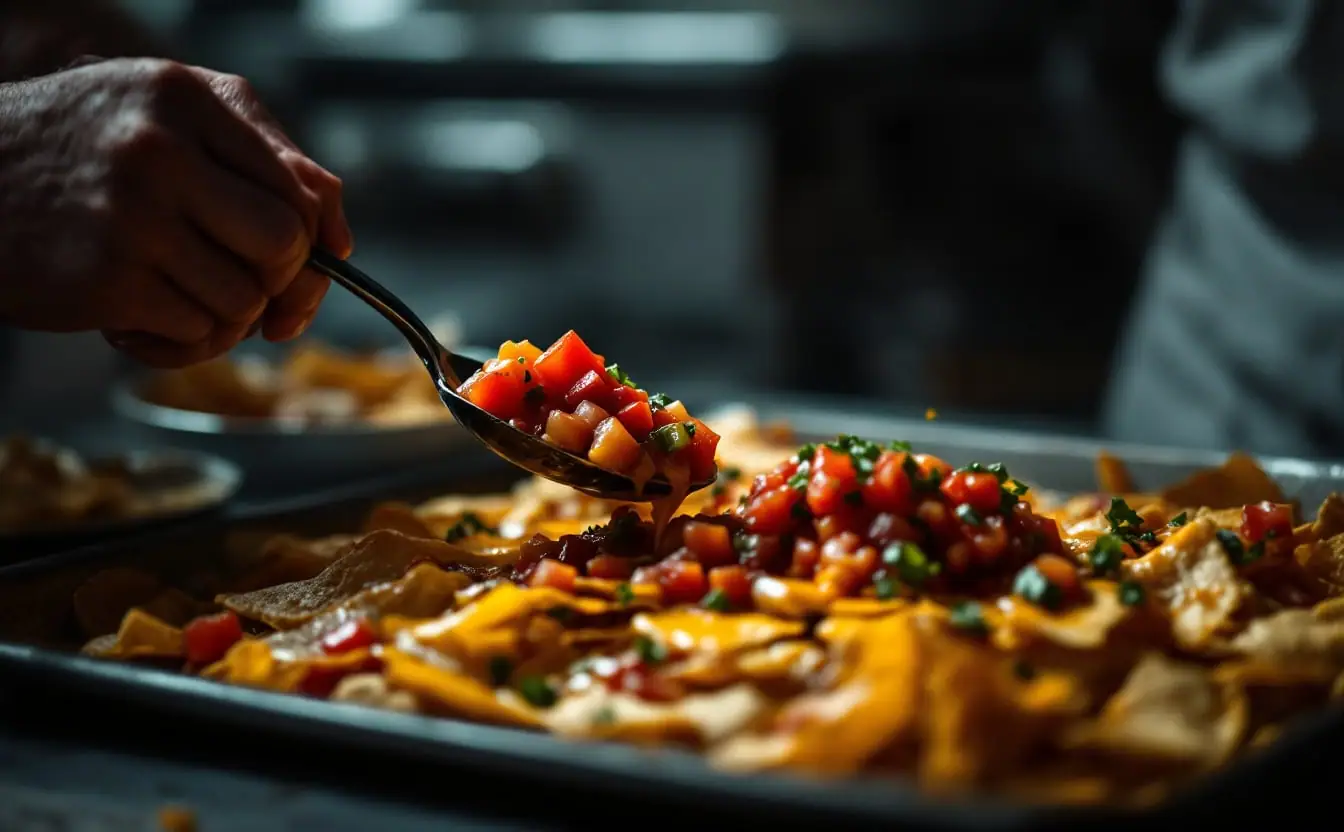
- Spread one layer of toasted chips across the parchment, overlapping slightly like roof shingles. No piles.
- Scatter a third of the cheese over it, right to the edges. This is the glue.
- Add half the warm, drained beans and meat in small spoonfuls, spaced out so some chips stay bare.
- Lay a second layer of chips over the top, offset so they bridge the gaps below.
- Add another third of the cheese, then the rest of the beans and meat.
- Finish with a light third layer of chips if the pan has room, then the last of the cheese. Make sure the top chips get cheese on their edges so they stick.
- Bake 8 to 10 minutes, until the cheese is fully melted and just starting to blister and brown at the edges.
Two layers is plenty for most half sheet pans; three if your chips are small. Any more and the middle won't heat through before the top scorches. In a preheated skillet, or a convection oven set to 375°F (191°C), start checking at 6 minutes.
The cheese between layers is structural. It melts, firms slightly as it cools and bonds chips into clusters, so a reach into the tray pulls out a loaded handful instead of leaving a crater with a wet floor.
Skip the broiler finish. It browns the top chips and does nothing for the layers underneath, and the gap between golden and burnt is shorter than a free throw routine.
What goes into the oven
Anything that bakes with the chips should be hot and as dry as you can make it.
Canned black or pinto beans: drain, rinse, shake dry in a sieve, then warm them in a pan for a few minutes with salt and a pinch of cumin. Cold beans pull heat out of the cheese and stretch the bake, which gives the chips longer to soften.
Ground beef or chorizo: brown it hard, then keep cooking a minute or two past where you'd stop for tacos, until the pan is nearly dry. Tip it into a sieve to drain the fat. Warm pulled pork or shredded chicken and squeeze off excess sauce. Anything saucy belongs on the side.
Pickled jalapeños are the one briny topping I let into the oven, because baked jalapeños taste better. Blot them hard on paper towel first.
What waits until after
Anything cold or wet goes on at the end, or better still, next to the tray.
| Into the oven | After the oven |
|---|---|
| Grated block cheese | Pico de gallo or salsa |
| Warm, drained beans | Sour cream or crema |
| Warm, drained meat | Guacamole |
| Blotted pickled jalapeños | Shredded lettuce |
| Dry, charred corn | Green onion and cilantro |
| Blotted sliced black olives | Lime wedges and hot sauce |
For grazers, put wet toppings in bowls and let everyone spoon their own. Sour cream dolloped across a whole tray looks great in a photo and ruins the tray in about four minutes.
Building a crowd tray
For a full room, two rounds beat one giant tray. Prep everything before tip-off: chips toasted and cooled, cheese grated and back in the fridge, beans and meat warm in covered pots on the lowest burner, cold toppings in bowls. Build and bake the first tray as the game starts, then build the second at halftime. Assembly takes about three minutes, and the second tray lands just as the first is down to crumbs.
As a rough guide, one half sheet pan holds about 300 g (10 1/2 oz) of chips, which feeds six to eight people as one dish in a wider spread, or four if nachos are the main event. Set the pan on a board in the middle of the table, bowls around it, small plates beside.
If wings are part of the plan, bake them first and hold them in a low oven while the nachos go in; this guide to wings at home has the oven method. The watch party planning checklist covers the rest of the night. For the other hand, a crisp lager or hoppy pale ale cuts through melted cheese; more on that in pairing craft beer with bar food.
A vegetarian version
Same structure, different fillings, same goal: warm, dry and with some texture.
- Black beans, drained, rinsed and warmed with cumin and smoked paprika.
- Roasted sweet potato: 1 cm (1/2 in) cubes tossed with oil, chili powder and salt, roasted at 425°F (218°C) for 20 to 25 minutes until the edges brown. They're drier than you'd expect and hold their shape.
- Charred corn: frozen kernels thawed, patted dry and cooked in a dry cast iron pan over high heat for 4 to 5 minutes, until some kernels blacken.
- Roasted poblano strips, or sliced red peppers softened in a hot pan.
If you like refried beans, check the label, since some canned versions are made with lard. Serve them warm on the side as a dip rather than spreading them on the chips, where they behave like a sponge.
When nachos go wrong
| Problem | Likely cause | Fix |
|---|---|---|
| Bottom chips soggy | One thick pile, wet toppings baked in | Two or three thin layers; wet toppings after |
| Cheese greasy and separated | Pre-shredded cheese, or baked too long | Grate block cheese; pull at the first blisters |
| Top melted, middle cold | Cold beans or meat, layers too thick | Warm the fillings first; thinner layers |
| Chips chewy before baking | Open bag, damp kitchen | Toast 5 minutes at 400°F (204°C) first |
| Tray soggy at the table | Sour cream and salsa spread over everything | Serve wet toppings on the side |
The test I still use comes from those fryer years: twenty minutes after the pan comes out, lift a chip from the bottom corner. If it snaps, the method worked.