How Toronto Learned to Love Basketball
Basketball was invented by a Canadian, yet Toronto took a century to give it the main screen. Here is how a hockey city changed the channel.
By Andre Whitfield9 min read
For most of my life, the main screen in a Toronto bar belonged to hockey. Walk into almost any room downtown on a Saturday night in January and you would find the same blue sweaters on every set, the sound up for the Leafs and for nothing else. If the Raptors were playing, they lived on a small television above the server station, captions crawling along the bottom, a few of us craning our necks at a game the rest of the room did not seem to know was on.
That was the order of things. Hockey was the city's first language, and basketball was something you picked up later, if at all. What interests me, after a couple of decades of charting games in a notebook and arguing about them over wings, is how that order changed. It took a strange old history, one ridiculous dunk contest, a slogan that turned out to mean something, and a ball that bounced on a rim four times before it made up its mind.
A game invented by a kid from the Ottawa Valley
Start with the awkward part. Basketball was invented by a Canadian, and Canada spent most of the following century treating it as an American game.
James Naismith was born in 1861 near Almonte, Ontario, a mill town west of Ottawa. He studied at McGill in Montreal, and by 1891 he was teaching at the YMCA training school in Springfield, Massachusetts. That December he was handed a problem every phys ed teacher knows: a restless class, a long winter, and nothing to do indoors but calisthenics. He hung two peach baskets from the railing of the gym balcony, ten feet off the floor, gave the class a soccer ball and wrote out thirteen rules. Players could not run with the ball. Somebody had to fetch it out of the basket after every goal.
Naismith later credited a schoolyard game from his Ontario childhood, duck on a rock, with teaching him that a soft, lofted throw beats a hard one. That is part of why he put the target up high, where force was useless and touch was everything.
The game spread through YMCAs and colleges, plenty of them in Canada, but for generations it stayed a gym-class sport here. It was the thing you played on the days the outdoor rinks went soft.
The first game was in a hockey barn
On November 1, 1946, the Toronto Huskies hosted the New York Knickerbockers at Maple Leaf Gardens in the first game of the Basketball Association of America. The BAA merged with the National Basketball League in 1949 and became the NBA, and the league still counts that night in Toronto as its first game.
The Knicks won by two points. The Huskies' promoters, trying to sell an unfamiliar sport inside a building made for hockey, advertised free admission for anyone taller than George Nostrand, their tallest player. The team folded after one season, and Toronto went without an NBA franchise for nearly half a century. The Gardens is still standing, reworked into a grocery store and a university athletic centre, and I have yet to work out where centre court would have been.
Dinosaurs at the dome
The NBA came back in 1995, when Toronto and Vancouver joined as expansion teams. The Toronto name came out of a public naming contest held while the movie Jurassic Park had made dinosaurs the most popular thing in any kid's bedroom, and the team took the floor in purple, with a cartoon raptor dribbling across the chest.
They played their first seasons at SkyDome, a stadium built for baseball and football, with the court set up in one section of a building far too big for it. On television you could feel how odd it was: curtains, faraway seats, the noise of a crowd swallowed by a room meant for something else. In 1999 they moved into the Air Canada Centre, the building now called Scotiabank Arena.
Those early teams lost a lot. Damon Stoudamire won Rookie of the Year in the first season and gave the city a small, fast point guard to love, but no bar manager was going to hand the main screen to an expansion team. I was a teenager then, shooting on a driveway hoop with a rim bent from too many failed dunks, and most of the games I saw, I saw at home.
Vince
Then came Vince Carter. Toronto got him on draft night in 1998 in a trade with Golden State, and within two seasons he was the most exciting player in the league to plenty of people who had never sat through a full basketball game.
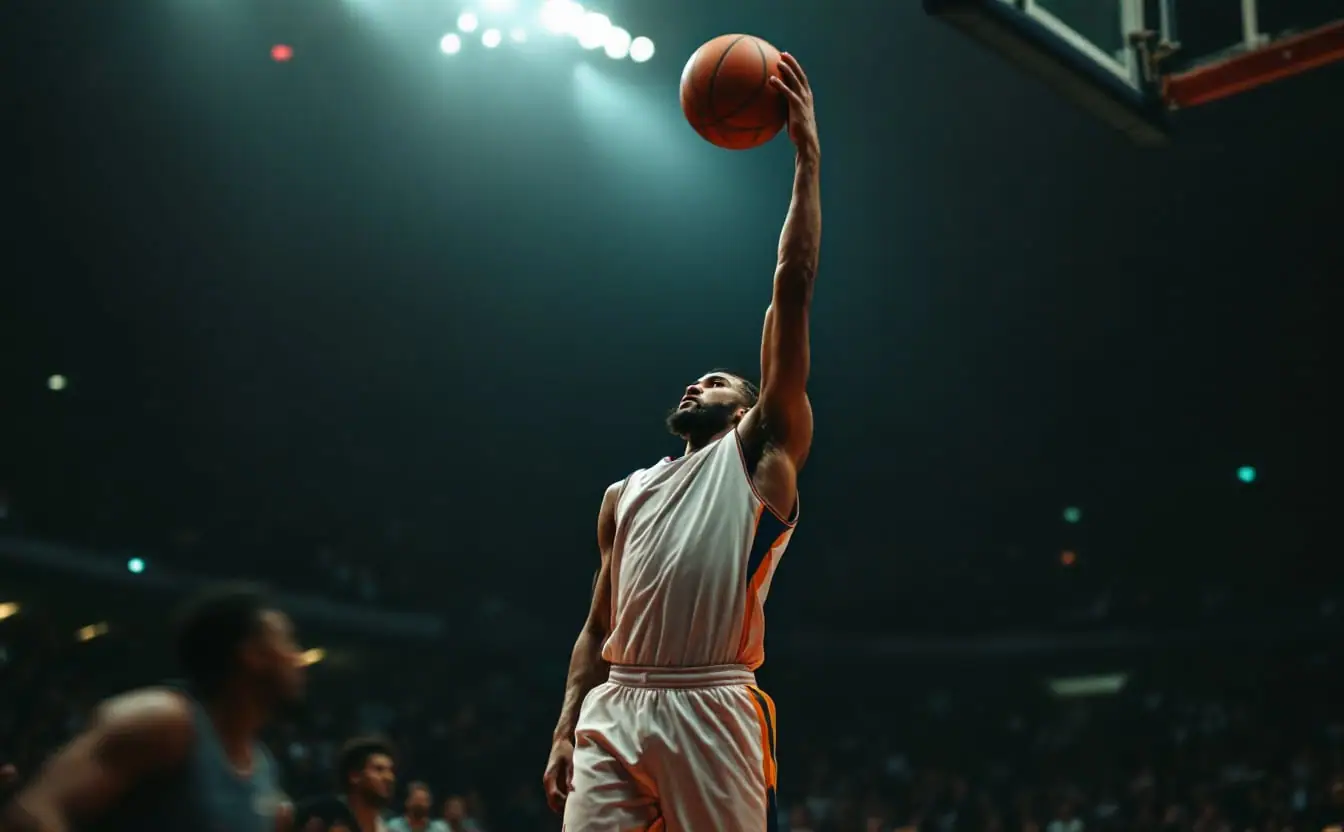
The 2000 Slam Dunk Contest in Oakland is still the clip people pull up when they want to explain why Toronto changed. Carter opened with a reverse 360 windmill. He took a bounce pass from his cousin and teammate Tracy McGrady, swung the ball between his legs in midair and threw it down. He dunked and hung there with his arm through the rim up to the elbow. Between dunks he looked into the camera and signalled that the contest was finished. It was. The next week every kid in my gym class was trying to take off from two feet, and the school gym got a lot harder to book.
What changed in the bars was small but real. On a Friday when the Raptors were at home and the Leafs were off, the main screen started going to basketball, now and then with the sound. In the spring of 2001 the team won its first playoff series, over the Knicks, and pushed Philadelphia to a seventh game in the second round. On the morning of that Game 7, Carter flew to North Carolina for his university graduation and flew back in time for tip-off. His jumper at the buzzer missed, and the 76ers won by a point. People here still argue about that flight.
Then the slide. Carter wanted out, and in 2004 he was traded to New Jersey and booed in Toronto for years after. In 2024 the team retired his No. 15, the first number it had ever retired, and the building stood for him. Hero, villain, then something like family: that is how a city forgives.
How the bars caught up
The middle years were uneven. Chris Bosh was a star on teams that mostly missed the playoffs, and basketball drifted back to the side screen. The shift that stuck came around 2014. Masai Ujiri had taken over the front office, Kyle Lowry and DeMar DeRozan had become a backcourt the city adopted as its own, and before the 2014 playoffs the team launched a campaign built around three words: We The North.
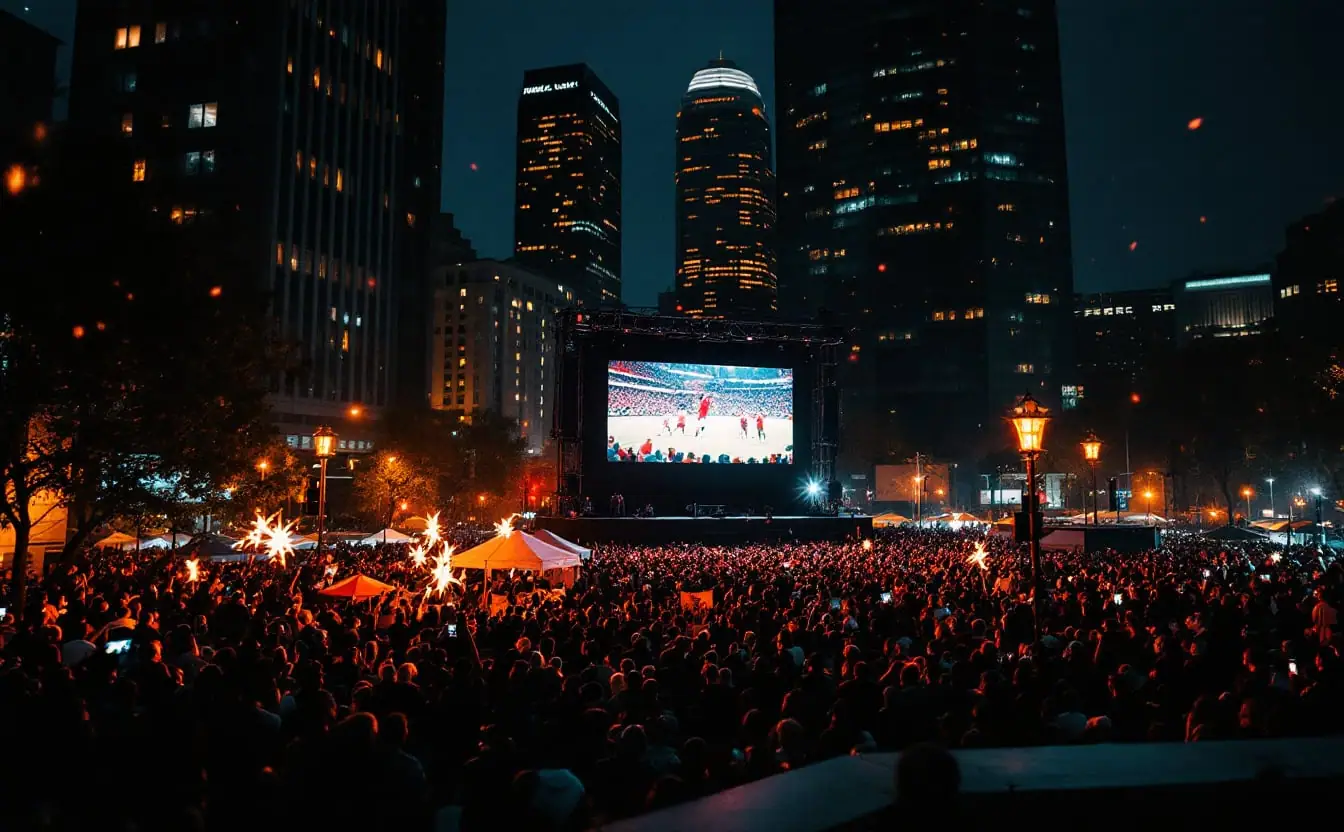
The slogan worked because it was true. The Raptors were the only NBA team in Canada, playing in a hockey town, used to being overlooked by American broadcasts. Fans filled the square outside the arena to watch playoff games on a big outdoor screen, and the place picked up a name of its own: Jurassic Park.
For a bar, the question was practical. Hockey and basketball seasons overlap from October to April, and their playoffs run side by side into June. A room has one main screen and one sound system, and for decades the sound went to hockey by default. Somewhere in the middle of the 2010s, the default started to depend on who was winning and who was still alive in May. One downtown sports bar I used to go to after league games taped a printed schedule beside the remote, with a column marked "sound" and a team written in for every playoff night.
Sightlines and sound for a basketball crowd are covered in our guide to what makes a good room for a game.
2019
In the summer of 2018 the team traded DeRozan to San Antonio for Kawhi Leonard. It hurt, and plenty of fans stayed angry right up until the playoffs.
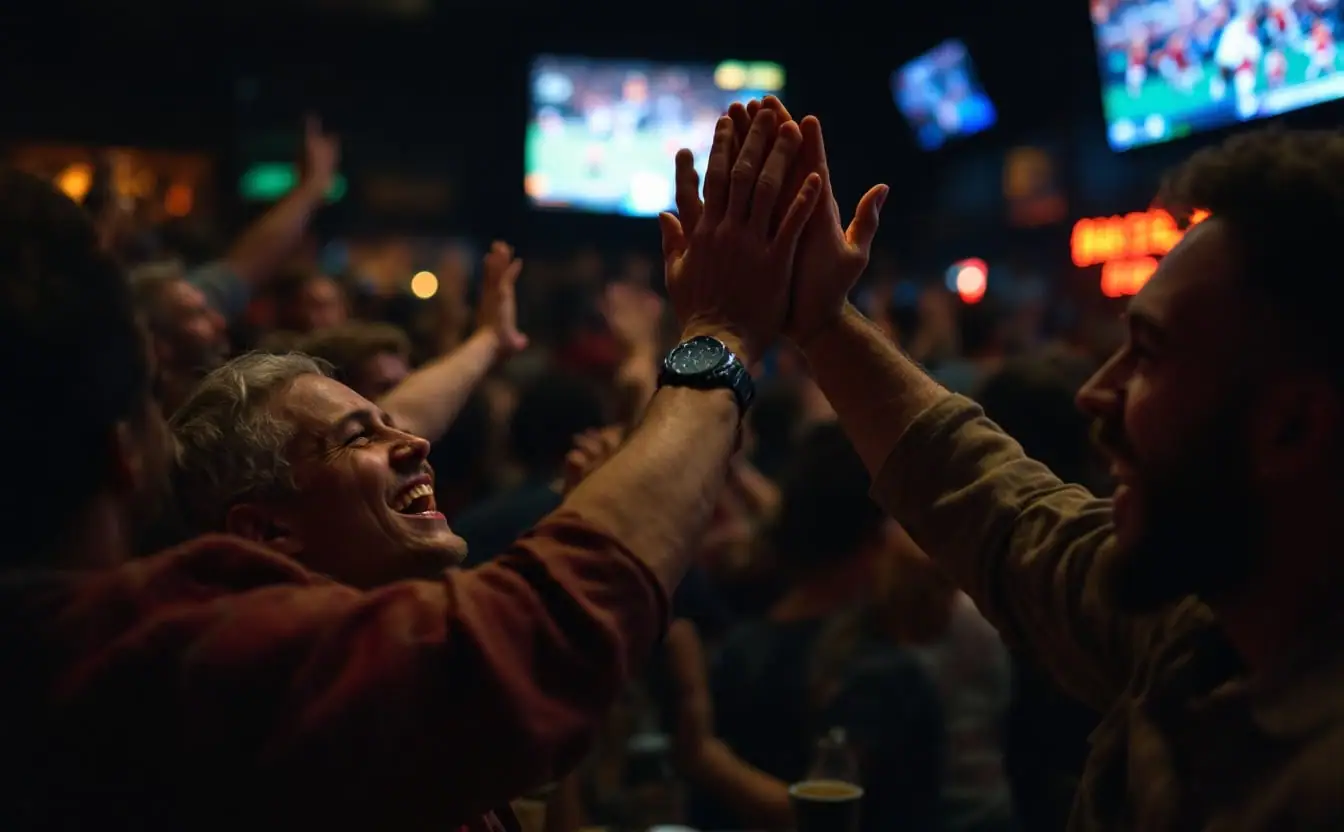
Game 7 against Philadelphia in the second round, tied with seconds left. Leonard drifted toward the corner, shot over a much taller defender from almost out of bounds, and the ball bounced on the rim four times before it dropped. I was charting that game in a crowded room. My notebook has neat columns through three quarters, a fourth quarter that gets messier by the possession, and then a line that just stops. The room went completely quiet for the bounces. I remember hearing the beer fridge hum. After that, nobody could hear anything.
They came back from two games down to beat Milwaukee, then beat Golden State in six games in the Finals, clinching on the road in Oakland. Oakland again, nineteen years after the dunk contest.
Those Finals settled the screen question for good. Jurassic Park was packed even for road games, with people standing in the street to watch a game played on the other side of the continent. Other cities set up their own outdoor watch parties, some borrowing the Jurassic Park name. Bars in towns that had never put basketball on the main screen turned every set to the Finals. Priya Nair has written well about why we watch together, and that spring is the purest example of it I have seen.
The kids who grew up on it
That roster was mostly not Canadian, but the country it won for was changing underneath it. When I played club ball at university, a weekend tournament drew parents, a few roommates and whoever needed a ride home. Walk into a community centre gym in the GTA on a Saturday morning now and you have to step around strollers and camp chairs to find a spot on the wall.
Canada has become one of the biggest sources of NBA talent outside the United States. Steve Nash, who grew up in Victoria, won back-to-back MVP awards in the mid-2000s and showed a generation of Canadian guards that the ceiling was higher than anyone had told them. Andrew Wiggins and Jamal Murray have both won championships. Shai Gilgeous-Alexander, from Hamilton, won the MVP and a title with Oklahoma City in 2025. The senior men's team won bronze at the 2023 World Cup, and the WNBA's first Canadian team, the Toronto Tempo, is scheduled to start play in 2026.
Plenty of those players came through programs that predate 2019. Still, when a nine-year-old in Brampton watches a title parade for a basketball team in her own city, she stops thinking of the sport as somebody else's.
What the main screen says now
The new season is starting, and the old overlap is back. The Leafs are on most nights, the Raptors are finishing preseason, and every bar with more than one screen has a decision to make. The rooms that learned something in 2019 handle it without fuss: hockey gets the sound when the Leafs matter, basketball gets it when the Raptors do, and on nights when both are on, somebody looks around the room before reaching for the remote. If you are new to the game, start with how to read a basketball game from a bar stool.
Last week I stopped into a sports bar a few blocks from the arena to watch a preseason game I had no business caring about. The Leafs were on the side wall with captions running. On the main screen, with the sound up, a lineup full of players fighting for the last roster spots ran a set I have drawn in my notebook a dozen times. A boy at the next table, maybe ten, was wearing a Gilgeous-Alexander jersey and explaining the play to his father with a ketchup-stained finger. Nobody asked to change the channel.