Beer Glasses: The Types, Which Glass for Which Beer and the Best Sets
The types of beer glasses, which glass suits which beer, how to keep glasses beer clean, and the three sets worth buying for a home bar.
By Rafael Antunes11 min read
For most homes, the best beer glasses start with a set of sturdy pints like the JoyJolt Callen for everyday cans, add the Libbey Stockholm pilsner glasses as the budget pick for lagers, and step up to Libbey's Craft Brews tulips for aromatic and strong ales. A one litre dimpled stein covers Oktoberfest nights, and Randy Mosher's Tasting Beer explains why any of this matters.
I spent ten years pouring beer in busy bars and many weekends judging homebrew competitions, and in neither place was the glass decoration. The wrong one meant a stout with no head by the second sip. You do not need a cabinet of twelve shapes at home. You need three or four that match what you drink, kept properly clean.
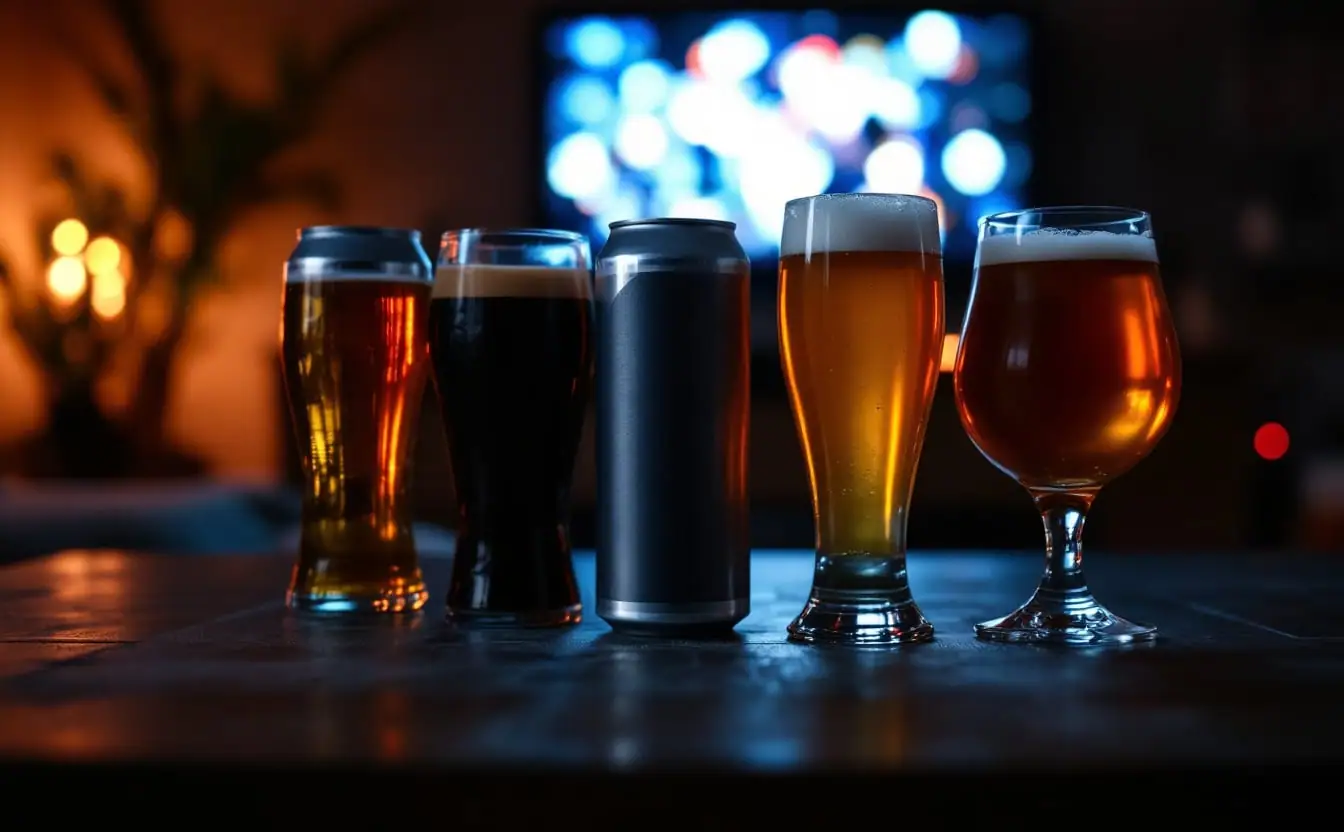
Types of beer glasses and what each one does
A glass changes three things you can notice: how much aroma reaches your nose, how long the foam lasts, and how fast the beer warms.
Beer pint glasses: shaker, nonic and tulip pint
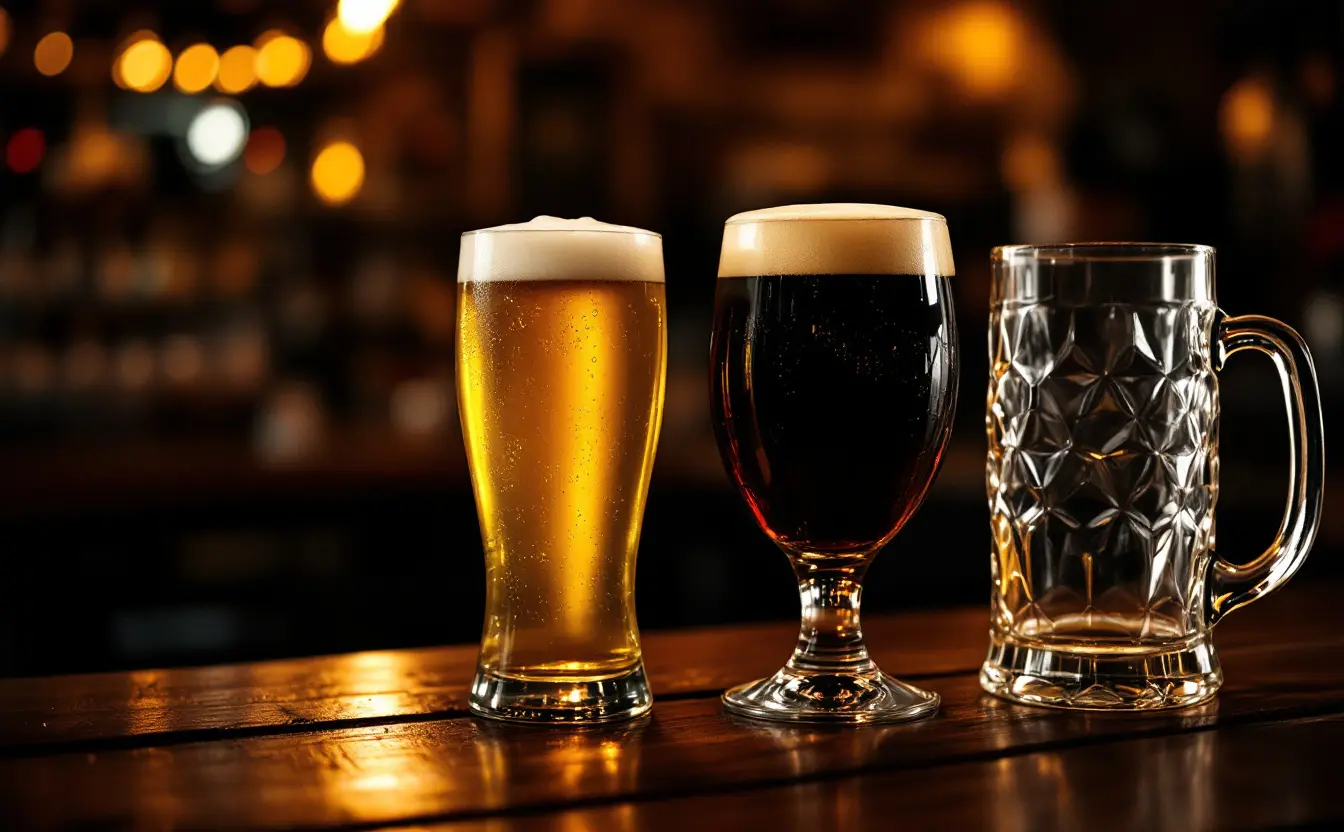
The conical shaker pint is the workhorse of North American bars. It takes its name from its other job as half of a cocktail shaker, it stacks, it survives, and it does nothing in particular for aroma. Lagers, pale ales and ambers are happy in it.
The nonic pint ("no nick") has a bulge near the top that gives your hand a grip, stops stacked glasses from wedging together and protects the rim from chips. It is the classic glass for bitters, porters and stouts. The tulip pint, the one you picture under an Irish stout, curves in and flares at the lip, which keeps a tight, creamy head on nitro beers.
A pint is not one size, either. A US pint is 16 US fluid ounces (473 ml); an imperial pint is 20 imperial ounces (568 ml). Most listings online use US ounces.
Pilsner glasses
Tall, slender and narrower at the base, pilsner beer glasses show off the colour and the steady bubble trail of a clear lager, and the slim top helps a tall white head stand up. Pour pilsner, helles, light lagers and kölsch.
Weizen glass
Narrow near the bottom and swelling toward the top, with room for the thick, slow foam of a German wheat beer. The traditional size holds half a litre plus the head. Use it for hefeweizen, dunkelweizen and witbier.
Tulip
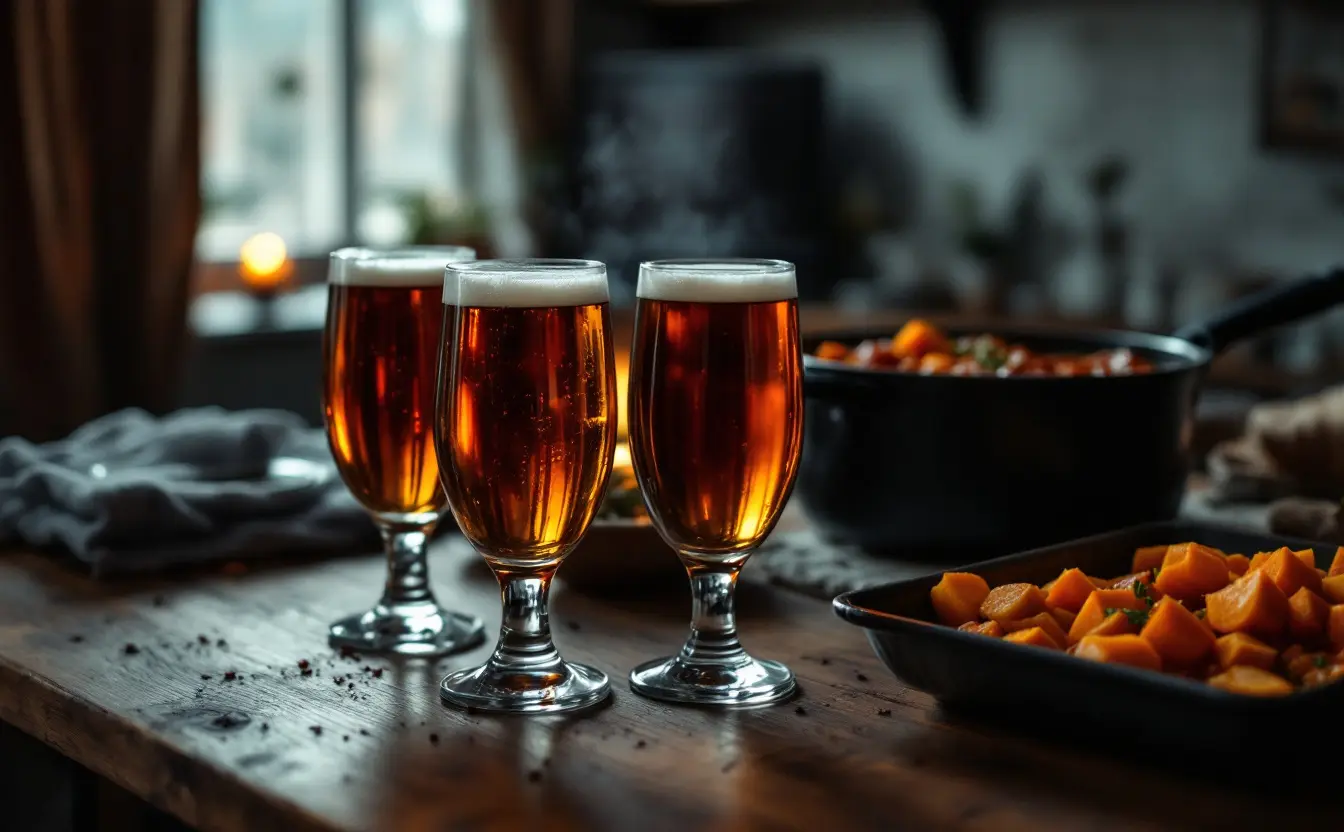
A stemmed glass with a round bowl, a pinched waist and a flared lip. The bowl lets you swirl, the waist gathers aroma and the flare supports a dense head. Saisons, Belgian strong ales, double IPAs, sours and imperial stouts all show well in it.
Snifter
The brandy balloon, for strong beers sipped slowly: barleywine, imperial stout, Belgian quad. The narrow mouth holds aroma, a cupped hand warms a cold pour gently, and the shape invites the small pour a 10% beer deserves.
Goblet and chalice
Stemmed with a wide, open mouth; a goblet is thin walled, a chalice heavier. They suit Belgian dubbels, tripels and abbey ales, and many have an etched spot in the base that keeps a thread of bubbles rising.
Teku
A stemmed, angular tasting glass from Italy whose bowl narrows and then flares at the rim. It presents aroma well and suits almost any style, but it is the most fragile shape here.
Stange
German for "rod": a tall, narrow cylinder, traditionally 200 ml. Small pours of delicate beers stay cold and lively to the last sip. It is the glass for kölsch and altbier.
Mug, stein and seidel
The handle keeps a warm hand off the beer, the thick walls take a toast, and the shape suits easy German lagers such as märzen, helles and dunkel. Strictly, a stein is stoneware; the dimpled one litre glass mug of a Bavarian beer hall is a Maßkrug, and seidel is the name you will see on smaller mugs.
Stemmed IPA glass
A newer design: a ridged base under a bowl that closes in at the top. The makers say the ridges stir the beer as you tip the glass, refreshing the head and hop aroma. Owners like the aroma; the usual complaint is that the ridges are a chore to clean.
How to choose the best beer glasses for home
- Start with what you drink. Lager and pale ale need pints and a pilsner shape; Belgian ales, IPAs and big stouts call for tulips.
- Match the glass to your cans. A 355 ml (12 oz) can wants 14 oz or more of glass to leave room for foam. A Canadian tallboy is 473 ml, which brims a 16 oz glass with no room for a head.
- Thick glass survives game nights and dishwashers; thin glass feels nicer and breaks more easily.
- A stem keeps your palm off the beer, which matters for slow sippers.
- Look for nucleation etching. A small etched mark in the base gives carbon dioxide a place to form bubbles, sending a steady column up the middle that feeds the head. Listings mention it when a glass has one.
Best overall: JoyJolt Callen Pint Glasses
Most beer at home comes in a 12 oz can, and this set is sized around it. JoyJolt lists the Callen pints at 15.5 oz (about 460 ml), with room for a full 12 oz can plus a head, in thick glass, four to a set and freezer safe. That covers most of a home fridge: lagers, pale ales, ambers, porters, stouts and alcohol-free beers.
Why a plain pint on top? Game nights are hard on glassware. Glasses get nudged during a fourth quarter run and washed in a hurry at halftime, and thick glass shrugs that off. The trade is aroma: an open pint lets smell drift away, which matters little with a cold lager and a fair bit with a hazy IPA.
Two notes. A 473 ml tallboy will not fit in one pour, so split it between two glasses. And freezer safe means the glass can take the cold, not that frosting it is a good idea; more on that below.
Budget pick: Libbey Stockholm Pilsner Glasses
If your fridge leans lager, a proper pilsner glass is the simplest upgrade in beer. Libbey describes the Stockholm as tall and slender with a slim mouth and a flat, reinforced foot, holding 14.5 oz (about 430 ml), dishwasher safe and sold in a set of four. Libbey pitches it for lagers, kölsch, bock and other light beers.
The shape does its job. A clear lager shows its colour and bubble trail, and the slim mouth helps the foam stand tall. There is room for a 12 oz bottle and a couple of fingers of head, and the flat foot gives a tall, top heavy glass a steadier stance on a crowded table.
It is a specialist: a stout looks lost in it, and I would pour a dark bock into a tulip.
The upgrade: Libbey Craft Brews Tulip Glasses
The tulip is the glass I would hand anyone who wants to smell more of their beer. Libbey's Craft Brews tulips are stemmed, hold 16 oz (about 470 ml) and have a wide bowl under a narrower top that holds a head and gathers aroma. They come four to a set, dishwasher safe and lead free. Libbey suggests them for Belgian ales and big stouts.
I would add saisons, double IPAs, sours and the better alcohol-free beers, which reward a glass that collects what aroma they have. The capacity is not a target: pour to about the widest part of the bowl and leave the rest for foam and smell. With strong beers, that keeps the pour sensibly small too.
Stemware has the usual trade-offs. It is easier to knock over, harder to stack and takes more cupboard space per glass.
Also good
The Hofbräuhaus 1 litre dimpled glass stein holds a full litre (33.8 oz) and carries the HB Oktoberfest design; it is imported from Germany. It is the vessel for a märzen at an Oktoberfest party or a German themed watch party. Be honest about the size: a litre is close to three standard cans. Fill it partway, share it, or keep it for the toast, and hold it by the handle, because a full one is heavy.
Tasting Beer, 2nd Edition, by Randy Mosher, is not a glass but the best companion to one. It is the standard primer on beer styles, flavour and how to taste, and where I would send anyone who wants to know why a tulip smells different from a shaker pint.
Which glass for which beer
| Beer | Glass |
|---|---|
| Pilsner, helles, light lager | Pilsner or stange |
| Kölsch, altbier | Stange |
| American lager, pale ale, amber | Shaker or nonic pint |
| IPA, hazy IPA, double IPA | Tulip or stemmed IPA glass |
| Hefeweizen, witbier | Weizen |
| Märzen, Oktoberfest lager, dunkel | Mug or stein |
| Irish stout, nitro beers | Tulip pint |
| Porter, stout | Nonic pint or tulip |
| Belgian dubbel, tripel | Goblet or chalice |
| Saison, sour, Belgian strong ale | Tulip or teku |
| Barleywine, imperial stout, quad | Snifter |
Alcohol-free beers follow the style they imitate; there is more on those in alcohol-free beer for game night. If some styles here are new to you, the guide to beer styles for game day walks through a typical tap list.
Does the glass really change the taste?
Yes, though not by magic. Most of what we call flavour is smell, and the glass decides how much aroma reaches your nose. An inward curving lip (tulip, snifter, teku) collects it above the beer; a straight, open top lets it drift away. The glass also shapes the head, and foam carries aroma while shielding the beer from air. Stems and thick walls slow warming, too.
What a glass does not do is steer beer to "sweet" or "bitter" zones of your tongue. The tongue map is a myth; every part of the tongue picks up every basic taste.
Keeping glasses beer clean
A beer clean glass carries no film of soap, grease or rinse aid. Residue gives bubbles something to cling to, so they collect on the walls, the head collapses and the beer goes flat sooner. Behind the bar, a glass with bubbles stuck to its sides went back to the washer.
- Wash with a little unscented dish soap, using a sponge that never touches greasy pans.
- Rinse well in hot water, then cold.
- Air dry upside down on a rack. Towels leave lint and whatever they last wiped.
- Rinse with cold water just before pouring.
Both Libbey sets are listed as dishwasher safe, but rinse aid and grease from a full load can leave a film, so rinse them cold before use.
To check, look for lacing: a clean glass keeps rings of foam at each sip. Dunked in water, it should sheet evenly rather than bead, and salt sprinkled inside a wet glass should coat it evenly. The one place you want bubbles to form is that etched mark in the base, if your glass has one.
Chilled, frosted or room temperature
The frosted mug looks great and does the beer no favours. Ice crystals melt in and water it down, set off a rush of foam, and the cold numbs aroma and flavour. A cupboard glass rinsed in cold water is better, or a fridge-chilled glass for a light lager on a hot day. Never pour hot water into a glass straight from the freezer: sudden temperature swings crack glass.
Serving temperatures, in broad terms:
- Light lagers and pilsners: 38 to 45°F (3 to 7°C)
- Pale ales, IPAs, ambers and wheat beers: 45 to 50°F (7 to 10°C)
- Porters, stouts and Belgian ales: 50 to 55°F (10 to 13°C)
- Barleywines, imperial stouts and quads: around 55°F (13°C)
A fridge at 40°F (4°C) is colder than most ales want, so let stronger beers sit out 10 to 20 minutes before pouring. If a bottle has been at the back of that fridge since spring, check whether beer goes bad first.
A starter set for a home bar
Three or four shapes cover nearly everything:
- Pints, nonic or shaker, one for each person who usually watches with you.
- A pilsner glass or stange for lagers.
- Tulips or tekus for aromatic and strong beers.
- Optional: weizen glasses for wheat beer, or a mug for Oktoberfest season.
Glass size also quietly sets the size of the pour; the beer calorie calculator shows what the gap between a 12 oz and a 16 oz pour adds up to over a long game.
How we chose
We chose these sets from the makers' published details (capacity, shape, materials and care), what owners commonly report about each kind of glass, and Rafael's years behind the bar and at judging tables. We have not used these particular sets for this guide.
FAQ
What are the best craft beer glasses?
A stemmed tulip or a teku. Both gather aroma under a narrowing rim, hold a head well and suit almost any craft style, from saisons and IPAs to imperial stouts. If you buy only one specialty glass, make it a tulip.
Should you put beer glasses in the freezer?
No. Frost melts into the beer, causes foaming and dulls aroma, and the glass can pick up freezer smells. Rinse a cupboard glass in cold water instead, or chill it in the fridge for a light lager.
Is a pint glass 16 or 20 ounces?
Both, depending on where it comes from. A US pint is 16 US fluid ounces (473 ml) and an imperial pint is 20 imperial ounces (568 ml). Glasses sold online usually list US ounces, so check the number against the cans you buy.
Why does beer go flat faster in some glasses?
Usually the glass is not beer clean. A film of soap, grease or rinse aid gives bubbles places to cling, so carbonation escapes and the head collapses. Wash with unscented soap, rinse hot then cold, and air dry upside down.