Best Japanese Beer: The Big Four, Rice Lagers and What to Eat With Them
The best Japanese beer depends on what you want in the glass. The big four brewers, dry and rice lagers, craft beer and the food that suits each.
By Rafael Antunes10 min read
People ask me for the best Japanese beer the way they ask for the best pizza, as if there were one answer. There isn't, but the field is narrower than it looks. Most Japanese beer sold in Canada and the US comes from four big brewers, Asahi, Kirin, Sapporo and Suntory, and their flagships are all pale lagers at around 5 percent alcohol. What separates them is how dry they finish, how much malt flavour they carry, how bitter they are and whether there is rice in the recipe. Choose along those lines, and by what is on the plate, and any of them will do its job.
I poured a lot of these over ten years behind busy bars, usually next to baskets of fried chicken, and these days I judge lager flights at homebrew competitions. This is how I sort them.
The best Japanese beer for what you want
- If you want the driest, sharpest glass, start with a dry lager. Asahi Super Dry created the style and is built for fried, salty food.
- If you want more malt flavour and a rounder body, look for an all-malt lager: Kirin Ichiban, Suntory's The Premium Malt's, or Sapporo's Yebisu when a shop carries it.
- If you want something light and easy for a long night, Sapporo Premium, the brand's export lager, and Orion from Okinawa are clean, cold and quick to finish.
- If you want something you haven't tried, look for Japanese craft beer: lagers, wheat beers and pale ales from small breweries, often with local ingredients such as yuzu citrus.
None of these is best in any absolute sense. They are different tools.
Japanese beer brands: the big four
Japan's modern brewing industry grew up in the late 1800s under heavy German influence, which is why the major brands are all lagers. Four companies still account for most of the beer sold in Japan, and each has a flagship that travels.
Asahi
Asahi Super Dry arrived in 1987 and changed the conversation. Japanese lager before it leaned toward a fuller, more bitter German model. Super Dry was lighter and sharper and finished almost instantly, a quality the Japanese call karakuchi, roughly "dry" in the sense a dry wine is dry. It is brewed with rice alongside barley malt, and its bitterness is low. Rival brewers rushed out dry beers of their own, a scramble the Japanese press nicknamed the dry wars. Super Dry outlasted the fight and became one of the best-known beers in the country.
In the glass it is very pale and very fizzy, with a clean, grainy nose, a faint fruitiness and a finish that is gone before you have set the glass down. That disappearing act is the whole point.
Kirin
Kirin has two beers worth knowing. Kirin Lager is the old guard, a brand with roots in the late 1800s and a firmer, more bitter, more traditional taste. Kirin Ichiban is the one you will see more often here.
Its name refers to ichiban shibori, "first press". In most breweries, after the sweet liquid drains out of the mash, the grain is rinsed with hot water to pull out the remaining sugar, and that second run goes into the kettle too. Ichiban uses only the first run. The result is an all-malt lager with a soft, clean malt flavour and less of the husky, faintly tannic edge that heavy rinsing can bring. Side by side with a dry lager, it tastes rounder and a touch sweeter, with more bread in the middle.
Sapporo
Sapporo traces its brewery to 1876 in the city of Sapporo, on the northern island of Hokkaido, and bills itself as Japan's oldest beer brand. Sapporo Premium, the export lager, is light and crisp with a gentle bitterness. At home in Japan the everyday flagship is Black Label, and the company's richer all-malt beer, Yebisu, is old enough that a Tokyo neighbourhood, Ebisu, took its name from the beer rather than the other way round. Yebisu is fuller and more bready than the export lager, and it is worth picking up when you see it.
Suntory
Suntory is better known abroad for whisky, but its beer, The Premium Malt's (the apostrophe is part of the name), is an all-malt, pilsner-style lager with more body and a more floral hop aroma than the dry lagers. You will see it less often on this side of the Pacific, mostly in Japanese grocers and restaurants.
Outside the big four, Orion, from Okinawa, is the regional lager you are most likely to meet here: light, with a loyal following, made for heat and humidity.
Brewed in Japan, or brewed here?
Read the small print before you judge a brand. Several Japanese labels sold in Canada and the US are brewed under licence in North America, and the recipe can differ from what is poured in Tokyo. The label says where the beer came from, usually as "brewed and packaged by" plus a company and a city.
Imports have a different problem, which is distance. A lager shipped across the Pacific has spent weeks in containers and warehouses before it reaches the cooler, and pale lager shows its age as a papery, sweetish dullness. Check the date and buy from a shop that moves its stock. The guide to whether beer goes bad explains how to read the codes on the can.
What is a rice lager?
Rice in beer has nothing to do with sake. Brewers use it as an adjunct, a source of starch alongside barley malt. In the mash, rice starch converts to sugar the way barley starch does, but the rice brings almost no flavour, protein or colour with it. The yeast eats that sugar, and what's left is a beer with a lighter body and a drier finish than an all-malt lager of the same strength.
Rice starch also needs more heat to soften than barley starch does. Big breweries cook it first in a separate vessel before adding it to the mash, and homebrewers usually buy it as pre-cooked flakes. I have judged plenty of homebrewed rice lagers, and the common fault is a beer so thin it tastes watery rather than crisp. The good ones still have a little cracker-like malt in the middle.
Brewers in Japan and the US have both used rice for well over a century. Many North American craft breweries now make a "Japanese-style rice lager" of their own: pale, very dry and low in bitterness, sometimes hopped with Sorachi Ace, a variety bred in Japan by Sapporo that smells of lemon and, to some noses, dill or coconut.
What makes a dry lager dry?
Dry means very little sugar left in the finished beer. It does not mean extra bitterness. Brewers get there three ways:
- A cooler mash. Holding the mash at around 145 to 149°F (63 to 65°C) favours the enzyme that produces the most fermentable sugar.
- Adjuncts such as rice, which ferment out almost completely.
- A yeast strain that keeps working until there is almost nothing left to eat.
The result is a beer that arrives, refreshes and leaves. Behind the bar, dry lager was the beer people reordered without thinking about it, because nothing lingered to fill them up.
One caution. Dry is not the same as light. A dry lager has less leftover sugar, but it carries about the same alcohol as any other 5 percent lager, and alcohol supplies most of a beer's calories. Put one through the beer calorie calculator and it lands right beside any other standard lager.
Happoshu, "third beer" and what counts as beer in Japan
Walk into a Japanese convenience store and you will find cans that look like beer but legally are not. Japan taxes beer partly according to its malt content, and brewers answered with happoshu, a low-malt drink, and later with "new genre" drinks, nicknamed third beer, made with little or no malt or blended with a spirit. They cost less there and taste lighter. Japan has been narrowing the tax gap between these categories in stages, so that shelf keeps shifting.
The big flagships sold in Canada and the US are beer in the full sense, so this matters mostly if you travel. Japan also takes alcohol-free beer seriously, and the major brewers all make one.
Japanese craft beer
Until the mid 1990s, Japan's licensing rules required a brewery to produce a very large volume every year, which shut small brewers out. When that minimum was cut sharply in 1994, small breweries opened across the country. The first wave, called ji-biru, or local beer, was often a sideline for hotels and tourist towns, and quality was uneven. A later generation of brewers, many trained abroad or devoted to particular styles, built something much more serious.
What you are likely to find:
- German styles done carefully: helles, pilsner, dark lager and wheat beer.
- Belgian-style wheat beers, often with yuzu or another local citrus in place of orange peel.
- Pale ales and IPAs, sometimes with Japanese hop varieties.
- Beers with local ingredients such as sansho pepper, green tea, sweet potato, sake yeast or rice koji.
- Wood-aged beers, some aged on Japanese cedar or in casks that once held shochu or whisky.
Here it turns up in specialty beer shops and Japanese grocers. Skip a hoppy import with no date on it, and lean toward lagers, dark beers and stronger ales, which handle a long trip better.
What to pair with Japanese beer
Japanese lager grew up beside a cuisine heavy in salt, umami, fried food and delicate fish, so it pairs well almost by default. Three rules cover most of it:
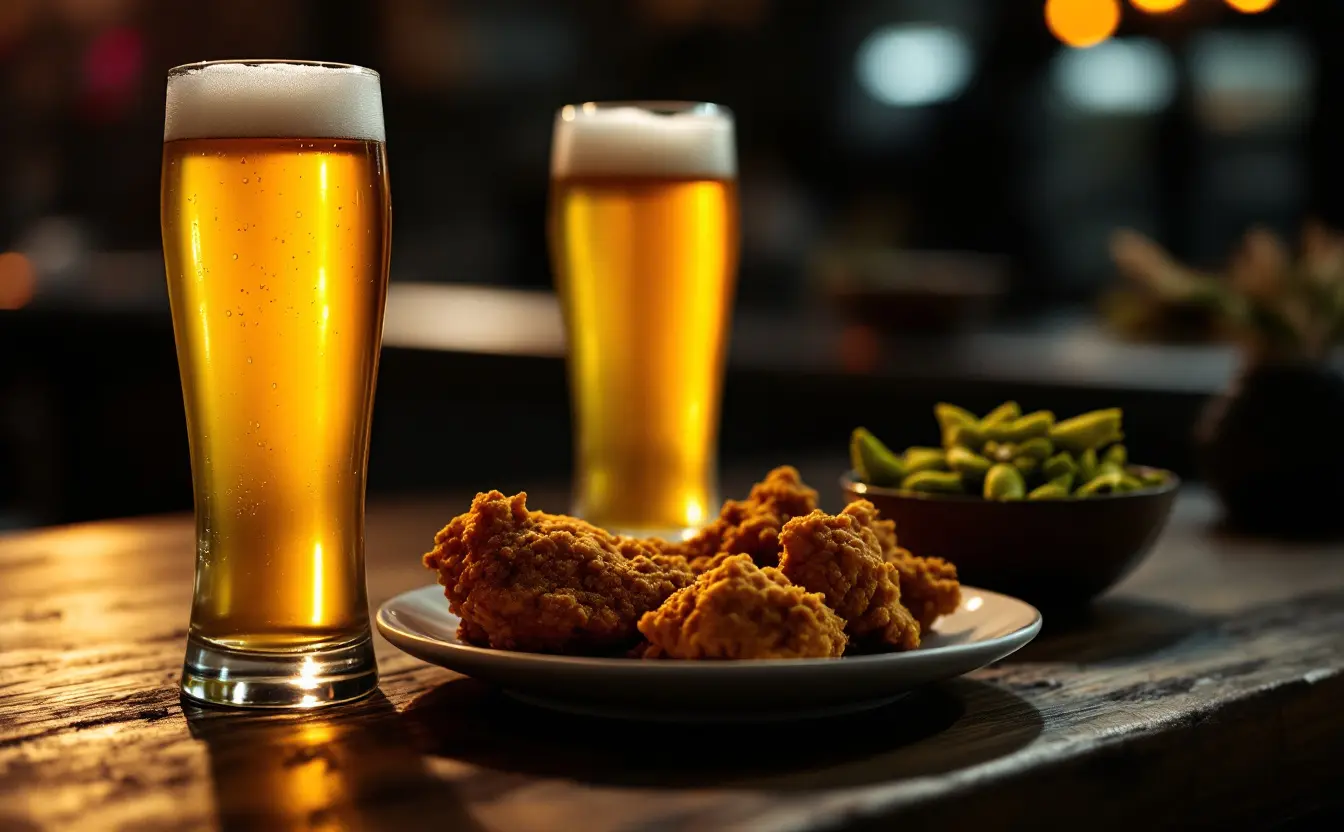
- High carbonation and a dry finish cut fat, so anything fried goes with a dry lager.
- Low bitterness leaves soy, miso and raw fish alone. A big IPA would trample sashimi.
- All-malt lagers have enough body for grilled, glazed and caramelized food.
| Food | Pour | Why it works |
|---|---|---|
| Karaage or chicken wings | Dry lager | Bubbles and a fast finish scrub away the fat |
| Sushi and sashimi | Light rice lager | Gentle enough for raw fish; low bitterness keeps soy in balance |
| Gyoza | All-malt lager | Browned, crisp bottoms meet toasty malt |
| Yakitori with tare glaze | All-malt or dark lager | A sweet, smoky glaze needs some body |
| Tonkotsu ramen | Dry lager | Rich pork broth needs a reset between bites |
| Tempura | Dry lager | Light batter, light beer |
| Japanese curry | All-malt lager | Mild, sweet spice suits a rounder beer |
| Salted edamame | Any of them, very cold | Salt makes every lager taste brighter |
| Nachos, burgers, game-day plates | Dry lager | Same logic as karaage |
For the same thinking applied to the rest of the snack table, the guide to pairing craft beer with bar food goes dish by dish.
How to serve it
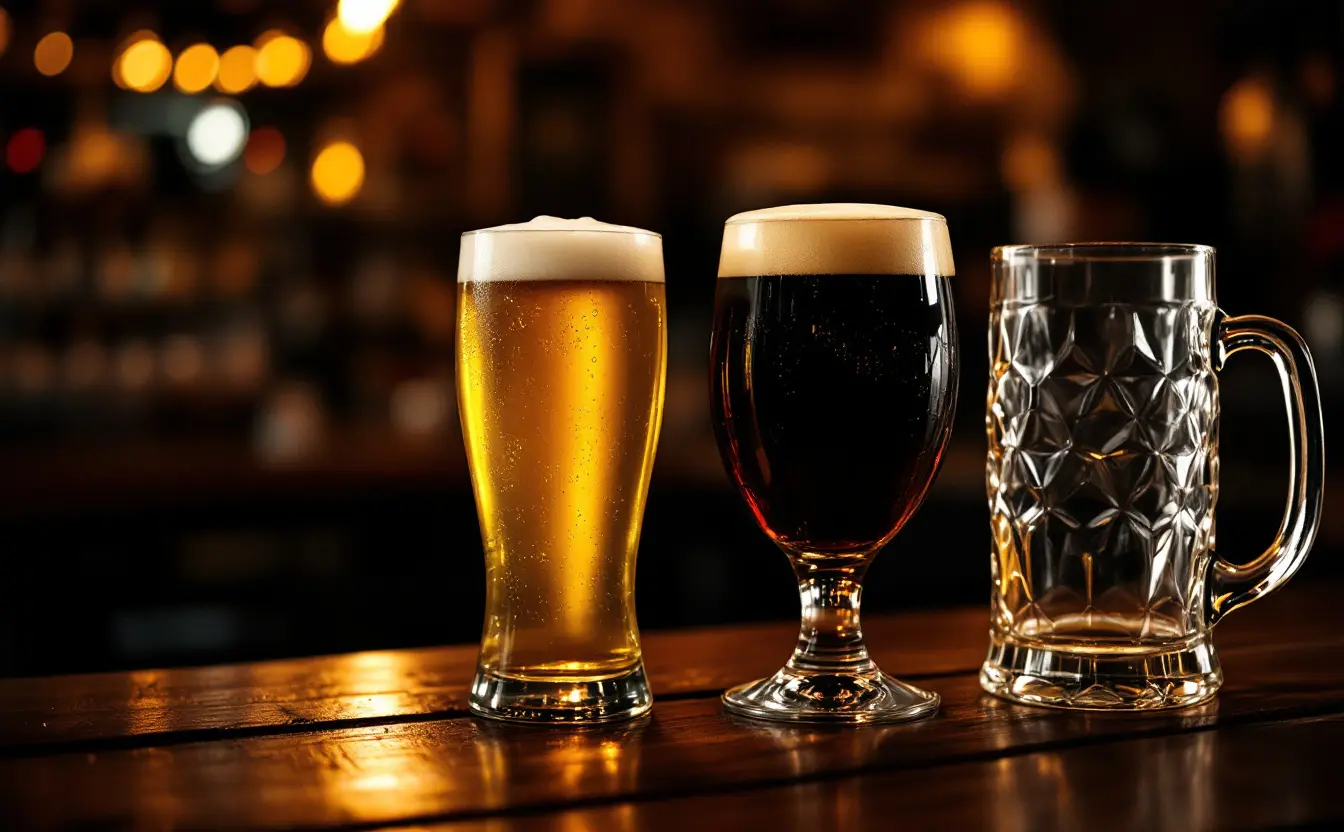
Japanese bars treat the pour seriously. A common ideal is about seven parts beer to three parts foam, poured hard enough to raise a dense white head that holds the aroma in and keeps the beer from going flat under it. Serve it cold, around 38 to 43°F (3 to 6°C), in a thin, clean glass. A glass rinsed in cold water just before the pour keeps the head tight.
In Japan, big bottles of about 633 ml (21 oz) are shared at the table, and the custom is to pour for the people around you and never for yourself; someone will top you up. It is a good habit for a late-November game night too. Buy a few big bottles, set out small glasses, and keep each other's glasses full through the fourth quarter.
FAQ
Is Japanese beer made with rice?
Some is and some isn't. Asahi Super Dry uses rice with its barley malt, while Kirin Ichiban, Yebisu and The Premium Malt's are all-malt beers. Recipes can also differ between a version brewed in Japan and one brewed under licence elsewhere, so check the label when it lists ingredients.
What does karakuchi mean on a Japanese beer?
It translates roughly as dry or sharp. On beer it describes a crisp, fast finish with very little sweetness, the quality Asahi Super Dry made famous in the late 1980s.
Is Japanese beer gluten-free?
No. Even the rice lagers are brewed with barley malt, which contains gluten. Anyone who has to avoid gluten should look for beer specifically labelled gluten-free.
Which Japanese beer should I buy for a game night?
A case of dry lager is the safe base for a long game with wings or fried food, because it stays refreshing for hours. Add a few all-malt lagers for anyone who wants more flavour, and keep everything cold and out of the light until it is poured.