Bar Food & RecipesCraft Beer & Drinks
Beer Cheese Dip That Stays Smooth: Recipe, Best Beers and What to Dip
A smooth beer cheese dip in 20 minutes, in grams and cups: which beer styles work, which turn it bitter, how to stop it breaking, and what to dip.
By Rafael Antunes10 min read
Beer cheese dip is the bar snack I have seen go wrong more often than any other. It looks easy: melt cheese, add beer, stir. Then the pot gets a few degrees too hot, or somebody reaches for a hoppy IPA, and the dip turns greasy, grainy or bitter right about when the puck drops. I spent ten years pouring beer a few steps from kitchens that made it by the gallon, and this is the version I trust.
The short answer: toss grated old cheddar with cornstarch, melt it slowly into warm evaporated milk and a malty, low-bitterness beer such as an amber lager or a brown ale, and never let it boil. You get a glossy dip that stays scoopable through a whole game. Below: the hot dip, a cold Kentucky-style spread, which beer styles work, and how to save a pot that breaks.
At a glance:
- Active time: about 20 minutes
- Heat: medium, then low; once the cheese is in, it should steam, never bubble
- Yield: about 4 cups (just under 1 litre), enough for 8 to 10 people as a starter
- Hold at: 140°F (60°C) or above, for up to 2 hours
- Keeps: 4 days in the fridge
Beer cheese dip recipe
Old cheddar is what Canadians call the sharp cheddar Americans buy. Grate it yourself from the block. Pre-shredded cheese is coated with starch or cellulose to keep the shreds from clumping, and that coating leaves the dip with a sandy texture.
| Ingredient | Weight or volume | Cups and spoons |
|---|---|---|
| Old (sharp) cheddar, grated | 340 g (12 oz) | 3 cups |
| Monterey Jack or young Gouda, grated | 115 g (4 oz) | 1 cup |
| Cornstarch | 16 g | 2 tablespoons |
| Evaporated milk | 250 ml | 1 cup |
| Beer, opened 10 minutes ahead | 180 ml | 3/4 cup |
| Cream cheese, softened and cubed | 115 g (4 oz) | 1/2 cup |
| Dry mustard | about 3 g | 1 teaspoon |
| Worcestershire sauce | 5 ml | 1 teaspoon |
| Garlic powder and smoked paprika | about 1 g each | 1/2 teaspoon each |
| Hot sauce or cayenne | to taste | a few dashes or a pinch |
- Toss the grated cheeses with the cornstarch until every shred is dusted. Leave the bowl on the counter while you do the rest; cheese that has lost its fridge chill melts more evenly.
- Pour the evaporated milk and beer into a heavy saucepan over medium heat. Bring it to a bare simmer, with small bubbles at the edge, and let it go for a minute or two. The beer foams up and then settles.
- Turn the heat to low. Whisk in the cream cheese until the liquid is smooth.
- Add the cheese a handful at a time, stirring with a silicone spatula in a figure eight, and wait until each handful has melted before adding the next. It takes about 5 minutes. The dip goes from loose and milky to thick and glossy.
- Stir in the mustard, Worcestershire, garlic powder, paprika and hot sauce. Taste before you add any salt. Cheddar usually brings enough.
- Move it to a warmed bowl, a fondue pot or a small slow cooker set to Warm. If it tightens as it sits, stir in a spoonful of warm evaporated milk or beer.
Beer cheese that doesn't break, and why this method works
Cheese is a mesh of milk protein holding fat and water in place. Heat it too fast or too far and the mesh tightens and squeezes the fat out, which is how you end up with an orange slick floating on a pot of curds. Acid makes the mesh tighten sooner, and beer is mildly acidic, so beer cheese is a little more fragile than a plain cheese sauce.
This recipe guards against that four ways.
- Cornstarch, tossed with the shreds, swells as the dip heats and thickens the liquid around the cheese, which keeps fat droplets suspended instead of letting them run together.
- Evaporated milk has much of its water cooked off, so its proteins, which help hold fat and water together, are concentrated. It has also been heat-treated in the can, which makes it less likely to curdle than fresh milk when the beer goes in.
- Cream cheese adds body and keeps the dip soft as it cools on the table.
- Low heat does the rest. If a bubble breaks the surface once the cheese is in, pull the pan off the burner for a minute.
The cheese matters too. Young, moist cheeses melt smoothly. Extra-old cheddar and other long-aged cheeses taste wonderful, but they carry less water and their proteins have already broken down, so on their own they go grainy or oily. Use them for part of the cheese, never all of it. Monterey Jack, young Gouda, Havarti and fontina all melt well beside cheddar.
For insurance, melt two or three slices of deli American cheese in with the last handful. Processed cheese contains emulsifying salts, which loosen the protein mesh so it holds on to its fat, and a few slices make the whole pot far harder to break.
Rescuing a dip that breaks
- Take the pan off the heat right away.
- Whisk in a tablespoon or two of warm evaporated milk, hard, for 30 seconds.
- If it's still oily, stir 1 teaspoon of cornstarch into 1 tablespoon of cold beer or milk, whisk that in, and return the pan to low heat, stirring until the dip tightens and turns glossy.
- Still not right? Fifteen seconds with an immersion blender usually brings it back.
A grainy dip, gritty but without free oil, was usually boiled or made with pre-shredded cheese. The blender helps there too, though rarely all the way back to silky.
The best beer for beer cheese
Two rules cover most of it. First, bitterness doesn't cook out. Hop bitterness stays in the pot while some of the water and alcohol leave, so an IPA that tastes pleasant in the glass turns harsh in the dip. Second, malt is what you're after. The bready, toasty and caramel flavours of malt sit right beside cheddar and make the dip taste of beer in the good way.
| Style | What it brings | How it works in the dip |
|---|---|---|
| Pilsner or pale lager | Clean, mild, a little bready | Safe; the dip tastes mostly of cheese |
| Amber lager, Vienna lager or Märzen | Toasty malt, light caramel | My first choice |
| Brown ale | Nutty, toffee | Excellent with aged cheddar |
| Porter or stout | Roast, coffee, chocolate | Use half and half with a lager; the colour goes dull brown |
| Hefeweizen | Banana and clove | Good with Gouda, but divisive |
| IPA or double IPA | High bitterness | Skip it |
| Sour or fruited beer | Acidity | Skip it; acid helps the sauce break |
| Alcohol-free lager or amber | Malt without the alcohol | Works well |
If some of those names are new, the guide to beer styles for game day explains each family and what it tastes like in the glass.
The beer doesn't need to be fresh. A bottle that sat at the back of the fridge too long is fine for cooking, as long as it isn't skunked or sour; how to tell when beer has gone off covers the difference. Let any beer stand open for 10 minutes before measuring so it doesn't foam over in the hot pan.
In the glass, a dip this rich wants something crisp. Carbonation lifts fat off your tongue, so a pilsner resets things between scoops, while an amber echoes the toasty malt in the pot. There's more on why in pairing craft beer with bar food.
Cold beer cheese, the Kentucky way
In Kentucky, where beer cheese has deep roots, the name usually means something else: a cold, sharp, garlicky spread served with crackers and raw vegetables. It needs a food processor and no stove at all.
- Put 450 g (1 lb) of grated old cheddar in the processor with 1 small clove of garlic, 1 teaspoon each of dry mustard and Worcestershire sauce, and 1/4 to 1/2 teaspoon of cayenne.
- Pulse until it looks like coarse crumbs.
- With the motor running, pour in flat beer a little at a time, somewhere between 1/2 and 3/4 cup (125 to 180 ml), until the mixture turns smooth and spreadable, about the texture of soft butter.
- Pack it into a container and chill it for at least 4 hours. Overnight is better: the garlic and cayenne sharpen and the beer flavour settles in.
It keeps for about 5 days in the fridge; take it out 20 minutes before serving so it spreads. A pale lager is the traditional choice. Nothing here is cooked, so all of the beer's alcohol is still in the spread.
What to dip in beer cheese
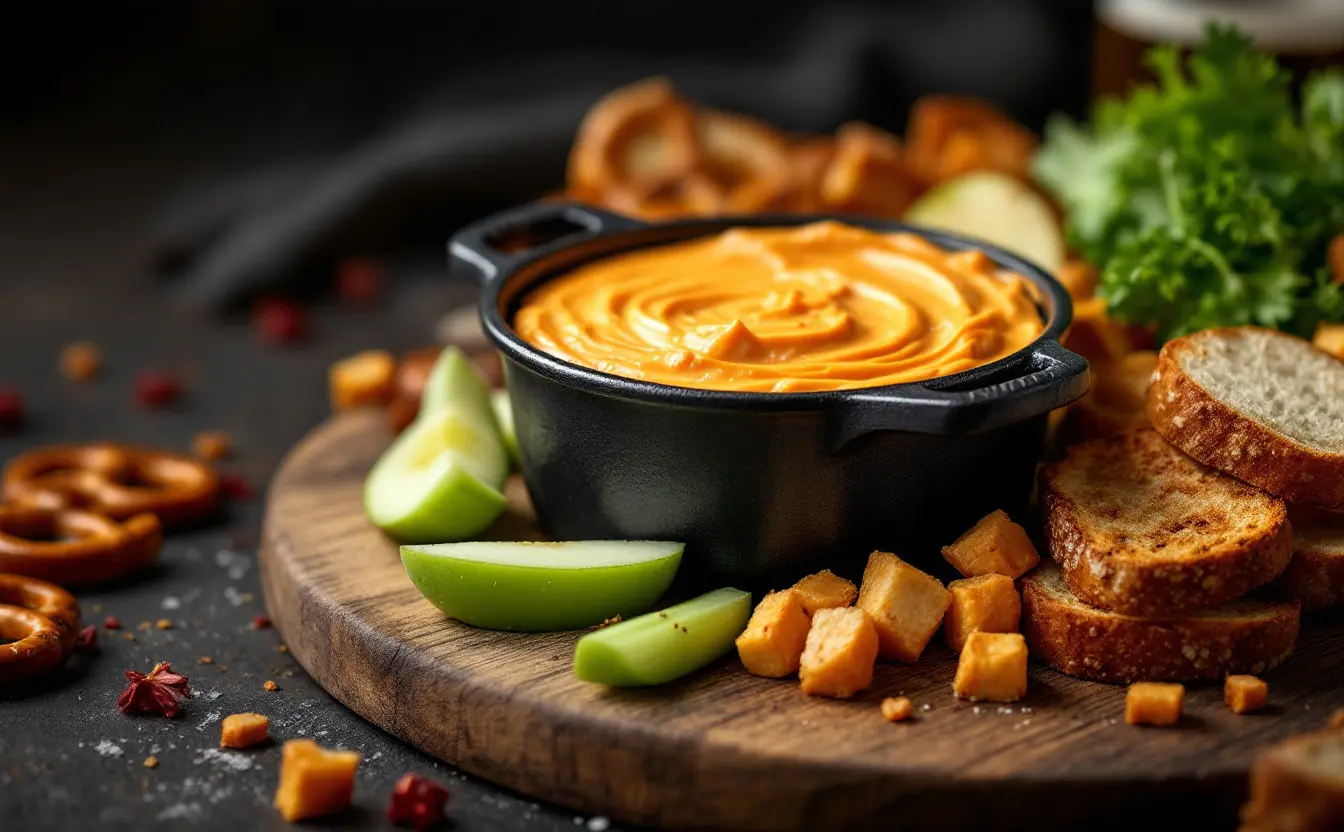
Soft pretzels are the classic, but beer cheese gets along with almost everything on a game-day table.
- Bread: pretzel bites, hard pretzel rods, toasted cubes of rye or pumpernickel, garlic toast.
- Vegetables: celery, carrots, radishes, sweet pepper strips, and broccoli or cauliflower florets blanched for a minute.
- Fruit: slices of a crisp, tart apple or a firm pear. The acidity cuts the richness better than anything else on the board.
- Meat: coins of smoked sausage or kielbasa, browned in a pan.
- Fried things: fries, tater tots, roasted baby potatoes, fried pickles.
Beyond the bowl, spoon it over a burger, a grilled bratwurst or a tray of nachos. For the rest of the starter table, the game-day food guide runs through spinach dip, potato skins and the other classics.
Making it ahead and keeping it warm
The hot dip keeps 4 days in a covered container in the fridge. It sets firm, close to a spread, and it's very good cold on a cracker. Reheat it in a saucepan over low heat with a splash of evaporated milk or beer, stirring the whole time, or in the microwave at half power in 30-second bursts, stirring between each.
For a long game, a small slow cooker on Warm keeps the dip above 140°F (60°C), the holding temperature food safety guidance in Canada and the US uses for hot food. Stir it every 15 minutes and keep the lid on. After about two hours the texture tightens and dulls, so I hold half and keep the rest in the fridge for the second half. A bowl that has cooled on the coffee table shouldn't sit out longer than two hours either, the same rule as any perishable food.
Alcohol, kids and anyone not drinking
A short simmer drives off some of the alcohol, not all of it. For kids, or guests who aren't drinking, make the hot dip with an alcohol-free lager or amber; it behaves the same in the pot. The guide to alcohol-free beer for game night covers which styles come closest to the real thing.
When it goes wrong
| Problem | Likely cause | Fix |
|---|---|---|
| Oil pooling on top | Too hot, or too much aged cheese | Off the heat, whisk in warm evaporated milk, then a cornstarch slurry |
| Gritty texture | Boiled, or pre-shredded cheese | Immersion blender; lower heat next time |
| Bitter finish | A hoppy beer | Stir in more cheese and cream cheese; use a malty beer next time |
| Too thick | Cooled down or held too long | Warm evaporated milk or beer, a spoonful at a time |
FAQ
What is the best beer for beer cheese dip?
A malty beer with little bitterness: an amber lager, Vienna lager, Märzen, brown ale or Irish red. A pilsner or pale lager gives a milder dip. Avoid IPAs, whose bitterness concentrates in the pot, and sour beers, whose acid makes the sauce more likely to break.
Can you make beer cheese dip ahead of time?
Yes, up to 4 days ahead, refrigerated and covered. Reheat it over low heat with a splash of evaporated milk or beer, stirring constantly, and don't let it bubble.
Why is my beer cheese grainy?
Usually it got too hot, or it was made with pre-shredded cheese, whose anti-caking coating doesn't melt smoothly. Long-aged cheddar on its own can turn grainy too. Grate a younger cheese from the block, toss it with cornstarch and keep the heat low.
Can you freeze beer cheese dip?
I don't. Cheese sauces come out of the freezer grainy and slightly split, and slow reheating with milk won't make them silky again. Making it a few days ahead and refrigerating it works much better.