Best Charcoal Grills: Kettles, Barrels and How to Pick a Charcoal Grill
How to choose a charcoal grill: kettle or barrel, grate size, vents and ash cleanup, with a classic kettle, a small portable one and a weekend upgrade.
By Megan Tremblay12 min read
There is a smell a charcoal grill makes that no other grill does. Fat drips onto glowing coals, hisses, and comes back up as smoke that clings to a burger before you have even flipped it. The char-broiler on the line where I learned to cook ran on gas, and the kitchen spent years chasing that flavour with wood chips wrapped in foil. A charcoal grill gets it for free.
It is also the simplest grill you can buy: a bowl, a grate, a lid and a couple of air vents. This guide is for anyone buying a first charcoal grill, replacing a rusted-out one, or picking one as a holiday gift for someone who has talked about it all fall. The short answer: the best charcoal grill for most people is still a 22 in kettle, big enough for a crowd and simple to control. Go smaller if you will carry it, go upgraded if you cook every weekend, and look at a barrel grill with a side firebox if you want to smoke on the same unit. If you have never lit one, start with charcoal grilling for beginners, which covers the chimney, the two-zone fire and working the vents during a cook.
How to choose a charcoal grill
- A lid with a vent. Without a lid you have a brazier, good for searing and little else. A lid turns the grill into an oven, so thick food cooks through.
- Size. Grate diameter on a kettle, cooking area on a barrel. An 18 in kettle feeds a small group; a 22 in kettle covers most families and leaves room for a proper two-zone fire.
- Vents, top and bottom, that move easily and close fully. Closing them is how you put the fire out and save the leftover charcoal.
- Ash handling. Look at how ash leaves the grill before anything else, because you will deal with it after nearly every cook.
- The grate. Thicker bars hold heat for better marks, and a section that lifts or hinges lets you add coals without taking the food off.
- Footing. Three legs on a flat patio are fine. On a deck, check how wide and steady the base is, and set it on a non-combustible pad.
- Portability, if you need it: low weight, a cool handle and a lid that locks.
Best overall: Weber Original Kettle (22 in)
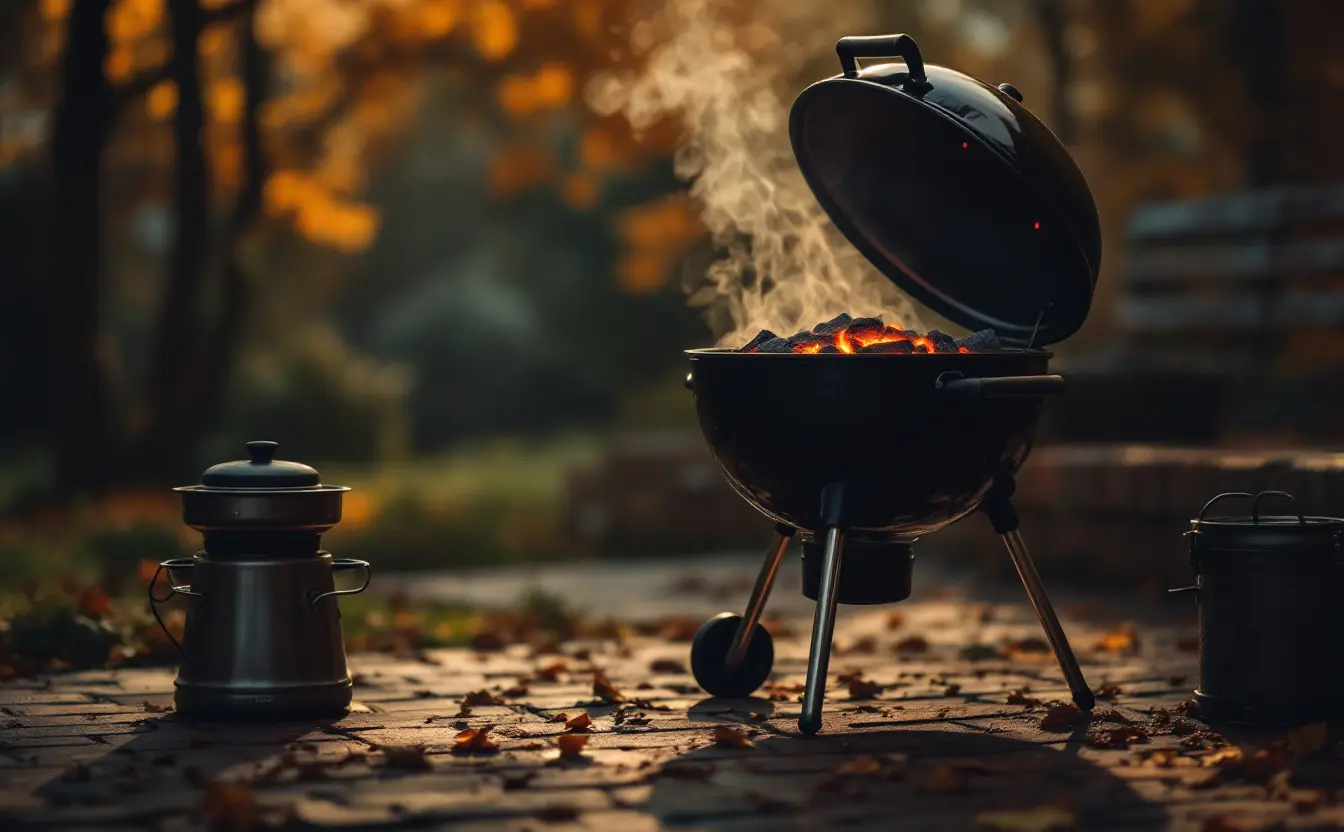
This is the classic charcoal kettle: one bowl, a 22 in (56 cm) grate, a vent in the lid and one in the bottom, and enough room for direct and indirect cooking side by side. That room is why it is the pick. Bank the coals to one side of a 22 in grate and you still have a full half left for the cool zone, so burgers can sear over the fire while sausages finish gently beside them. That set-up rescues more game-day cooks than any gadget.
The round bowl does more than it looks like it does. With the lid on, heat rolls up the curved sides and back down over the food, so a spatchcocked chicken or a tray of wings cooks evenly without much turning. Two vents are the only controls, which sounds limiting until you notice there is nothing else to break. Once the coals are ready, the grill time calculator gives minutes per side for burgers, chicken, steak and the rest.
What it does less well: long smokes take attention, since a kettle needs its charcoal arranged to burn slowly (a ring of briquettes around the edge, lit at one end, is the usual trick), and a big brisket won't lie flat on a round grate. Ash drops through the bottom of the bowl, so check the listing for the kind of ash catcher the version you are looking at includes. That one detail decides how messy cleanup gets.
Budget pick: Weber Jumbo Joe (18 in)
The Jumbo Joe is the same idea, shrunk: an 18 in (46 cm) grate, a light body and a lid that locks for carrying. It is big enough for burgers for six and small enough for a car trunk, a cottage dock or a balcony where the building allows charcoal. Many don't, so check first.
An 18 in grate has about two thirds the area of a 22 in one. You can still build two zones, but the cool side is small, so cook in rounds: sausages first on the cool side, then burgers over the coals while the sausages wait in a foil pan. The lid lock is for carrying a cold grill. Let it cool completely, ash and all, before it goes anywhere near a car, because coals that look dead can stay hot for hours.
The upgrade: Weber Master-Touch (22 in)
Same 22 in grate and the same charcoal, with the extra conveniences Weber builds in for people who cook on charcoal every weekend. The exact extras differ between versions, so read the current listing and compare it line by line with the Original Kettle. Upgraded kettles in general add things like an enclosed ash catcher, a thermometer in the lid, a holder for the lid and a grate with a removable centre for inserts. Pay for the ones that fix something that already bugs you.
Weber has sold several versions of its kettles over the years, and the easiest way to compare the current ones is side by side. Abt, a family-owned appliance store in Illinois, lists Weber's kettles and smokers together, sizes and colours included.
It cooks the same food over the same fire. The case for it is frequency. If you light charcoal every Saturday from April to the first snow, small comforts like a tidier ash dump add up over a summer. If you grill a dozen times a year, the original is all the kettle you need.
Also good
The Royal Gourmet CC1830S is a barrel grill with an offset firebox on the side, so one charcoal unit can grill in the main barrel and smoke with a fire in the side box. If you want burgers on Saturday and ribs on Sunday and only have room for one cooker, it covers both. Barrel-and-firebox combos as a group are generally lighter-built than heavy dedicated smokers, and their owners often mention smoke escaping around the lid and firebox seams, so plan on a probe thermometer at grate level rather than trusting the lid dial.
The Weber Rapidfire chimney starter belongs beside any charcoal grill. It is a standard-size metal chimney with a heat-shielded handle that gets a full load of charcoal lit with newspaper, no lighter fluid needed. The beginners guide linked above walks through using one.
Kettle grill or barrel grill?
| Shape | Good at | Weaker at | Ash | Suits |
|---|---|---|---|---|
| Kettle | Two-zone grilling, lid-down roasting, short smokes | Long cuts, very big batches | Falls through to a pan or catcher | Most households |
| Barrel | Big batches, long items, smoking with a side firebox | Heating all that steel | Tray or drawer under the coals | Crowds, grilling and smoking on one unit |
| Ceramic kamado | Holding low or high heat on little charcoal | Weight, slow to cool down | Small amount, raked out below | Weekly cooks who smoke and grill |
| Tabletop | Travel and small spaces | Anything big | Small pan, tipped out when cold | Tailgates, small balconies |
A kettle grill is round, deep and efficient: a modest pile of charcoal heats the whole dome, and two vents control it. A barrel grill is a horizontal drum on legs with a long, rectangular grate, which suits rows of sausages, full racks of ribs and skewers for a crowd. Many barrel grills also let you raise or lower the charcoal pan with a crank or a set of hooks, a second way to control heat; check whether the one you want does.
The cost of a barrel is fuel. All that steel takes more charcoal to heat, and on a cold evening thin metal sheds heat fast. If you cook for four most weekends, a kettle does everything a barrel does with less charcoal and less cleanup.
Charcoal vs gas
Flavour first, since that is what people argue about. Glowing coals cook mostly with radiant heat, and drippings that land on them turn into smoke. Gas grills have bars or plates over the burners that do some of the same work, but on a burger or a steak most people can taste the difference.
Heat is next. A full chimney of coals poured under one side of a kettle gets hotter at the grate than most home gas grills, which is why a steak crusts better over charcoal. Gas wins on time and ease: it is lit and preheated in 10 to 15 minutes with a turn of a knob, while charcoal takes 15 to 20 minutes in a chimney, a few more to settle, and a few cooks to learn the vents.
Then the practical stuff. Charcoal means bags to store and ash to empty; gas means tank swaps and burner tubes to keep clear. Condo and apartment buildings often ban charcoal outright while sometimes allowing gas or electric, so check before you buy anything. Charcoal doesn't mind the cold, though it eats more fuel, while a propane tank delivers less gas in deep cold. If you want wood smoke with a dial instead of vents, the pellet grill guide covers that route.
Vents: what to check before you buy
The vents are a charcoal grill's only controls, so judge them the way you would judge the knobs on a stove.
- The bottom vent sits under the coals and lets air in. If ash piles up on it, the fire starves halfway through the burgers. Designs that sweep ash away from the vent stay steady longer.
- The top vent lets heat and smoke out. On a kettle it is in the lid, so you can turn the lid until the vent sits over the cool side and pulls smoke across the food.
- Both should close fully. Shut them after a cook and the fire smothers itself, leaving unburnt charcoal for next time.
- They should move freely. A damper that feels stiff in the store will seize after a winter outside. Look for metal thick enough not to bend and a handle you can work with a gloved hand.
- On barrel grills and firebox combos, look at the seams where the lid meets the body. Air sneaking in where you didn't plan for it makes low and slow cooking much harder.
Using them is simpler than it looks: open for hot, partly closed for gentle, and wait about 10 minutes before you judge any change, because charcoal answers slowly.
Ash cleanup without the mess
Ash is the chore that decides whether a charcoal grill gets used on a weeknight. Before you buy, look at the path ash takes out of the grill:
- An open ash pan, a shallow tray hanging below the bowl. Simple, but wind blows ash out of it and it is fiddly to empty.
- An enclosed ash catcher, a deeper container under the bowl that empties in one go. Much tidier.
- Sweep blades, arms inside the bowl turned by a handle, which push ash through the bottom vents and keep those vents clear.
- A tray or drawer under the charcoal pan on a barrel grill. A pull-out drawer is the easiest version.
Habits matter more than hardware. Empty the ash only once it is stone cold, ideally the next day, into a metal can with a lid that lives away from the house, never a plastic bin or a paper bag. Empty it before each cook as well, since ash on the vents chokes the fire and ash left in the bowl holds moisture against the steel. The guide to cleaning a grill covers the rest of the routine, from grates to vents.
Grilling with charcoal into the winter
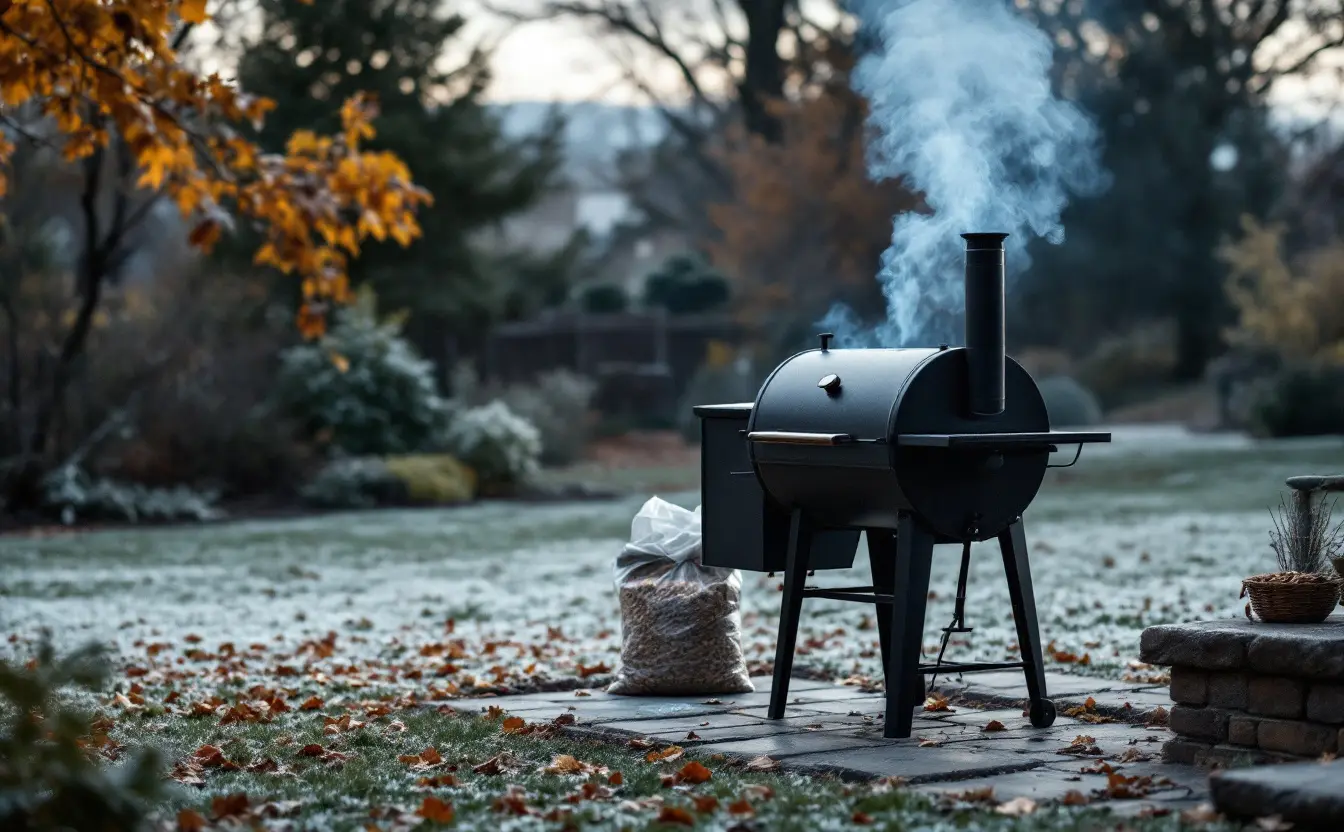
By late November plenty of kettles disappear under covers, but charcoal copes with cold better than its reputation suggests.
- Light the chimney out of the wind and give it an extra 5 to 10 minutes.
- Use more charcoal than you would in July; cold steel and cold air both steal heat.
- Keep the lid down even more than usual, since every peek costs more in January.
- Shovel a path, and keep a flat, non-combustible spot clear for the hot chimney.
- Store charcoal in a lidded bin off the floor. Damp briquettes light slowly and crumble.
Never move a charcoal grill into a garage or onto an enclosed porch to get out of the weather. Burning charcoal gives off carbon monoxide, and it needs open air every time.
If you are putting the grill away instead, empty every bit of ash, brush the grate, let everything dry and cover it once it is cold. Leave the vents a little open under the cover so damp air can escape, and it will be ready for the first warm Saturday in spring.
How we chose
We have not cooked on these particular grills. The picks come from the makers' published details (grate size, vents, portability, the lid lock on the Jumbo Joe and the offset firebox on the barrel grill), from what owners commonly report about charcoal grills as a group, such as vents seizing after a wet winter and seams leaking smoke on lighter barrel combos, and from years of cooking over live fire. We chose a kettle at each common size because the kettle shape suits most people, then added the barrel combo for anyone who wants to smoke, and the chimney starter because every charcoal grill needs one. Where the makers' details leave a gap, such as the exact extras on the Master-Touch, we say so and send you to the current listing.
FAQ
What size charcoal grill do I need?
An 18 in kettle suits two to six people, and a 22 in kettle covers most families and watch parties with room for a two-zone fire. A barrel grill is for bigger crowds, or for grilling and smoking on one unit.
Is a kettle grill better than a barrel grill?
For most people, yes. A kettle heats with less charcoal, controls easily with two vents and handles two-zone cooking well. A barrel wins on capacity and long items, and with a side firebox it can smoke.
Does charcoal taste better than gas?
On burgers and steak, most people can tell, because coals sear harder and drippings turn into smoke. On chicken breasts or vegetables cooked quickly, the gap is much smaller.
How often should I empty the ash?
Every cook or two, and only once it is completely cold. A buildup blocks the bottom vent and holds moisture against the bowl, which rusts it.
Can you smoke on a charcoal grill?
Yes. On a kettle, bank the coals to one side or lay them in a slow-burning ring, add a few wood chunks, and cook on the cool side with the lid vent over the food. A barrel grill with an offset firebox makes it easier, with more room and a fire you can feed from the side without lifting the lid.