Best Grill Brushes: Bristle-Free Picks and Safer Ways to Clean the Grates
How to pick a safe grill brush for your grates, from coil and mesh to steam and hardwood, and what to do about the old wire one on the hook.
By Megan Tremblay11 min read
The pub kitchen where I learned to cook had a char-broiler that ran from open to close, and the tool that kept it honest was not a brush at all. It was a long steel scraper with a blade like a wide putty knife, and every cook on the line learned to work it along the bars between tickets. At home, for years, a wire grill brush hung off my grill the way one hangs off half the grills on any street. Then I read what happens when its bristles let go, and it went in the garbage.
Starting five the picks at a glance
- 04OXO Outdoor Coiled Grill BrushCheck price
- 05Traeger Wooden Grill ScraperCheck price
A grill brush gets used twice every cook and thought about almost never, so it is worth five minutes of choosing. This guide is for anyone with a gas, charcoal or pellet grill who is replacing a worn brush or switching away from wire. The short answer: for most grills, the best grill brush is a bristle-free one with a long handle and a scraper edge, matched to what your grates are made of. Below are three picks, two alternates, and the grate-by-grate advice that keeps the coating on your grill and the metal out of your food.
How to choose a grill brush
Start with the grates, not the brush. Your grill's manual says what is safe on its grates, and that list beats any product description. Then look for five things:
- No loose bristles. Coil, mesh, steam, wood and plain scrapers all avoid the single wires that can snap off.
- A long handle. Around 17 to 18 in keeps your knuckles out of the heat over a hot grate.
- A scraper edge, for the carbon a brush only polishes.
- A head you can replace, so a worn brush does not mean a whole new tool.
- A shape that suits your bars. Coils and mesh like sturdy grates; thin round rods and coated grates want gentler tools.
Top pick
GRILLART Bristle-Free Grill Brush and Scraper
A long-handled brush with no loose wires to break off, plus a scraper edge for stuck bits.
- 18 in handle
- No wire bristles
- Built-in scraper
Budget pick
Kona Safe/Clean Bristle-Free Grill Brush
Coiled stainless steel instead of bristles; the maker advises against it on small portable grills and thin round grates.
- Stainless coils, no bristles
- Not for thin round grates
Upgrade pick
ThermoMaven Bristle-Free Steam Grill Brush
A woven mesh head plus a small water reservoir that steams grease loose on a warm grate.
- Woven mesh head
- Steam cleaning
- 17 in handle
Also good
- OXO Outdoor Coiled Grill Brush: A coiled head you can replace when it wears out, with a metal scraper; not meant for ceramic-coated grates. Check price on Amazon
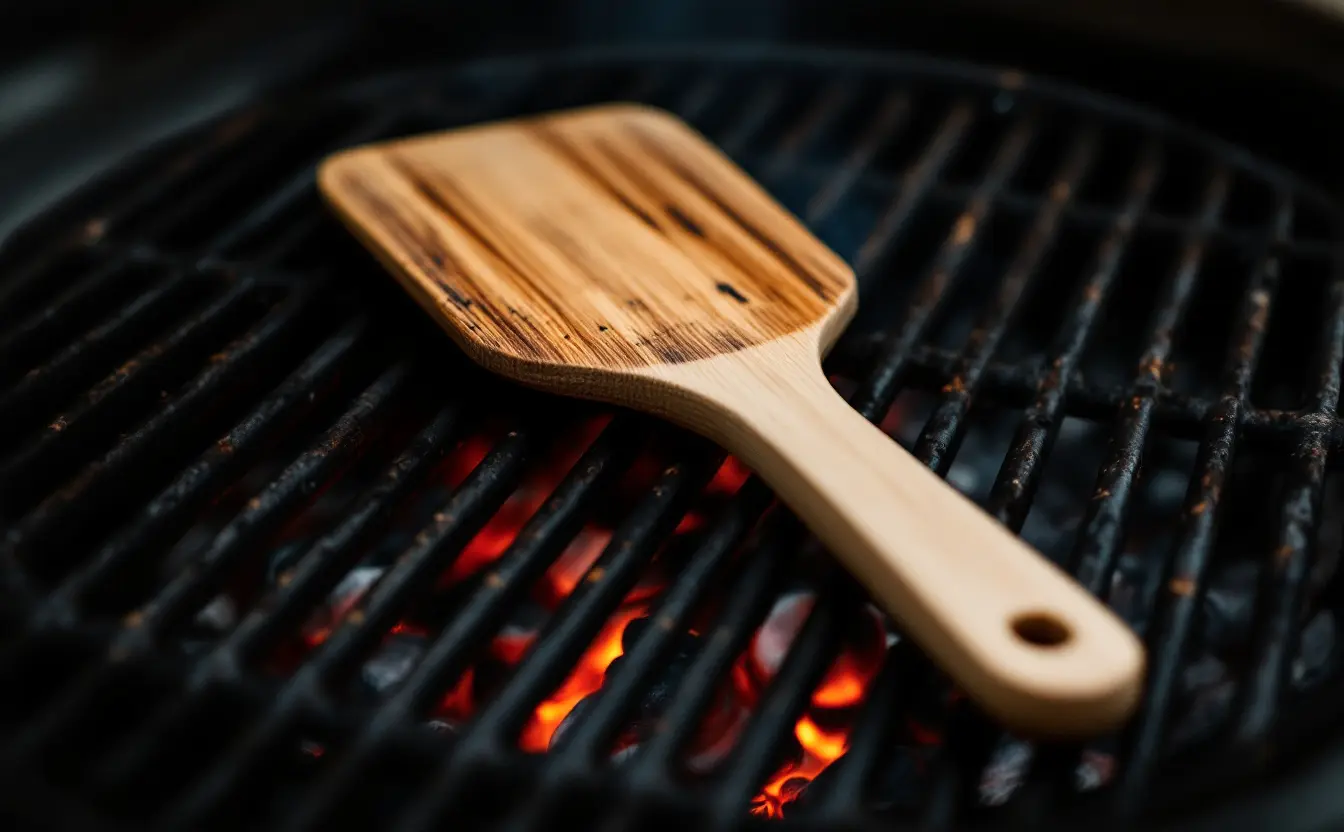
- Traeger Wooden Grill Scraper: A solid hardwood paddle shaped to the maker's grill grates; no metal to shed at all. Check price on Amazon
Best overall: GRILLART bristle-free brush and scraper
This is the brush for a typical backyard gas grill with stainless steel or cast iron grates, and for anyone coming off wire who wants something that feels familiar in the hand. It has a bristle-free head, a built-in scraper for stuck bits and an 18 in handle, long enough to reach the back of the grate without leaning a forearm over the fire.
See the GRILLART Bristle-Free Grill Brush and Scraper on Amazon
One tool on one hook: knock the carbon off with the scraper edge, then go over the bars with the head.
The trade-off is the one every bristle-free design shares. A fresh wire brush reaches down between bars in a way nothing else quite matches, so plan on a few extra passes, and make them on a hot grate where the residue is brittle. On a small tabletop grill, 18 in of handle is more reach than you need. And if your grates are porcelain or carry a ceramic coating, check the grill maker's guidance before running any metal head over them.
Budget pick: Kona coil brush
The plain choice. Instead of bristles, the head is coiled stainless steel, with no single wires to work loose. It suits full-size gas grills with sturdy grates, and cooks who want a simple tool with nothing to refill or assemble.
See the Kona Safe/Clean Bristle-Free Grill Brush on Amazon
Read the limits before you order. The maker advises against using it on small portable grills and on thin, round grates, which rules out a lot of tailgate grills and the thin rod grates on many kettle-style charcoal grills. Coil heads in general also flatten and spread over a season of hard use, and a flattened coil cleans a little less with every pass. When it stops biting, replace it.
The upgrade: ThermoMaven steam brush
The steam brush is for people who cook sticky things. Wings finished in a honey garlic glaze, ribs mopped with sauce, anything with sugar in it leaves residue that sets on the bars like caramel. This one pairs a woven mesh head with a small water reservoir, and on a warm grate the water turns to steam and loosens the grease so the mesh can wipe it away. The handle is 17 in.
See the ThermoMaven Bristle-Free Steam Grill Brush on Amazon
Steam does real work on sugar, but it brings chores. You have to fill the reservoir, there are more parts to keep clean, and steam rising off a grate can scald a bare hand, so wear a long grill glove. Mesh wears like any head, so check whether replacement heads are sold for it before you commit.
Also good
The OXO coiled brush suits anyone who would rather replace a head than a whole brush. The coil head swaps out when it wears, and a metal scraper handles the heavy spots. The maker says it is not meant for ceramic-coated grates, so keep it to stainless and bare cast iron.
The Traeger wooden scraper is a solid hardwood paddle cut to fit Traeger's own grates, with a loop for hanging it on the grill. There is no metal on it to shed at all, which makes it a natural partner for a pellet grill; if you are new to those, the pellet grill explainer covers how the whole machine works. Wooden scrapers in general wear grooves that follow your grates after a few uses, but this one fits best on the grill it was shaped for. Wood is gentle and slow, so pair it with a proper burn-off when the buildup is heavy.
The trouble with wire bristles
A classic wire grill brush is a block of thin steel bristles, and as it ages the bristles loosen. One breaks off, catches on a grate, sticks to a burger and gets eaten. Public health agencies in Canada and the US have warned about it, and emergency doctors and ear, nose and throat specialists have written up cases of bristles caught in the throat or swallowed further down, some of which had to be removed surgically. It is not common. But a bristle is thin, sharp and close to invisible in a bun, which is a lot of risk to leave hanging on a hook.
A safe grill brush is one with nothing to shed. A coil, a mesh pad or a hardwood paddle has no single wire to lose, and that is the whole argument for a bristle-free grill brush. If you keep a wire brush anyway, treat it as a part that wears out. Look it over before every use, tug a few bristles, and replace it the moment any look bent, flattened or loose. Plenty of cooks simply start each season with a new one.
Bristle-free types, side by side
| Type | How it cleans | Best on | Watch for |
|---|---|---|---|
| Coil | Tightly wound stainless wire with no single bristles | Stainless and bare cast iron | Flattens with use; some makers rule out thin rods |
| Mesh | A woven metal pad that bends around the bars | Most sturdy grates | Frays and tears as it wears |
| Steam | Mesh plus water that turns to steam on contact | Sugary sauces on a warm grate | Refilling, and steam burns |
| Wood | A hardwood paddle that wears to the shape of the grate | Porcelain and pellet grates | Slow on heavy carbon |
| Scraper | A flat metal or wood blade | Carbon on wide, flat bars | Metal can chip coatings |
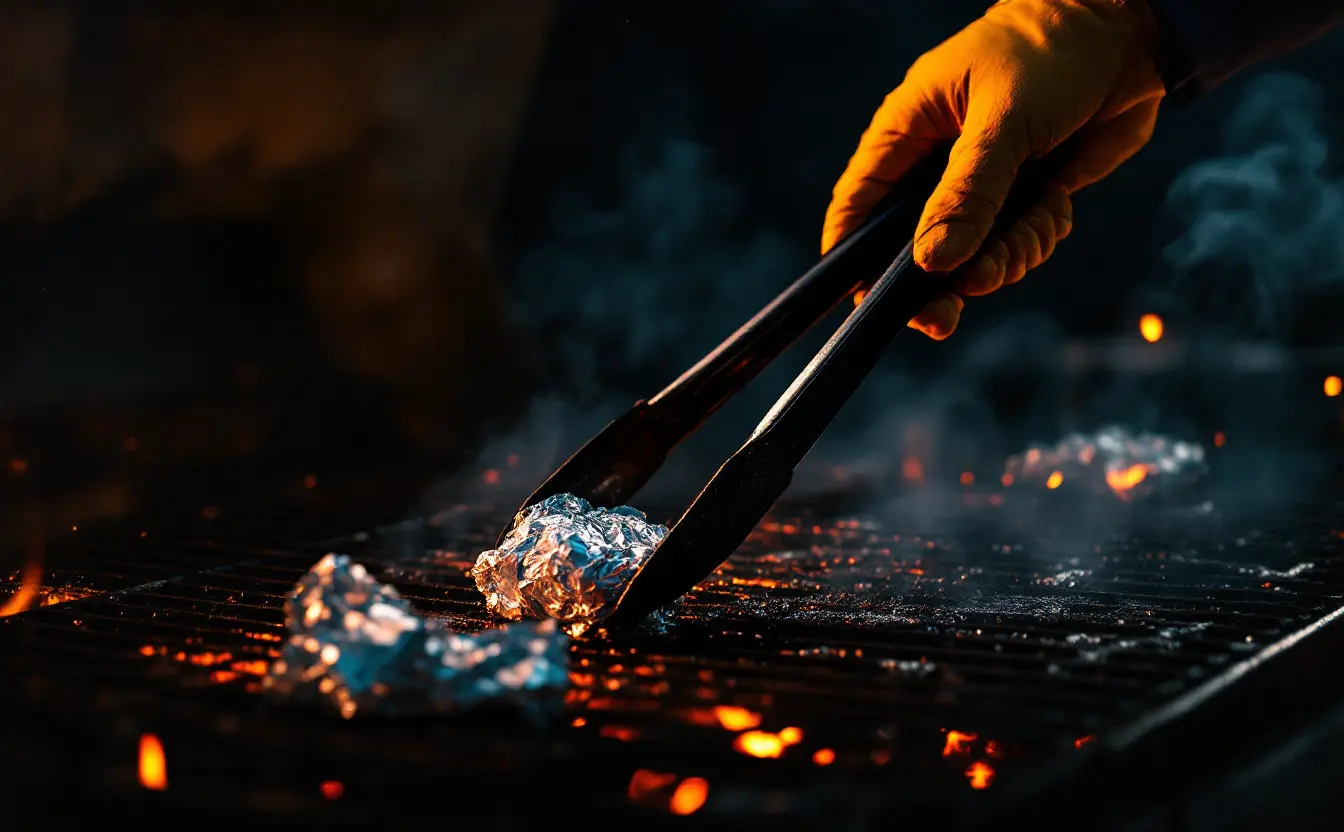
| Balled foil | Aluminum foil crumpled and held in long tongs | Any grate, in a pinch | Hot grates; use tongs, not fingers |
A grill scraper deserves more credit than it gets at home. On wide, flat bars it shears carbon off in long strips, the way a line cook works a char-broiler. It is weaker on round rods and in the gaps, which is why the best tools put a scraper edge and a head on the same handle. Wood paddles are the gentle end of the scale; keep them out of the dishwasher, wipe them down and let them dry.
Match the tool to the grate
| Grate | Usually fine | Be careful with |
|---|---|---|
| Stainless steel | Coil, mesh, steam, metal scraper, wood | Very little; it is the toughest |
| Bare cast iron | Coil, mesh, metal scraper, wood | Long soaks and leaving it wet |
| Porcelain-enamelled | Wood scraper, nylon brush on cold grates, non-scratch pad | Metal scrapers that chip the coating |
| Ceramic or other non-stick coating | Whatever the grill maker lists | Any tool the grill maker rules out |
Stainless and bare cast iron are forgiving: any bristle-free tool works, and the only real enemy of cast iron is water left sitting on it, so dry it in the heat of the grill after any wet cleaning.
Porcelain-enamelled grates are steel or cast iron under a glassy coat that stops sticking and rust; once it chips, rust starts at the chip. Use the gentlest tool that works: wood on a warm grate, nylon only on a cold one (it melts on hot metal), and no metal scrapers.
Ceramic and other non-stick coatings vary from maker to maker, and so do the rules. Follow the grill maker's list to the letter; some brush makers, OXO among them, say plainly that their coil is not for ceramic-coated grates.
Thin rod grates on kettle grills are their own case. A coil may not suit them, as the Kona maker warns, but a foil ball or a wooden paddle on hot rods does the job. If you cook on a kettle, the charcoal grilling guide for beginners covers building the fire that does half the cleaning for you.
Hot or cold?
Most grate cleaning goes better hot. Heat turns fat and sauce into dry, brittle carbon that comes away in a few strokes; cold, the same residue is gummy and smears. There are two good moments:
- After cooking, close the lid and run the grill on high for 10 to 15 minutes, then scrape.
- Before cooking, preheat with the lid down until the lid thermometer reads around 500°F (260°C), then scrape, wipe and oil.
I do the second every single time, because whatever happened overnight (pollen, a spider, a raccoon with ideas) gets burned off and brushed away before food goes near it. Clean, properly preheated grates are also what every cooking time assumes; the grill time calculator gives minutes per side for burgers, chicken, steak and more once the grates are ready.
Cold work is a different list: nylon brushes, soaking removable grates, scrubbing with a non-scratch pad, and anything to do with the grease tray or cook box. Steam brushes sit in between, since they need a warm grate to make steam at all. Wooden scrapers are happiest on a warm grate too; a blazing one scorches the edge over time.
When to replace the head
Every head wears, and a worn head cleans badly long before it falls apart.
- Coil: flattened, spread out, no longer springs back, or any strand working loose.
- Mesh: fraying, torn, or matted so thick with grease that it smears instead of scrubbing.
- Wood: split, or with an edge charred and crumbling.
- Metal scraper: a rolled or nicked edge that skips over the carbon.
- Wire: bent, flattened or loose bristles, or the start of a new season, whichever comes first.
Check the grates before food goes on
This takes thirty seconds and it is the habit I would keep if I could keep only one. Fold a paper towel into a thick pad, dampen it, grip it in long tongs and run it along every bar of the hot grate. It picks up carbon dust and anything the brush left behind. Look at the towel, then look along the bars, with a flashlight if the sun has gone. Then oil: a fresh towel dipped lightly in canola oil, wiped along the grates just before the food goes on. It matters most after a wire brush, but I do it no matter what tool I used.
How to clean grill grates without a brush
- Balled foil. Crumple a sheet of heavy aluminum foil into a fist-sized ball, grip it in long tongs and scrub the hot grates. It is surprisingly effective on stainless and cast iron.
- Half an onion. Spear it on a long fork, cut side down, and rub it along hot grates. The moisture steams off light residue. It will not shift real buildup.
- A wooden paddle. Technically not a brush, and the best tool for porcelain.
- A soak. Lift out cool grates and soak them in hot water and dish soap in a laundry tub or a big plastic bin for half an hour or so, then scrub with a non-scratch pad. Keep the soak short for bare cast iron, dry it in a hot grill and oil it.
- Baking soda paste. A thick paste of baking soda and water on a damp cloth lifts stubborn spots on stainless.
For the full routine, from the after-cook scrape to the spring strip-down, read how to clean a grill.
How we chose
We have not used these particular brushes on a grill. The picks come from the makers' published details (head type, handle length, scraper edge, replaceable heads, and the grates each maker says to avoid), the wear patterns owners commonly report for bristle-free brushes as a group, such as coils flattening and mesh fraying over a season, and years of scraping commercial grills between orders. Every pick has no single wire bristles. Where a maker rules out a grate type, we say so, because that note is the most useful line in the whole description.
FAQ
What is the safest grill brush?
One with no single wire bristles: a coil, mesh, steam brush or hardwood scraper. Whatever you use, wipe the grates with a damp paper towel and look along the bars before food goes on.
Do bristle-free grill brushes work as well as wire?
On a hot grate, close enough for routine cleaning. A fresh wire brush reaches deeper between bars, so bristle-free tools take a few more passes, and heavy buildup still needs a burn-off or a soak.
Is a grill scraper better than a brush?
For thick carbon on wide, flat bars, a scraper is faster, which is why commercial kitchens lean on them. A brush or coil does better on round bars and for the final pass, and most of the picks above put both on one handle.
How often should you replace a grill brush?
When the head flattens, frays, cracks or starts to shed, whichever comes first. If you still use a wire brush, inspect it before every cook and replace it at least once a season.
Can you use a metal grill brush on porcelain grates?
Be careful. Porcelain-enamelled grates chip, and every chip becomes a rust spot. Use what the grill maker recommends; a wooden scraper on warm grates and a nylon brush on cold ones are the gentle options.